Posted on Leave a comment

Garden Planning on a Cold Winter’s Day

Thinking of Spring

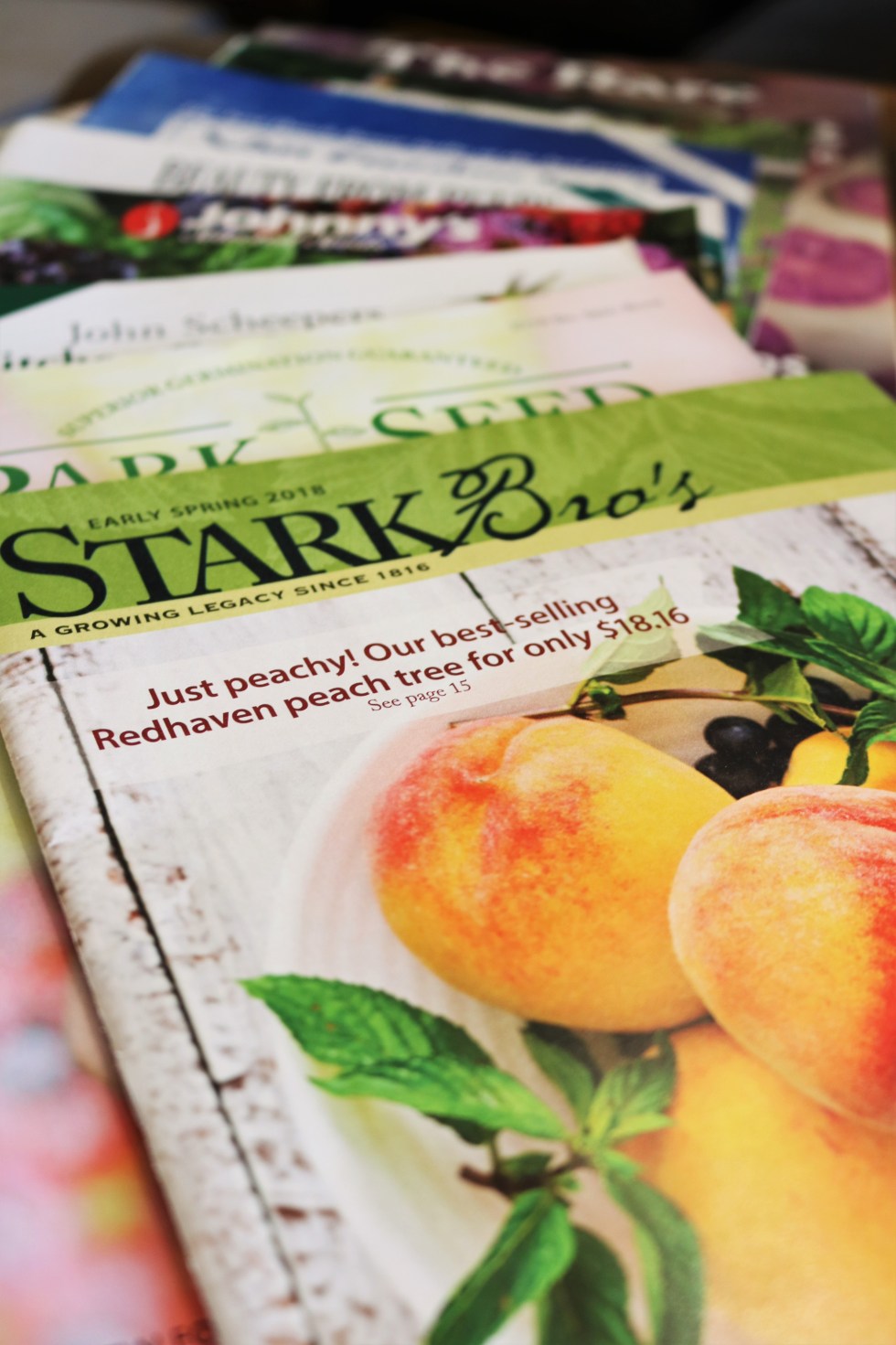
We are in the midst of a blizzard. Mother nature is dumping heavy, wet snow, yet inside my cozy house the growing stack of seed catalogs is whetting my appetite for summer. Johnny’s Selected Seeds has introduced “the first-ever red-colored Chinese cabbage with full-sized heads.” Park Seed has just introduced a bi-colored Echinacea where “yellow petal tips give way to magenta-red on these large, very abundant blooms.” I once again have zone 5 envy as I read about Spark Bros’ new variety of Honeycrisp/Gala apple cross.

My garden is buried, and the branches of my mulberry tree stark. However, I am starting to think, plan, and drool at the promise of a new variety of tomato. The juicy, sweet German Pink variety ensures greater disease resistance and heavier yields.

IMG_4232 (2)

Creating a Garden Plan

These cold, winter months give me time to reflect. What worked last summer? What do I want to do differently? Should I plant more pollinator-friendly plantings? How about more climbing vegetables? I love using my fence for vining peas, beans, cucumbers, and melons. Unfortunately it seems the most interesting seed varieties tend to sell out quickly. For that reason, if there is something I particularly want to try, I need to order soon. These deep, cold temps are essential for many of our native trees and plants, so I do not wish for a warm winter.

The variety of seasons offers a change of pace in our schedules. For me, on this wintry day, I am curled up with a mug of Chai tea with the strains of violin music in the background. A pine-scented candle burns as I nestle up with my garden planning book and seed catalogs.
IMG_4624 (2)

Posted on Leave a comment

Beets

Attributes of the Beet

This deep ruby-colored globe is as delicately flexible to use in your cooking as it is beautiful to behold. The National Garden Bureau has named this “The Year of the Beet.” A justly deserved honor this is!

Beets are an obliging workhorse in the garden. They thrive in a variety of conditions, easily started in spring, after the last frost and not resowed until early August. They prefer slightly acidic soil (pH greater than 6.0) and are fine with a sunny or part-sunny spot.

IMG_4280 (2)
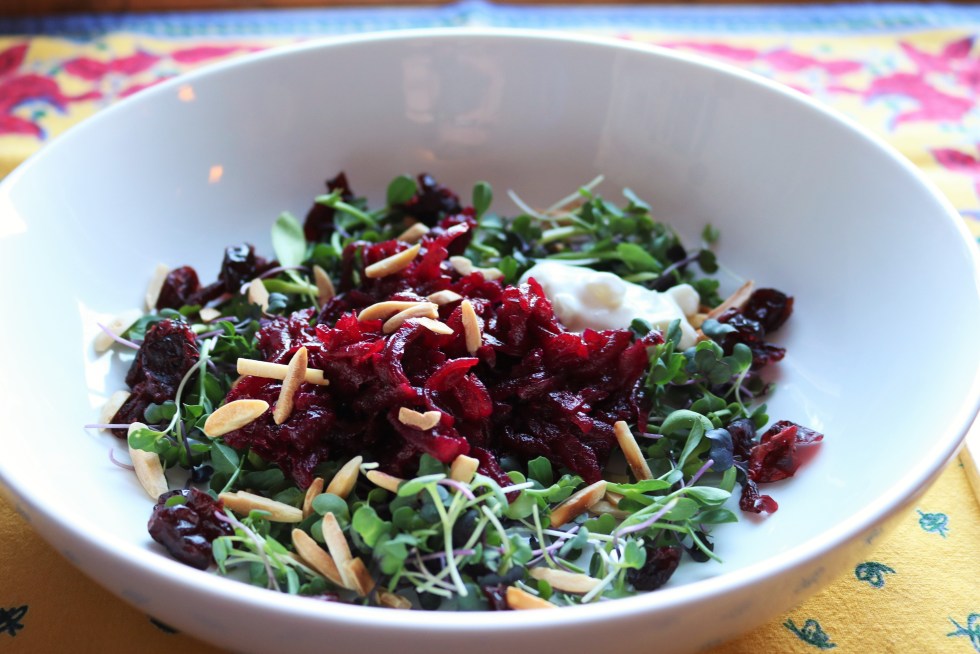
Microgreen salad with shredded beets, toasted almonds, crème fraîche, and dried cranberries in an oil balsamic vinaigrette.

Cooking with Beets

Both the leaves and the root are delicious and packed full of nutrients. I love beets roasted with a little olive oil and sea salt, used as one of the essential ingredients of Russian Borscht stew or boiled then tossed with goat cheese, crisp apple wedges in a toothsome salad. Likewise, the greens contribute well to soups, salads, or even smoothies. Because of their high nutritional value, they’ve taken the health-conscious world by storm. You can buy everything from beet pills or juice to beet powder.

Nothing, however, replaces a good old chunk of roasted beet.

Let’s explore together this versatile vegetable. From its humble beginnings all covered with loamy brown dirt to a rich garnet sliver poking out of a meaty braise, let’s celebrate the year of the beet.

IMG_3828 (2)


Posted on Leave a comment

My Grandmother’s Spoon

Heritage and History

A parallel exists between beauty, heritage, and function. I received this cherished spoon from my grandmother. It was carved in Norway with the Norwegian art form called Rosemaling. This spoon encompasses the mission and goals of Ripe and Roasted. It works to make cooking and gardening into crafts that pass from one generation to the next.

This spoon remains preserved and treasured three generations after its creation. In the same way, the culture of great food does not easily die out over time.

When families raise their children with an appreciation for freshly canned peach jam, pasta sauces simmering on the stove, meat falling off the bone from being tended at the grill all day, scratch whipped cream atop a handmade pie, these delicacies become a part of what makes each day whole. Each child will carry the light of their heritage of cooking to their children. Thus a family creates a continuum of food across the span of time.

IMG_3452 (2)

The Traditions of Our Lives

Rich traditions help to define us culturally, whether they pass down from parents or grandparents or they are something we simply turn into a custom. In our family we prepare foods and dishes that come from the different cultures that compose the patina of our lives. We also hold to traditions that we created many years ago. For example, when my kids were young, we decided that the combination of Chicken Chili and Cinnamon Rolls were a “thing.” So today, if we make Chicken Chili, we are probably going to make Cinnamon Rolls as well.

My grandmother’s beautiful spoon is a symbol of this multi-faceted nature of life. In its great simplicity yet masterfully carved splendor,  it represents the way food, lovingly and skillfully made, can unite family or friends in one moment as well as in all the moments to the end of time.