I step outside on a cool afternoon. As I look around, the spring meadows surround me, painted with great swatches of blue flowers. Life is waking up after our strangely mild winter. The arrival of Colorado blue columbine signals the warmer days of summer are just around the corner.
Spring in the mountains is a lovely time. The streams begin to gurgle with the fresh snow melt running off the peaks. It’s tough to be a plant in such rocky soil and at such high altitude. This makes it all the more refreshing when flowers like bittersweet and Colorado blue columbine flourish. Harsh conditions are exactly where they thrive.
Pasque flowers are much the same, except they bloom on the prairies rather than the mountains. Like its mountain counterparts, the pasque flower loves the cool spring and doesn’t mind challenging growing conditions.
Most of my flower collections are structured in a rigid frame, but this unique collection is instead simply a grouping of some of my favorite flowers, some found in the wild and some in the garden:
- Colorado blue columbine
- Pasque flower
- Lady slipper
- Bitterroot
- Dogwood flower
- Poppy
It is with joy and excitement that I present to you this special collection of flower designs.
Colorado blue columbine
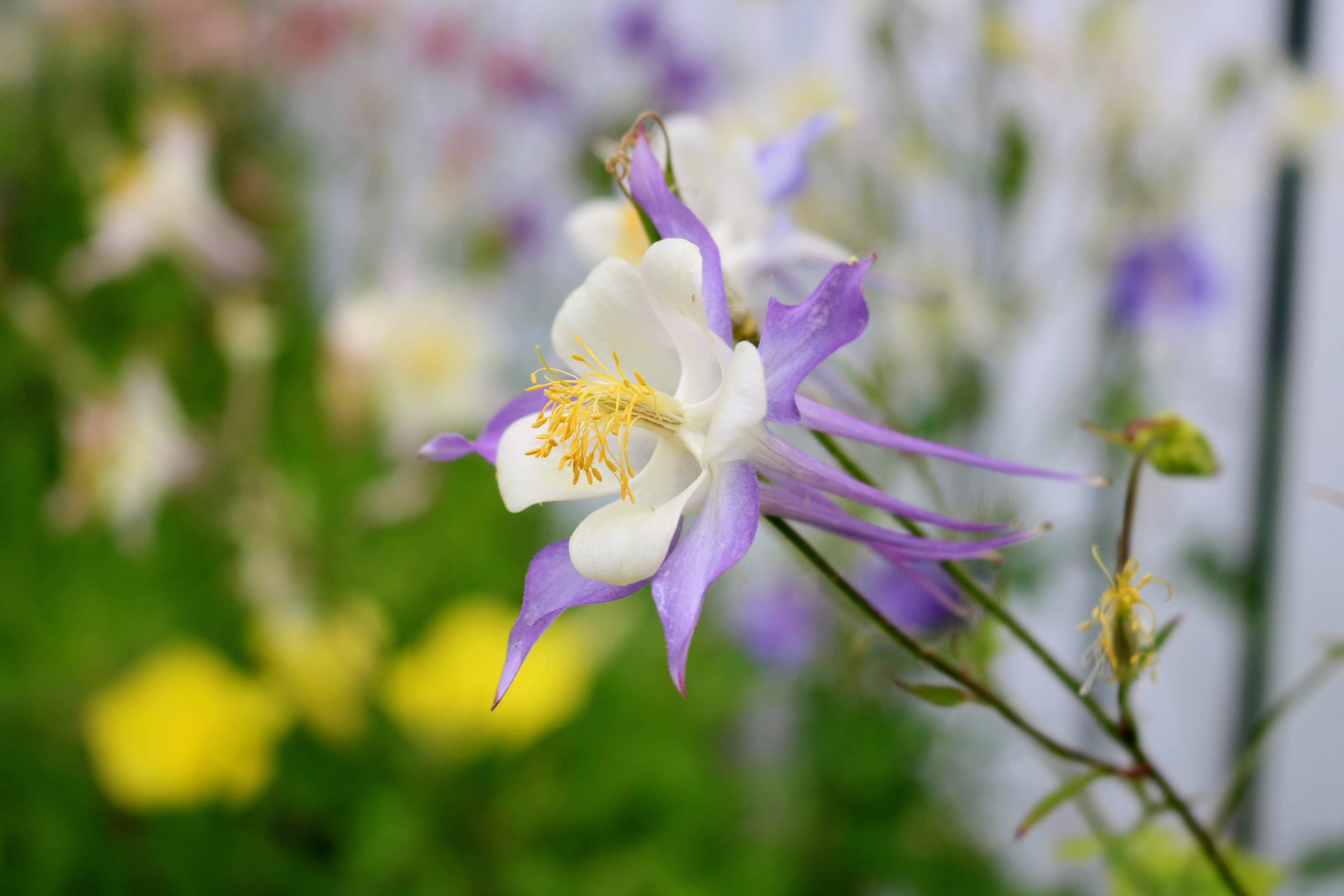
The Colorado blue columbine is one of those hard-to-find state flowers. To see these beauties in all their glory, you need to hike up into the Rocky Mountains during the early part of the summer. These flowers like moist, sunny mountain meadows, and they can also be found tucked into relatively open Aspen groves in the alpine tundra.
Colorado blue columbines are bi-colored, sporting creamy white sepals that extend out from the flower at a right angle. The blue petals jut backwards and extend into long points. The structure of the columbine flower is particularly suited to the hummingbird and hawkmoths, who both help to pollinate these lovely flowers.
Like so many of these high mountain glories, this flower is becoming rarer and rarer. It’s currently against the law to pick it on public lands in Colorado. If you are lucky enough to see it in the meadows of your own mountain getaway and want a bouquet, simply clip the stems off above the ground so the roots stay intact. This way it’ll come back in years to come.


Pasque flower
The pasque flower is another one of those early bloomers. As its name indicates, pasque is the French word for Easter, which is around the time that it usually blooms. It’s the state flower of South Dakota, my home, where it’s one of the earliest flowers seen on the prairie.
The bluish purple petals stand out against the otherwise bland-colored spring ground. These delicate flowers serve as an important early pollinator for many insects that are just waking up in the spring. Even though insects love this plant, it is considered toxic to both animals and humans.


Lady slipper
It was a gorgeous sunny day when I found myself walking on the edge of a wood in northern Minnesota. What suddenly caught my eye were dozens of delicate orchid-looking pink and white flowers scattered around the vegetation.
Some were tucked under the pines, and others poked up throughout the meadow in front of me. The ground in this area was mildly moist and spongy under my feet. In fact, just off in the distance was a swamp. The tall brown cattail heads stood high against the green foliage. These intricate and showy flowers seemed out of place against the wildness of the environment.
Lady slipper is a flower in the orchid family that thrives in the moist, cool forests of central and northern Minnesota. In this native habitat, the plants can live for decades, putting out their gorgeous flowers every year.
When you see a lady slipper in nature, it’s easy to forget how increasingly rare they’ve become. Lady slippers have very specific requirements for growth. They need bees to pollinate them, the seeds depend on mycorrhizal fungi to survive, and they can grow for years before they flower. As their natural habitat is developed and disappears, so also these beauties are becoming less prevalent.
It is with a great deal of awe and reverence that I paint and offer my rendition of this very special flower, the state flower of Minnesota, and one of the most interesting and rare of the state flowers.
For me personally, there are only a few flowers that fall into the “hallowed flowers” category. The lady slipper orchid holds this elevated status for me.


Bitterroot
This darling little pink flower is only found in the most desolate of locations, in the dry, stony areas in and around mountain ranges. It thrives in the poorest of soils and the driest of conditions. It baffles me that something can be so beautiful in spite of such difficult environments, or should I say because of such difficult environments. I somehow find the antithetical nature of this flower personally inspiring.
In the southwestern part of Montana exists a river, a mountain range, and a valley all named after bitterroot. Many Native Americans tribes, who had an innate sense of edible plants, considered bitterroot a delicacy, eaten with meat such as grouse.
That said, if you happen to be wandering through the high country of Montana, resist harvesting this rare plant for dinner, as it is also becoming rarer in recent years.


Dogwood flower
I’m a sucker for flowering trees, and dogwood flowers have to be among my favorites. They almost glow in their brilliance.
One of my many favorite things about spring in the southeast quadrant of our country is the spring flowering dogwoods. The white, yellow, or pink flowers seem to float on top of the branches. These blooming trees are the portal to the beginning of spring.
Botanically, dogwoods have many interesting qualities. They can self pollinate, so you only need one to enjoy flowers and berries. The wood is extremely hard — so hard, in fact, that it’s almost grainless. The flowering dogwood variety actually grows better as an understory tree in dappled shade than it does in full sun.
This tree is so prized that it’s the state tree and/or flower in several states: North Carolina, Virginia, Missouri, and New Jersey. I’ll have to admit, this tree is one of the reasons I suffer from zone 5 envy!


Poppy
The poppy, with its papery petals and colors that look like they came off a painter’s easel, are both tough and delicate. Their petals ruffle in the breeze in the most whimsical way.
The primary reason I painted the red poppy is because of their incredible color. Their vibrant red pops in the landscape (or on a wall). Poppies are one of the most recognizable flowers in the world, even though they tend to flourish in the northern hemisphere.
Their color range is wide from white to pink to rose, red, wine, purple, yellow, orange, and even a grayish purple. Since World War I when poppies flourished in the war-torn fields of northern Europe, the red poppy has been the symbol of remembrance and hope for veterans throughout the United Kingdom. The orange-colored California poppy is the state flower of its namesake, California.


Closing thoughts
I hope this collection of flowers gets you in the mood for spring. Everywhere I turn, trees are budding, bulbs are emerging from the ground, perennials are reviving, and the grass is becoming ever-more green. May each of you have a happy and beautiful spring!