SUMMARY: The process of how to grow garlic is simple once you know the key points. First, decide what varieties to plant, and prepare the soil. Plant and cover the garlic in autumn. Uncover it in spring, watch it grow, and pick the scapes and harvest the heads during the summer.
Are you interested in growing garlic in your yard, but you’re not sure how to get started? Garlic is a low-maintenance and high-reward plant to grow as long as you understand a few key principles.
I’ll walk through the seven steps for how to grow garlic so you can order them and get them in the ground by this fall.


1. Decide What Varieties to Plant and Order Them
The first step in how to grow garlic is deciding what type of garlic to grow. At the grocery store, you generally only see one or two varieties, but when you’re growing your own, you have a myriad of beautiful options.
You’ll plant your garlic in the fall, so it’s best to order it early, in late spring, for the best selection. Recently I’ve been getting my garlic from Keene Garlic, but another great option is Seed Savers. You can find garlic heads for planting through local farmers or garden shops. Grocery store garlic is typically a softneck garlic, which isn’t hardy in northern parts of the U.S., so it’s best to order garlic intended for planting.
Hardneck Garlic
The first type of garlic is hardneck, which means that the stem is stiff and woody, and it can’t be braided like softneck varieties. If you live in a climate with cold winters, such as the northern parts of the U.S., plant hardneck garlic because it’s hardier and will withstand the winters better.
Hardneck garlic varieties produce scapes, which are the flowering stem of the plant. You can cut off these scapes and cook with them, or you can plant them. Hardneck garlic generally has fewer larger cloves compared to softneck.
Best Hardneck Varieties
Here are a few of my favorite hardneck varieties to grow in my upper Midwestern garden:
- Music
- Chesnok Red
- German Extra Hardy
- Purple Glazer
- Rose de Lautrec
- Russian Red
- Spanish Roja
Softneck Garlic
The other type of garlic you can plant is softneck, which means the stem of the garlic is more flexible. These varieties are generally more susceptible to the cold, so they do great in warmer climates with less severe winters, such as the lower parts of the U.S.
Softneck garlic does not produce scapes, and the cloves tend to be smaller and more numerous than hardneck garlic cloves.
Best Softneck Varieties
A few great options for planting softneck garlic include:
- Inchelium Red
- French Red
- Blanco Piacenza
2. Prepare the Soil
Once you’ve ordered your garlic, you’ll need to plan where you’ll plant it. Garlic is a heavy feeder, so it prefers rich, loose soil, not clay. They do best in full sun. You can replant it in the same place every year if you have good soil, but it’s ideal to rotate its location around your garden.
If you do not have good soil where you live, add compost to enrich the dirt. You can also separate the cloves from each other and soak them in a fertilizer soak before planting, which you’ll be able to find anywhere you buy garlic bulbs.

3. Plant and Cover the Garlic in Mid-Fall
Plant your garlic in mid-fall. In the upper midwest, I plant my garlic when the maple leaves are golden, which is late September or early October.
Dig holes 6 to 9 inches apart, 3 inches deep, and place an individual clove in each hole. Place the root side down, and the tip upwards. Then cover with dirt. When you are done planting, cover the patch with 3 to 6 inches of an organic mulch, such as straw or leaves.
After the cloves are buried and covered in the fall, you can forget about them until spring.
4. Uncover the Garlic in Spring
In the spring, you can take off some or all of the mulch after the threat of freezing temperatures has passed. If you leave some of the mulch, it acts as a weed barrier. The garlic will be able to grow through it.
It’s important to keep the space very weeded, as weeds will compete with the garlic, producing smaller garlic heads. Once the garlic is uncovered, as it grows you can water it as needed. Otherwise, sit back and watch it grow.


5. Harvest Garlic Scapes in June
In mid June, if you planted a hardneck variety, you will notice curly stems called scapes poking out from the garlic leaves. These stems curl as they reach upward and outward. In mid June, if you planted a hardneck variety, you will notice curly stems called scapes poking out from the garlic leaves. These stems curl as they reach upward and outward. If you let these go without picking, they will produce a beautiful white garlic flower. These are the seed heads, and they are delicious.
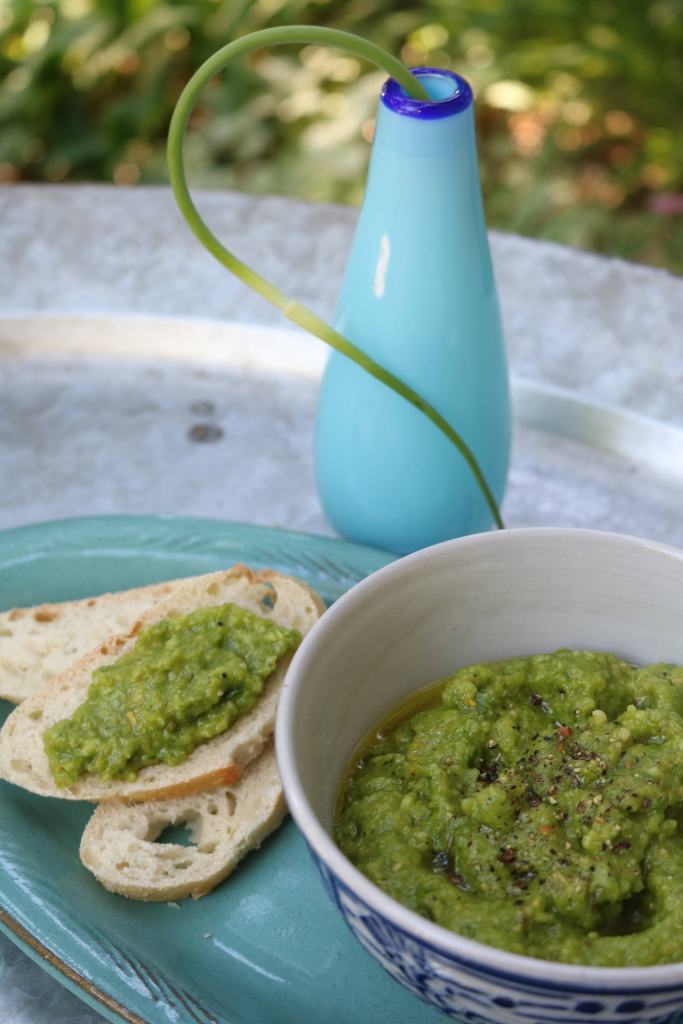
When these scapes get nice and long, you can cut them off and bring them inside to use in your cooking. I add them to everything I would normally use garlic in and more. Because they are a bit like a garlicky green onion, they go into salads, soups, and pastes. Anything savory, really.
Once all the scapes are trimmed off the plants, I continue to let the garlic plants grow.


6. Dig Up Garlic in July
Once the tops of the garlic leaves are starting to dry and turn brown, I start keeping track of them again. When you have about 5 green leaves remaining on each plant, or about 50% of the leaves are still green, you can harvest the garlic bulbs.
First dig up one plant to see if it is ready. You should see big heads with the outside skin sort of papery. Once I deem them ready, I dig them out of the ground carefully with a long spade, being careful not to slice open the heads.


7. Dry and Prepare the Garlic Heads
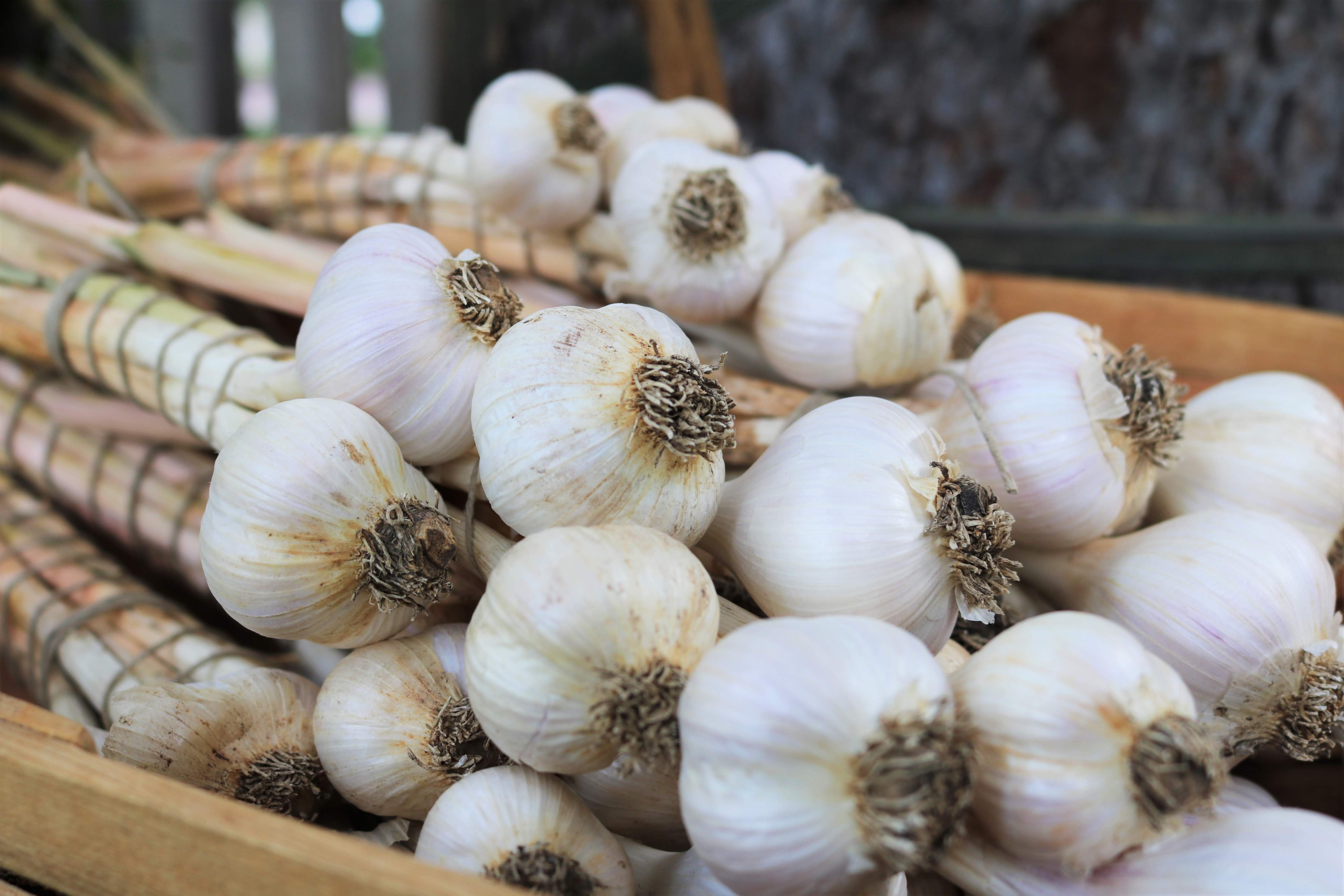
After pulling out my garlic, use a stiff brush to remove the excess dirt. Do not use water. Once they’re brushed off, lay them out in a well-circulated place, not touching each other, for about three weeks. This will allow them to cure. I generally leave them on a tarp in my garage, but you can also put them in the sun or under a tree, or you can tie and hang them in a well-ventilated space.
Once the garlic has cured for about three weeks, then it’s time to finish cleaning it up. Trim the tops and roots so they’re neat, and then tie them by wrapping them with string. By combining the garlic into a nice arrangement, they are beautiful on the wall, and they’re extra convenient when you want to clip a head off to use in your cooking.
Once the garlic is arranged and ready for storage, place it in a well-ventilated, room-temperature space. I generally like to hang it in my kitchen, and that way, it’s ready for use.


Why Grow Garlic?
I grew up with minimal garlic in my life, and what did exist came in the form of garlic powder. Later this changed to the minced garlic in a jar, and I thought I was getting pretty fancy at this point. The idea of fresh cloves of garlic came next, but I always bought these from a grocery store.
It was probably twenty five years ago when I was wandering through a farmers market in late July and came across a stand that had garlic for sale. They had baskets filled with pink garlic, garlic with purple stripes, and white garlic. Some bulbs were large, others smaller.
The realization that so many varieties existed was quite the discovery for me. Of course I fell in love with the taste and texture of homegrown garlic heads. Newly harvested garlic is very juicy. The individual cloves are firmer and fresher than what you buy at the grocery store.
A number of years ago, I started my own garlic patch, and I have never looked back. Garlic has become one of my favorite things to grow. It’s such an easy, carefree plant, and I can cook with the garlic year round. My garlic lasts all the way through winter, spring, and summer until I get my new batch in the late summer.


What to Cook with Garlic
The best part of learning how to grow garlic is getting to cook delicious meals from the scapes and fresh, juicy heads. If I tried to list all the ways I use my garlic, I could go on forever. But a few of my favorite uses for homegrown garlic include:
- Garlic scape pesto
- Garlic scape and sauteed mushroom pasta
- Grilled pizza topped with fresh garlic scapes
- Bruschetta with garlic scapes or garlic
- Garlic bisque
- Garlic and shrimp pasta

Learn More about Creating Your Garden
Growing garlic is one of the many joys of starting a garden at home. By growing a garden, you can create a wonderful haven and rich food for yourself and your family.
The Ripe and Roasted online vegetable garden course with Cami walks you through the steps of how to design and build your garden from scratch. You’ll learn how to choose, arrange, plant, and care for your vegetables and pollinator flowers.
Visit the garden course page to learn more and sign up. Gardening makes it possible to reconnect with nature while growing fresh, organic food in your own backyard.