Posted on Leave a comment

6 Flowers Near and Dear to My Heart

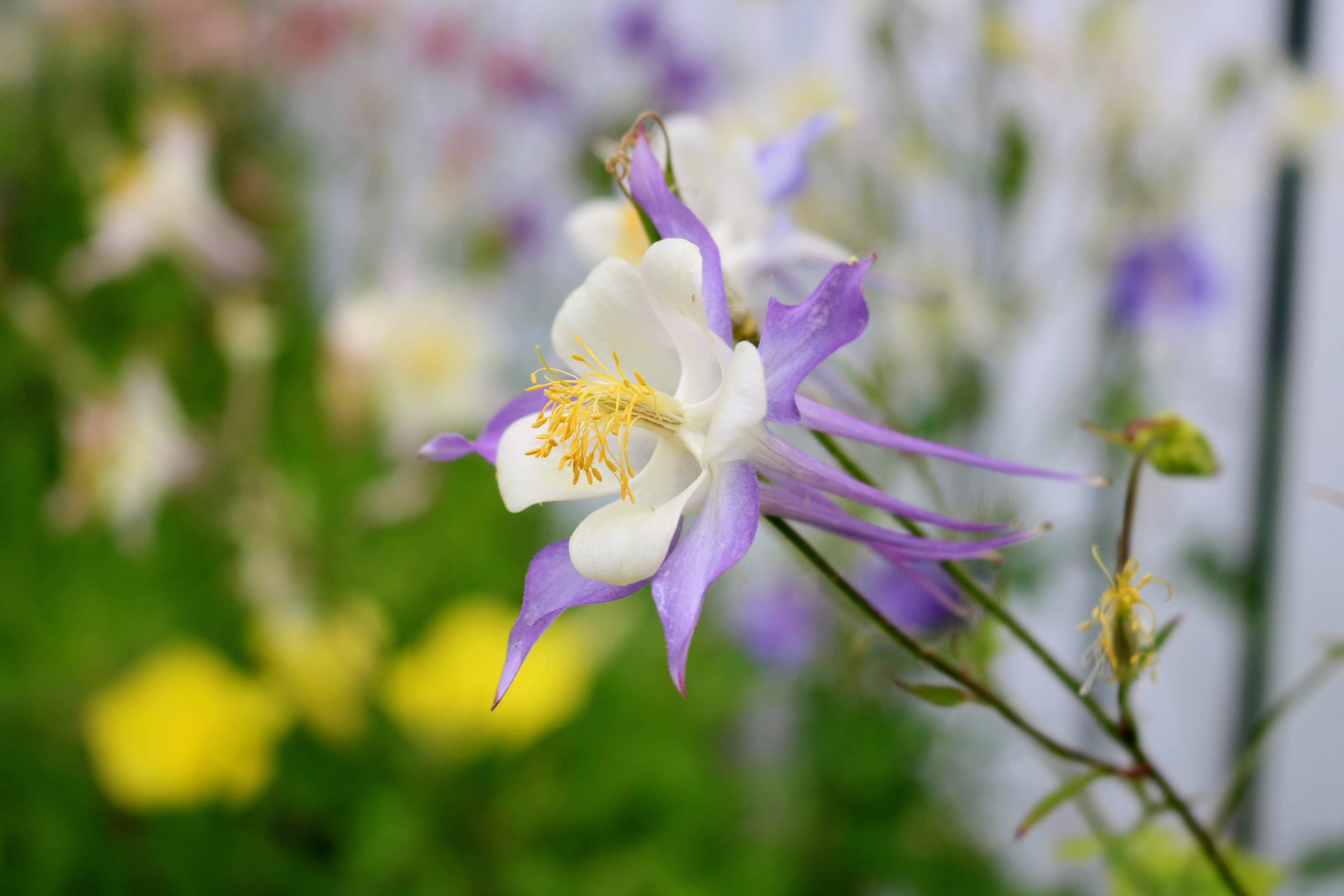
I step outside on a cool afternoon. As I look around, the spring meadows surround me, painted with great swatches of blue flowers. Life is waking up after our strangely mild winter. The arrival of Colorado blue columbine signals the warmer days of summer are just around the corner.

Spring in the mountains is a lovely time. The streams begin to gurgle with the fresh snow melt running off the peaks. It’s tough to be a plant in such rocky soil and at such high altitude. This makes it all the more refreshing when flowers like bittersweet and Colorado blue columbine flourish. Harsh conditions are exactly where they thrive.

Pasque flowers are much the same, except they bloom on the prairies rather than the mountains. Like its mountain counterparts, the pasque flower loves the cool spring and doesn’t mind challenging growing conditions.

Most of my flower collections are structured in a rigid frame, but this unique collection is instead simply a grouping of some of my favorite flowers, some found in the wild and some in the garden:

  • Colorado blue columbine
  • Pasque flower
  • Lady slipper
  • Bitterroot
  • Dogwood flower
  • Poppy

It is with joy and excitement that I present to you this special collection of flower designs.

Colorado blue columbine

The Colorado blue columbine is one of those hard-to-find state flowers. To see these beauties in all their glory, you need to hike up into the Rocky Mountains during the early part of the summer. These flowers like moist, sunny mountain meadows, and they can also be found tucked into relatively open Aspen groves in the alpine tundra.

Colorado blue columbines are bi-colored, sporting creamy white sepals that extend out from the flower at a right angle. The blue petals jut backwards and extend into long points. The structure of the columbine flower is particularly suited to the hummingbird and hawkmoths, who both help to pollinate these lovely flowers.

Like so many of these high mountain glories, this flower is becoming rarer and rarer. It’s currently against the law to pick it on public lands in Colorado. If you are lucky enough to see it in the meadows of your own mountain getaway and want a bouquet, simply clip the stems off above the ground so the roots stay intact. This way it’ll come back in years to come.

Pasque flower

The pasque flower is another one of those early bloomers. As its name indicates, pasque is the French word for Easter, which is around the time that it usually blooms. It’s the state flower of South Dakota, my home, where it’s one of the earliest flowers seen on the prairie.

The bluish purple petals stand out against the otherwise bland-colored spring ground. These delicate flowers serve as an important early pollinator for many insects that are just waking up in the spring. Even though insects love this plant, it is considered toxic to both animals and humans.

Lady slipper

It was a gorgeous sunny day when I found myself walking on the edge of a wood in northern Minnesota. What suddenly caught my eye were dozens of delicate orchid-looking pink and white flowers scattered around the vegetation.

Some were tucked under the pines, and others poked up throughout the meadow in front of me. The ground in this area was mildly moist and spongy under my feet. In fact, just off in the distance was a swamp. The tall brown cattail heads stood high against the green foliage. These intricate and showy flowers seemed out of place against the wildness of the environment.

Lady slipper is a flower in the orchid family that thrives in the moist, cool forests of central and northern Minnesota. In this native habitat, the plants can live for decades, putting out their gorgeous flowers every year.

When you see a lady slipper in nature, it’s easy to forget how increasingly rare they’ve become. Lady slippers have very specific requirements for growth. They need bees to pollinate them, the seeds depend on mycorrhizal fungi to survive, and they can grow for years before they flower. As their natural habitat is developed and disappears, so also these beauties are becoming less prevalent.

It is with a great deal of awe and reverence that I paint and offer my rendition of this very special flower, the state flower of Minnesota, and one of the most interesting and rare of the state flowers.

For me personally, there are only a few flowers that fall into the “hallowed flowers” category. The lady slipper orchid holds this elevated status for me.

Bitterroot

This darling little pink flower is only found in the most desolate of locations, in the dry, stony areas in and around mountain ranges. It thrives in the poorest of soils and the driest of conditions. It baffles me that something can be so beautiful in spite of such difficult environments, or should I say because of such difficult environments. I somehow find the antithetical nature of this flower personally inspiring.

In the southwestern part of Montana exists a river, a mountain range, and a valley all named after bitterroot. Many Native Americans tribes, who had an innate sense of edible plants, considered bitterroot a delicacy, eaten with meat such as grouse.

That said, if you happen to be wandering through the high country of Montana, resist harvesting this rare plant for dinner, as it is also becoming rarer in recent years.

Dogwood flower

I’m a sucker for flowering trees, and dogwood flowers have to be among my favorites. They almost glow in their brilliance.

One of my many favorite things about spring in the southeast quadrant of our country is the spring flowering dogwoods. The white, yellow, or pink flowers seem to float on top of the branches. These blooming trees are the portal to the beginning of spring.

Botanically, dogwoods have many interesting qualities. They can self pollinate, so you only need one to enjoy flowers and berries. The wood is extremely hard — so hard, in fact, that it’s almost grainless. The flowering dogwood variety actually grows better as an understory tree in dappled shade than it does in full sun.

This tree is so prized that it’s the state tree and/or flower in several states: North Carolina, Virginia, Missouri, and New Jersey. I’ll have to admit, this tree is one of the reasons I suffer from zone 5 envy!

Poppy

The poppy, with its papery petals and colors that look like they came off a painter’s easel, are both tough and delicate. Their petals ruffle in the breeze in the most whimsical way.

The primary reason I painted the red poppy is because of their incredible color. Their vibrant red pops in the landscape (or on a wall). Poppies are one of the most recognizable flowers in the world, even though they tend to flourish in the northern hemisphere.

Their color range is wide from white to pink to rose, red, wine, purple, yellow, orange, and even a grayish purple. Since World War I when poppies flourished in the war-torn fields of northern Europe, the red poppy has been the symbol of remembrance and hope for veterans throughout the United Kingdom. The orange-colored California poppy is the state flower of its namesake, California.

Closing thoughts

I hope this collection of flowers gets you in the mood for spring. Everywhere I turn, trees are budding, bulbs are emerging from the ground, perennials are reviving, and the grass is becoming ever-more green. May each of you have a happy and beautiful spring!

Posted on 2 Comments

Garden Planning to Soothe the Soul

Spring Planting

Seed catalogs litter my couch. I keep pouring over the pages of flowers and vegetables. I have garden tabs open across the top of my computer screen, and I have been driving through town, stopping by garden shops. Amid all this planning, the plants are pulling me in, whispering, “I am beautiful. I am delicious. Buy me. Plant me.”

Planting time is approaching. The days are longer and warmer. We have been cooped up, self-isolating, and our reaction to this seclusion is to get outside. In the face of sickness, we have an inner voice inspiring us to self-improve and do what we can within ourselves to combat the enemy that is consuming our world.

IMG_2406 (2)

We have this urge to grow plants for eating. We want to surround ourselves with beauty, living greenery, and flowers. The desire to eat healthy foods enthralls us. We are exercising more than ever. It seems more important than ever that we plant our gardens. For our soundness of mind, we need to sink our hands in the dirt and bury seeds that soon will produce vegetal plenty.

Finding Garden Plants

Now, where to go to procure these seeds and plants? As local businesses are struggling, it seems more important now than ever to support them. I choose to buy my garden supplies from those I value and rely on during normal gardening seasons. I carefully tuck away the catalogs, turn off the computer, and buy from the shops in my community.

Whether it’s calling on the phone, ordering by computer, or, mask in hand, actually visiting these shops, seeds and plants will come home with me. The plants that fill my garden this year and the flowers that will spill out of my planters will mean more than ever.

IMG_7065 (2)

Planning the Garden

First, I start with a plan. What should I plant first? Second? In a few weeks? My garden map is sketched, pencil on graph paper. I need to place the nightshade plants in a new spot this year. Maybe where the basil was last year.

IMG_3425 (2)

I tend to go a little crazy on tomato plants. My resolution for 2020 is to control myself and carefully choose my favorite varieties. A few heirlooms, some Romas for pasta sauce, a couple sweet cherries, a couple dependable heavy producers, and most importantly, some new interesting colors and shapes. These are going to take too much room. I erase and rearrange the vegetables on my map, trying to squeeze in my indulgences. So many indulgences, so little space… There are simply too many have-to-have tomatoes.

Planning a Timeline

The cool weather vegetables need to go into the ground. Kale, arugula, sweet peas, radishes, lettuces, onions, leeks, carrots, beets, radicchio, Swiss chard.

My attention now turns to planning what I will plant in late May. It is important to purchase them now, as these unusual varieties tend to sell out. Plants include tomatoes, eggplant, peppers, and cold-sensitive herbs and flowers. After bringing them home, they can harden in my yard for a while before they get planted.

IMG_9795 (2)

Lastly are the vegetables that cannot get planted until the ground is very warm: beans, cucumbers, and squash. I buy the seeds but will hold off planting until early June.

IMG_2820 (2)

With my plan forming, I can already smell the intoxicating scents of the garden. Tall dill that I allow to self seed everywhere (My small contribution to the black swallowtail butterfly). The delicate white cilantro flowers. Marigolds and nasturtium. The distinctive aroma of a just pruned tomato plant. Green fingertips. The yellow finches flitting from coleus to coleus, eating their seeds. This planning process elicits a visceral reaction. This garden is already worming its way into my soul.

The Hope of Spring

While on a walk, I hear the robins chirp as they busily go about building their nests. The squirrels race from tree to tree, busy with who knows what. The buds on the magnolia trees are just appearing, ivory cashmere petals emerging from pale green, velvety calyx.

The cool spring air. I breathe in deeply. Thankful. The soft new grass seems so green. Rhubarb and strawberry leaves push up through the soft, damp earth. The roses and clematis don’t realize there’s a deadly virus afoot. The plum and cherry trees are blithely budding. Nature is seemingly unaware of our current crisis.

This new birth is calming and reassuring. Heading to the garden, trowel and seed packets in hand, I settle in to dig, plant, and water, waiting for the future, waiting for new life to emerge.

Posted on Leave a comment

The Rise of Spring

Awakening Creation

Spring. Warm, sunny days. Cool rains. The green of the budding trees is almost electric, and emerging plants are the same. Their lime color is cheerful yet soothing. I am daily transfixed by the new strawberries poking their leaves up through the caramel mulch. Lily of the valley are slowly uncoiling their leaves. Soon the intoxicating perfume of their flowers will greet me each day.

The garlic cloves I buried in a corner bed last fall have long been up and stretching toward the sky. I cannot stop thinking about the garlic scape pesto I will be creating from the curly scapes that will swirl up from each plant. As I look across my other garden beds, I see the tiny evidence of early spring peas, lettuces, and pak choi.

IMG_7104 (2)
Garlic shoots

Spring Preparation

The time has not yet arrived for planting my summer seeds and plants. In this part of the country, we wait for the soil temperatures to warm up. What I am doing now is collecting. My stack of vegetable seed packets increases by the day. A wide array of pepper and tomato plants are hardening in my yard and garage. Flowers and plants with interesting foliage await being planted into ceramic pots.

IMG_7072 (2)
Collecting plants

Gardens with multi-season plantings bring life to the spring season when we have been without outside color for months. Some of my favorites are the early bulbs such as the subtly-hued Lenten rose, stubby crocuses that almost look like they are laughing at late winter as they push themselves up through the frosty remnants of winter, muscari with its clusters of tiny indigo grape-like flowers standing at attention up and down the stem, and fritillaria whose upside down tulip-shaped flowers look like miniature plum checkerboards. These are of course in addition to the many varieties and shades of daffodils and tulips.

The First Market

Just as I welcome the visual freshness of spring, so I also eagerly anticipate the clean crispness of spring fruits and vegetables. The weekly summer tradition of going to the farmers market began this weekend. Like walking through a seasonal portal, the opening of the farmers market is, for me, the start of my summer gardening season. Catching up with the farmers, scouting their new offerings, listening to the bluegrass band, buying something here, tasting something there. The aroma of coffee beans grinding or pizza baking in a wood-fired oven. It all comes together to lift my spirits. It is saying, “hello spring,” “hello warm sunshine,” “hello cool rich earth!” “Are you ready to welcome and nurture what I’m planting this year?”

IMG_7076 (2)
Farmers market bounty

Cooking for Spring

Of course, I brought home some culinary gems; trumpet mushrooms, Japanese spinach, and bok choy. These formed the components of our evening meal. So upon returning from the farmers market, I had to create in the kitchen. The ingredients called for simple dishes. We needed to hear the crunch of the bok choy and feel the bite of the emerald Japanese spinach. I decided to do an Asian interpretation by tossing in some pistachios and drizzling the greens with a mixture of peanut and sesame oil, Tamari sauce, freshly grated ginger root, minced garlic, and rice wine vinegar.

The just-harvested trumpet mushrooms that I buy at the market are so marvelous that I had to do the classic preparation of sauteing them in butter albeit with the twist of a sprinkling truffle salt. Strips of Ataulfo mangoes topped with coarsely ground pepper and charcoal-grilled chicken thighs marinated in a mixture of Vietnamese lemon curry, sea salt, and black pepper rounded out the dinner plates.

IMG_7139 (2)

I wake up to the multitude of birds chirping outside my bedroom window and go to sleep to the sound of gentle rain. Digging into the chocolate dirt, I carefully place my seeds within. I clean windows, sweep sidewalks, wash off yard furniture, and for the next five months we move our lives outdoors. Yes, spring has arrived. She has flung her bountiful self upon us, and I am basking in her presence.