Posted on 1 Comment

The Trout Collection: Fly Fishing and the Waters of My Youth

As a little girl, summertime brought my family to the Absaroka-Beartooth Wilderness of Montana, where the primary pastime was fly fishing. Still today, the memories remain etched in my mind. I would sit on the rocky bank of the river, watching my father work his way upstream. He elegantly whisked his fly rod back and forth, the line barely grazing the top of the fast-flowing water. If he got lucky, an unknowing rainbow trout would mistake his fly for dinner and take a bite.

My dad famously advised anyone learning to fly fish to “pretend you’re holding a whiskey bottle under your arm. Work your rod back and forth while pretending to hold this bottle.” Now if you knew my father, you’d know him as a borderline teetotaler, not wont to indulge in the beverage. Thus he probably never actually owned said whiskey bottle, making his advice all the more humorous.

Golden Trout

Fly fishing stories and lore intertwined into the fabric of my upbringing. I remember hearing of a handful of high mountain lakes, accessible only by off-trail hiking, that were full of large golden trout. These elusive beauties were always deemed to be the ultimate capstone of trout. As you probably can imagine, these trout remained unreachable and thus safe from our fishing rods simply because we could never get our heads around bushwhacking over mountains to reach them.

Yellowstone Cutthroat Trout

Just a tad closer to our flies and tippets were the yellowstone cutthroat trout. This beautiful trout is distinctive for the bright pink splash of color around its gills and down along its sides. Even though they are considered native to the Yellowstone Park watershed, they historically and naturally migrated across the continental divide from the Pacific drainage into the Atlantic drainage, specifically the Yellowstone Park area.

Only very occasionally has a cutthroat been caught by a member of my family. When we stumble upon these beauties, we immediately release them back into the waters from which they came. Since we’re usually fishing in Montana rivers or streams, per that state’s regulations, we can’t keep them anyway. With such careful management as is happening in the states whether they’re found, these gorgeous fish will continue to flourish and multiply.

Arctic Grayling

One of the most captivating trout designs I’ve painted has to be the arctic grayling. Their too-big-for-their-body dorsal fin gives them a comical air. Then their thin stripe of pink along the edge of the fin is the perfect finishing touch, not unlike a hint of lipstick elevating your look from “everyday” to “evening wear”. Their little splashes of pink and random black dots remind me of a toddler playing with forbidden make-up.

The arctic grayling, while relatively common in Alaska, is quite scarce in the lower 48 states, found only in a handful of high mountain lakes in Montana. Because of this, I’m sad to say I’ve never seen one of these in person.

Rainbow Trout

Ah, the rainbow trout! Possibly the most caught and most talked about type of trout in my fly fishing circle. Every time I see the gorgeous rainbow stripes running down the sides of these trout, I remember again how special these fish are. This beauty graces our eyes for only a few minutes, as I run with the catch-and-release type of fishermen. Thus, these beauties always quickly return back to the waters from whence they came. However short and sweet our encounters, they never fail to delight.

Brook Trout
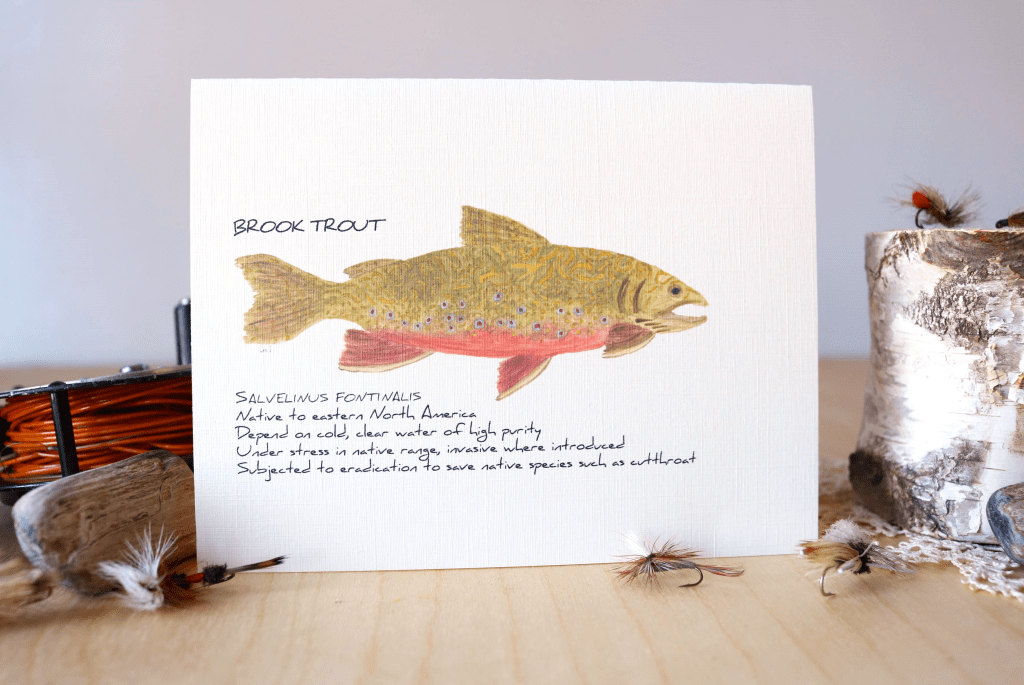
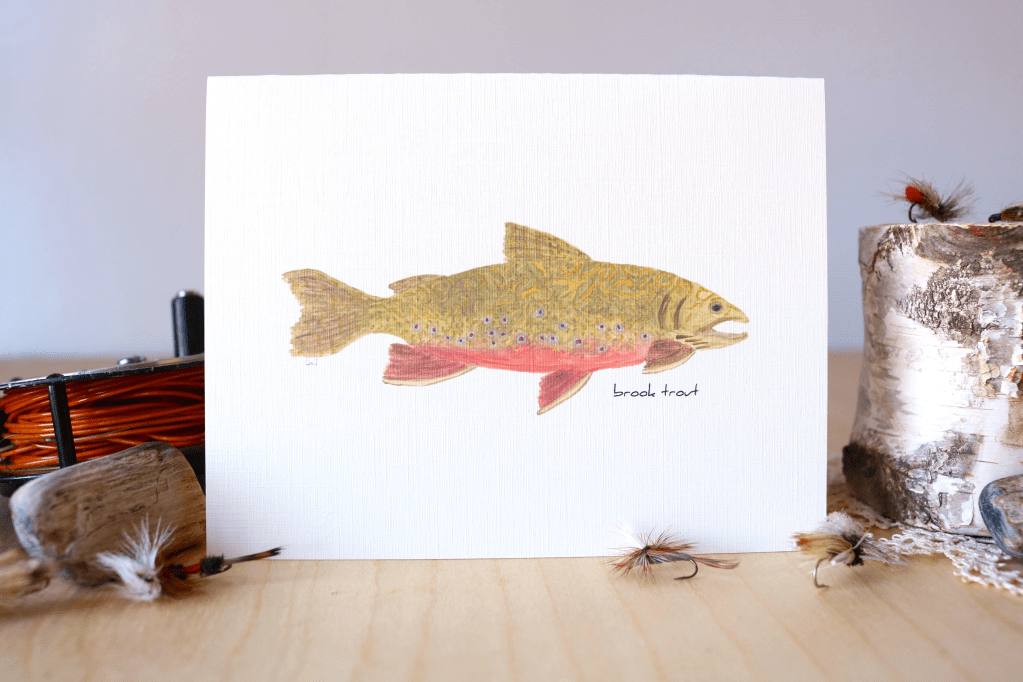
It would seem that brook trout have a bit of an identity crisis. If you live in the eastern United States, where they are under stress, you adore this fish. However, those of us in the mountainous western states don’t have quite so much appreciation. That’s because the brook trout’s ability to flourish is causing populations of native trout to decrease. No matter your level of affection, you can’t help but admit they sport a captivating pattern of yellow and red splotches on their sides. Their squiggly spots made them quite enjoyable for me to paint.

Brown Trout

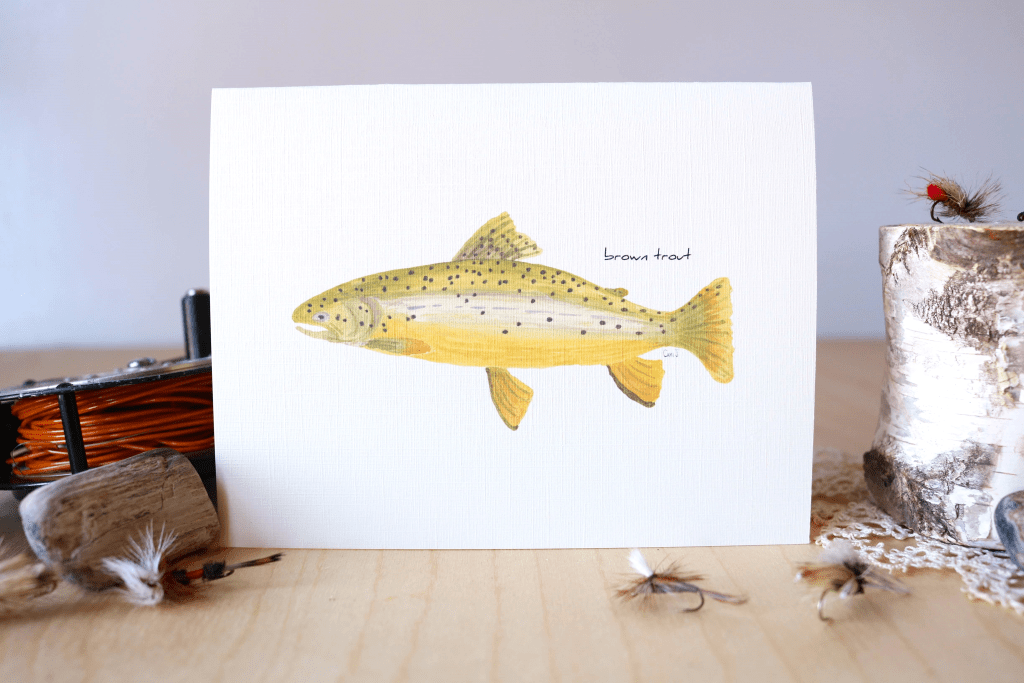
Finally the brown trout, the most spotted of all the trout I painted. I love the coloring of this beauty, with its buttery tan lower abdomen that morphs into brown higher up on the body. Brown trout originated in Europe and were transplanted to the United States in the 1880s. These behemoths run an average length of 12 to 20 inches. Although they can be found in tributaries, they prefer to hang out in bigger waters. They are wily and can be elusive, making them “the one to catch” for many anglers.

The Trout Art Collection
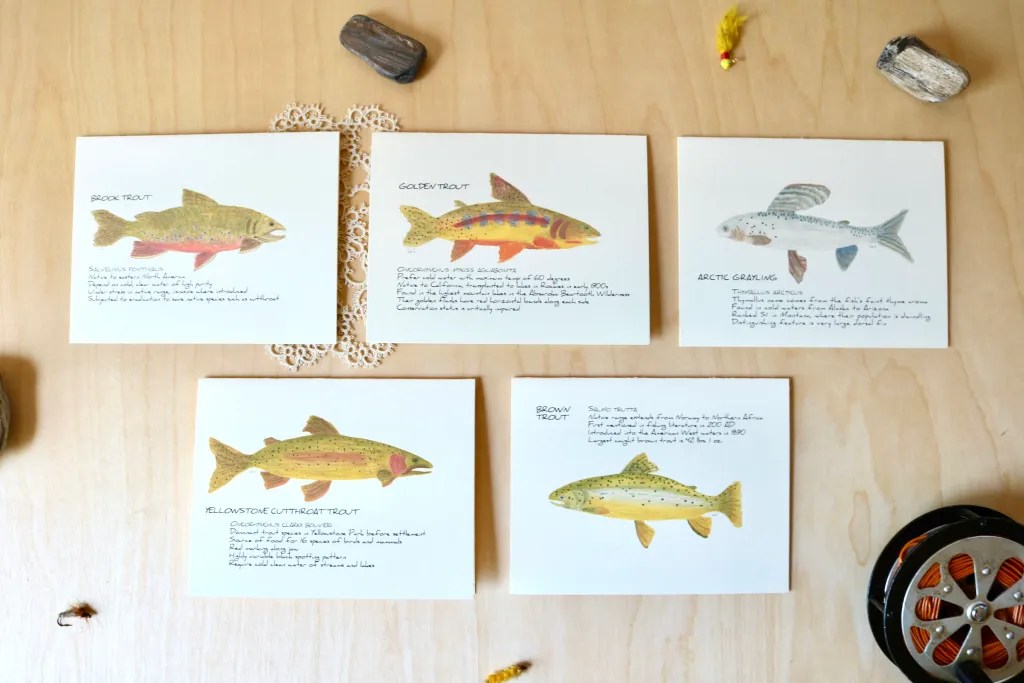
It was pure joy to paint this trout series. Not only do the trout themselves hold a sacred place in heart, but their habitats do as well. Some of my favorite places in the world are the clear waters of the rivers and lakes they call home. The sound of the rushing stream, the smell of lodgepole pine, the flicker of a trout flipping its tail fin above the water during the evening rise…This is where my soul lingered as I painted these beauties. And like a mantra echoing in the recesses of my soul, I heard the voice of my father saying, “Now don’t drop that whiskey bottle!”

Posted on Leave a comment

Cooking with a Hint of Sweetness: Gourmet Fruit Art Collection

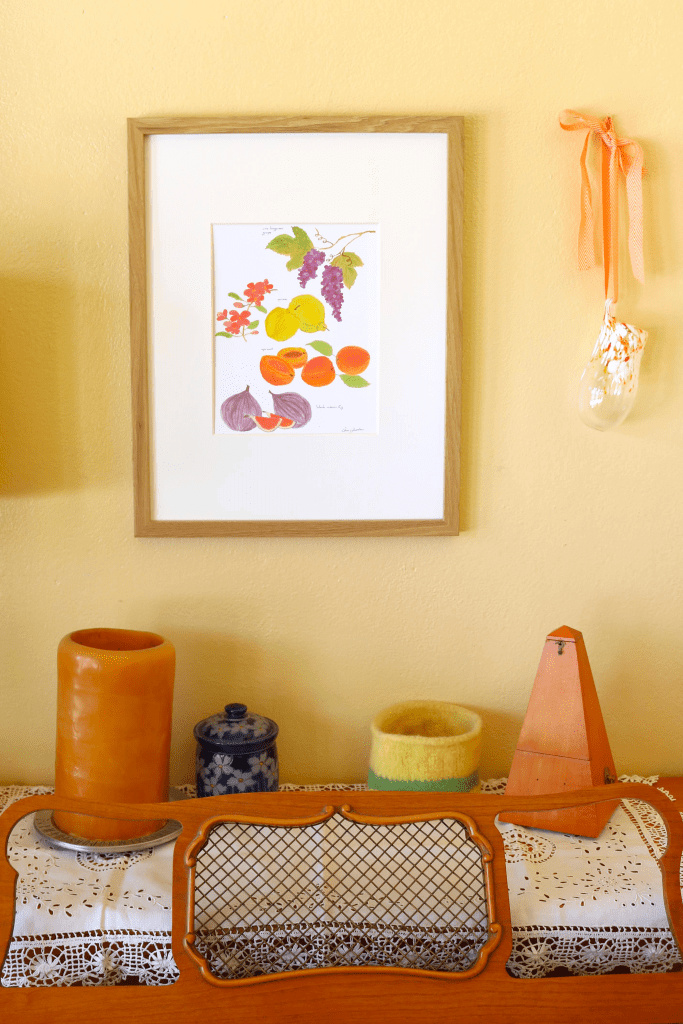
Figs, apricots, quince, persimmons, and grapes; these gourmet fruit varieties stem from such unique lineages but possess similar captivating applications in the kitchen.

These are a collection of gourmet fruit ingredients I use time and again in entertaining because they transform the level of a dish. Their panache is unparalleled. I use them in appetizers as a sweet counter to savory meats and cheeses. They’re delightful as a part of the main course in braises, tagines, or roasts.

Then finally, they act as a sweet capstone in tarts, galettes, cakes, or toppings. These fruits have the power to change whatever you are serving from ordinary to special. They lend an earthy classiness to your meal.

Apricot

When I was a little girl, my mom would regularly make apricot jam. I grew to adore this jam on a piece of freshly toasted English muffin. I still taste the apricot flavor in my memories. Now, as an adult, I return to apricots as often as I can. They often find their way into braises, such as a chicken, white wine, and wild mushroom braise atop potatoes or rice. Apricots perfectly balance the savory hues and help create well-developed sauce. 

Quince

Likewise, quinces have played a role in my culinary journey. I was first introduced to this fruit when I lived in the French province of Alsace. The mild climate of eastern France is perfect for quince trees to thrive. Harvested in the late fall, they turn into pastes and butters, and they’re baked into cakes, tarts, and galettes. Quince also adds a refreshing sweetness when sliced and roasted with lamb in a tagine. 

As an added bonus, if you happen to live where quince trees grow, you get the privilege of enjoying their spring blossoms, which are the most electric color of pink coral possible. I swoon at the far-fetched idea of having a quince tree in my yard.

Fig

Figs seem like an almost mystical fruit to me. I’m always experimenting with interesting ways to use them. My most recent find was a recipe in Dorie Greenspan’s Around My French Table cookbook: 

I take fresh, homemade pasta (trust me, it’s worth it to make the pasta for this recipe from scratch), and toss it with browned butter, figs, and pistachios, among other things. What stands out to me in this recipe is the crunchy je ne sais quoi nature of those tiny fig seeds. It’s worth buying the cookbook just for this recipe! 

As with quinces and apricots, making a fig paste, or a very concentrated jam, to serve with cheeses and meats proves a sweet counter to the more savory hors d’oeuvres items. These intensely flavored fig pastes are also amazing with a slice of buttery pound cake, in the filling of a crepe along with some Brie, or melted into a marinade for grilled meat; the list could go on and on. Pretty soon I’ll be putting it on my toast. Wait a minute, that’s actually a great idea…

Persimmon

Persimmons meet and exceed the same thresholds as the other fruits in this collection. They can have both sweet and savory applications. When included in your menu, they elevate the playing field. The color and shape of persimmons are almost cartoonist. They make me smile. As with many fruits, the wild ones have the most interesting flavor. When cooked into pudding and butters, persimmons’ bright flavor adds a complicated sweetness that’s hard to pin down but delightful to the palate.

Red Grape

I have left my oldest friend for last, the red grape. For most of us, grapes have woven their way in and out of our menus our whole lives. They’re an easy and nutritious fruit that your mom packed in your lunchbox during elementary school. For me grapes showed up in their wild form first. Wild grapes grow all over Minnesota. They spread by the birds, so they can be found along many public fencelines or climbing up poles or trees. These aren’t the sweet grapes from the grocery store. Rather they are tiny explosions of richness in your mouth. They really shine when made into jam, juices, or pastes, which I grew up eating. The best grocery store jam pales in comparison. 

Moving into adulthood, the first savory use for grapes was a chicken salad recipe from Lukins and Rosso’s original Silver Palate cookbook. Here red grapes serve as a delightful surprise up against the slivers of chicken, celery, and onion. A chicken, grape, and white wine braise over curried rice was my next iteration.

The grape I chose to paint for this newest collection caught my fancy because of its charming story. A vine was discovered winding its way up and around an old oak tree on Longanesi’s property in the Emilia Romagna region of Italy. They took cuttings and planted them in their vineyard. The grapes grew and thrived, and today roughly 500 acres of this grape variety is grown. Many Uva Longanesi varietal wines are now made from this grape.   

The Gourmet Fruit Art Collection

I painted the gourmet fruit varieties in this culinary art series because each lies close to my heart with its connection to great cooking. They are delicious in countless meals, and with them you can create complexly flavored food year round.

This art collection honors just a few of the sweet and beautiful ingredients in our repertoire. It’s my wish that you enjoy these fruits on greeting cards and fine art prints as much as you would enjoy them in your cooking.