Posted on 1 Comment

The Invisible Glory of Dirt

What Happened to All the Dirt?

The new house we were moving into was in a section of town that was being carved out of native prairie. The neighborhood was located on a large (mostly) limestone plateau that looked out over the city below. I was excited. It was a large lot for a new subdivision. It was flat, and we had big plans for all that space. The final thing to happen before we moved in was for the contractor to grade the yard and lay down the sod. We had reserved a chunk in the very back for what would become our vegetable and flower garden. The rest they scraped and sodded. They said they had to do it so that we’d have a nice flat lawn. Our plan included flower beds surrounding the house and a stone patio with beds around that as well.

We moved in the fall, so when spring rolled around, we were ready, with shovels in hand, to create our flower beds. We pierced the ground with our shovels only to discover rock and clay hiding just below the surface. This was not the dark, rich soil we had envisioned. Our plants would not grow in this! Then we remembered; the native topsoil, teaming with living microorganisms, that was there originally had been scrapped away by those developing our neighborhood and by our builder as he leveled our lot.

Developing Good Dirt

At the time, we didn’t know a lot about dirt, but we knew enough to know the bulbs, flowering bushes, and perennials we had planned to put there weren’t going to thrive in rocky, clay soil.

So we decided to go about changing our dirt. First we carved the outlines of our beds. Next we removed all the dirt down about two feet. Truckloads of good, black dirt, compost, manure, and sand were dumped in tall piles on the end our driveway. We mixed these together, including some of the original dirt. Then we refilled all of our soon-to-be flowerbeds and vegetable garden with this new mixture.

All this work paid off in spades. We were rewarded with abundance in flowers, vegetables, and fruits. Though we didn’t know why exactly our plants thrived in healthy dirt, we saw the delicious and beautiful results.

The Microscopic World of Soil

Only relatively recently has the scientific community begun to put together all the many parts of what goes on under the ground in our soil. Scientists have historically thought that soil was made up of clay, sand, silt, and dead plant material. They didn’t know that in healthy soil the organic matter is almost completely made up of living and dead microbes. They are just beginning to understand how critical these microbes are to soil health and thus to plant health, and because we eat plants or eat animals that eat plants, to people health.

Life in the soil is mostly microscopic. What cannot be seen has not been understood. Now thanks to advances in scientific research, we are beginning to get a grasp on the role of bacteria, viruses, fungi, protists, archea, etc. The vast majority of these are extremely beneficial and essential to plant health.

Plant roots and the microorganisms that surround them have a mutually beneficial relationship. In a myriad of ways, this symbiosis makes our plants healthier. They have bigger root systems, and they have a much higher immunity to diseases. It has been shown they not only produce more fruits and vegetables, but those yields contain higher amounts of nutrients compared to plants grown in poor soil.

Creating Healthy Dirt

This begs the question, how can we get the healthiest soil possible? Of course, that is what we all want, right? Our solution over the past century has been to fertilize. If plants and soil need nitrogen, potassium, and phosphorus, let’s just give it to them. And we have … in abundance. The problem is that putting these minerals on the soil does not create healthy, living soil the plants need. Yes, the plants can grow large, but they are not growing better. They do not have the immunity to disease. They are not able to take advantage of the millions of organisms in the soil that make it possible for them to absorb necessary nutrients. Healthy soil absorbs and holds onto moisture better, making for more water for the plants as well as less runoff.

I liken it to the old adage, “Give a man a fish and he eats for a day. Teach him to fish and he eats for a lifetime.” Creating good soil is providing plants with the all the tools at nature’s disposal to flourish.

Enriching Your Soil

Healthy soil can be created almost anywhere by thinking through what you have at your disposal and faithfully applying it to your yard and garden.

It’s not unlike a recipe in your kitchen. Laying down compost and dried leaves in the fall (especially oak) grass clippings, wood mulch, compost tea, aged manure, even things like coffee grounds or fish emulsion. The more you add, the more food there is for the microorganisms to eat. This healthy soil makes for plants that can better fight off pests and diseases while bearing more produce.

As the saying goes, “We are what we eat.” And as it turns out, so are plants.

Spring is the perfect time to start creating great soil. Your landscapes are fairly bare, making it much easier to work with your soil. I would recommend just laying everything on the top of the ground. Don’t work it in. Trust me, the microbes will know where to find the food they need. It turns out the underground is like a microscopic city with infrastructure, pathways, and means of communication all set up. When we till, we destroy these established networks. Then it takes time to set it all back up again.

Soil experts and farmers around the world are only beginning to understand this and put into practice “no till” methods of farming. Farmers that practice just this one thing are seeing greater crops yields (as well as lower expenses because they are not spending the time and money it takes to till).

Try this: put away your chemicals, and instead feed your soil. Let’s see where this takes your yard and garden.
Soil is one of earth’s greatest assets, so let’s do what we can to make it better. The funny thing is, when we improve it, it will improve us.

Posted on 2 Comments

The Many Uses of Ginger Root

A Ginger Collection

Who knew when we were young and sipping on a can of ginger ale that this root would become such a large part of our culture and diet?

As one of Scandinavian heritage, I was first exposed to the spice in the form of my Aunt Joyce’s incredibly crisp ginger snaps and my family’s Thanksgiving pumpkin pie. It was an ingredient people used to bake things. I didn’t give it much thought or find it particularly remarkable.

The root morphed its way into my life like the shoe collection taking over my closet. It slowly expanded, almost unnoticed, into more and more of the dishes I made. Now I eat it in something almost every day.

I really started playing around with the ingredient back in the early 90s. I was developing an Asian grilled pizza recipe, and I wanted a fresh kick component to the sauce. In went grated ginger root. It was the perfect je ne sais quoi I was looking for.

Cooking with Ginger

When I started exploring the world of Indian dishes, ginger was in all of them.

Next it landed in my Thai Curried Noodle Soup, and then I started pickling it to serve alongside Vietnamese dishes. I love serving it pickled with sushi. Now it shows up in my homemade rosemary ginger tea or in the lemon ginger kombucha that the family seems to devour around my house.

Fresh or frozen root is not the only way to go. My latest obsession is candied ginger, which I tuck into impossibly tender scones, buttery pound cake, and cookies. You can also sprinkle on ice cream or pancakes; the list could go on and on.

Ginger is a grass which grows in tropical regions. It produces a pretty yellow flower and is often used as a part of landscaping in warm climates. The root of the grass is called a rhizome. It reminds me of an Iris bulb, which is also a rhizome. The various Asian cultures started incorporating ginger into their cooking and diet thousands of years ago. They brew it in tea or use it as a spicy addition to hot and cold dishes alike when a little kick is wanted. They use it pickled, candied, dried and ground into a powder, and of course fresh.

Thai Curry Noodle Soup with rice noodles, ginger, curry, chicken, mango, red onion, cilantro, lime, and green onions.

Facets of the Root

There is much debate between Eastern and Western medicines as to ginger’s specific health benefits. While the experts battle this out, we can all sit back and enjoy this wonderful, edible rhizome, knowing at the very least, it is okay for you health-wise, and at the very best, it aids it relieving a half a dozen or more illnesses.

I would be remiss if I didn’t end by mentioning ginger beer, the essential ingredient in the ever-popular drink, a Moscow mule. Served in an icy cooper mug, this refreshing drink is the perfect thirst quencher on a hot summer evening.

On this cool and gratifying note, start incorporating this versatile and delicious spice into your recipes. I always have a fresh root in my vegetable drawer, a frozen root in my freezer, and the powdered or candied spice in my cupboard. Just like shoes, you can never have too much.

IMG_4671 (2)

Posted on 2 Comments

What Should You Plant First?

As early spring begins, I am starting to think about what seeds I want to plant in my garden beds for the first planting of the season. You are probably thinking it is too early to start thinking about one’s summer vegetable garden. However, this is the ideal time to plan and purchase those first seeds. Some of the most interesting varieties of seeds sell out fairly quickly, so once you know what you’re hoping to plant, get the seeds while they are still available.

A number of types of vegetables thrive in the cool, wet days of spring. Many plants need this weather to really do well.  I take the temperature of my garden soil, and when it’s around 50 degrees, it is time to plant.

The vegetables I am planting this early spring include:

Radishes

Last year I planted “D’Avignon,” the traditional French breakfast radish. This year I am trying two very different varieties. Early Scarlet Globe is a very dependable radish. It is ready in 20 to 28 days, so we can enjoy eating them early. And because I like to try new things, I am planting Purple Plum, a purple radish with a great flavor. A second new venture for me is Watermelon, a white radish with a stunning, dark pink center. This variety shines in the very early spring. It lends itself well to pickling, so I may play around with doing that later this spring.

Sweet Peas

I’m going all out on three completely new varieties of snap or snow peas this year. I chose two from Seed Savers Exchange (an organization that preserves historic and heritage varieties of seeds, saving them and also reproducing some for sale) The first pea variety is the Amish Snap. This is a pea that was been grown by the Amish community long before our present varieties existed. It vines tall and vigorous. The other choice from Seed Savers is Swenson Swedish. This heirloom variety was brought to Minnesota from Sweden in 1876. It is sweet, flavorful, and productive.

Another seed company that is doing great work in preserving rare and heirloom varieties is Baker Creek Heirloom Seeds out of Missouri. I chose my third variety of sweet pea from them. This hypertendril snap pea produces more tendrils instead of some of its leaves. These, along with the beautiful pink blossoms, are deliciously edible and taste just like peas.

Lettuce

With lettuce I like to plant several kinds. I start early in the spring and reseed several times throughout the summer so I have a constant supply. I am planting two mixes, a Mesclun blend that contains some peppery lettuce varieties and a lettuce blend. All the Romaine lettuces are wonderful, so this year I am planting Red Romaine. A large variety, it is both a colorful and tasty addition to salads. Lastly, I am planting an English variety Craquerelle du Midi, sweet and crisp with dark green curled leaves. Its slowness to bolt in the heat of summer is another desired trait.

Carrots

I am starting with two varieties of carrots this year. One is an old faithful I have used for years, Scarlet Nantes. It is sweet, tender, and a proven producer. The other is a red carrot called Dragon. I love the beauty of red carrots. This tasty variety is red on the outside and orange in the center.

Arugula

The arugula I planted last year will come up again this year. I am also, however, planting a bitey variety that will nicely complement what is already out in my garden. Wasabi arugula has the spicy taste of wasabi, a very helpful addition to Asian dishes. It is more tolerant of swings in weather than other varieties. I’ll also be picking the edible blossoms to throw into salads or pasta dishes.

Kale

Lacianto Dinosaur is my kale choice this time around. This Tuscan variety dates back to at least the early 1800s. It is beautiful with dark green, deeply savoyed leaves. It is quite flavorful, making for a fabulous addition to soups and stews. This grouping of vegetables prefers the cool wetness of spring. At least a month before the final frost, I am out cleaning my garden beds and burying the these little nuggets in the ground. They don’t mind a little snow, frost, and cold spring rainstorms. They get to work, germinating and soon popping their little heads through the surface of the earth. The unsuspecting surprise of eating sweet lettuces or crunchy peas in the middle of May when most of us are just starting to put in our summer vegetables is refreshing indeed.

These early vegetables in an otherwise dormant space is like spring opening her door and saying, “Welcome to my home.” And, in fact, welcome it is!

Posted on 1 Comment

Sweet Mangoes – A Fruit of My Youth

Malagasy Mangoes

When I was a girl, my family lived on the island of Madagascar. Often my mom would ask me to fetch something from the yard. “Cami, would you go get me some mangoes?” I would take my wagon out to the cluster of mango trees down by the river. It was pure heaven to have the grove of mango, avocado, leches, banana, and citrus trees so close at hand. I would soon return with a wagon-full of sweet mangoes. This it when my love of this fruit first began.

When they were in season, we could never get too many mangoes. We peeled them and ate them plain, biting the juicy meat off the center seed. It was a messy business with all that sweet elixir running down our arms and dripping off our elbows. My mom would remind me, “Don’t get that juice on your clothes. Mango stains!”

The Fruit’s History

IMG_6606 (2)

Hailing originally from South Asia about 5,000 years ago, mangoes are now one of the most popular fruits worldwide. Nutritionally speaking, they are good sources of vitamins, minerals, fiber, antioxidants, and phytochemicals, making them very healthy to eat.

Mangoes play a central role in the cuisines of many tropical cultures. They are cultivated all over the world: Asia, Africa, southern Spain, South and Central America, the southern United States, Hawaii, and Australia, thus completing the global circuit.

The sweet meat is used in as many ways as the cuisines it inhabits. It can become aam panna or mango lassi, both popular beverages throughout Asia. In India it becomes a part of the main entrée as an ingredient in dahl, a sauce served over rice. Furthermore, mangoes can be pickled, dried, juiced, grilled, added to salads, and mashed. Or even eaten plain.

Mangoes in Your Kitchen

With modern agricultural advancements, different varieties of mangoes are now available almost year round. I think of them, however, as a late winter/early spring fruit. Currently there are two varieties available in our grocery stores, the creamy, sweet, golden Alphonso or “honey” mango and the more prevalent green/ruby-colored Tommy Atkins cultivar. Both types are delicious. They do, however, have slightly different flavors from each other.

IMG_6672 (2)
A delightful curry quinoa salad with mangoes, green onions, cilantro, and almonds.

I tend to use Alphonsos in a way that lets their sweet, smooth nature shine. I cut them into large slices and serve them in a way that they can stand alone. The Tommy Atkins mangoes hold up very well in grain salads or are used green in more of a Thai or Vietnamese-type dish. Strips of under-ripe mango simply tossed with lime juice, green or red onions, diced jalapeños, and a sprinkling of sea salt is a perfect example of a dish that rises above the sum of its parts.

The versatile, delicious mango is in season right now. Let us help you discover this wonderful fruit. Together we can explore mangoes in our myriad of classes that include them. In the meantime, when you are in the produce section, pick up some mangoes. Peel them, bite into the sweet meat, and discover the many ways you can add this gem into your meals. They are, oh, so worth it!

IMG_6593 (2).JPG

Posted on Leave a comment

Late Winter Pruning

The Great Storm

A few years ago, we had the oddest, and as it turned out, most disastrous, April ice storm. First it rained like the dickens for a day. Then the temperature dropped, and the rain changed to heavy, wet snow of which we proceeded to get about a foot. When it was all said and done, our city looked like a war zone.

Massive branches, limbs, and even whole trees were strewn everywhere. Streets were impassable, city parks a disaster. Our town came to a complete standstill. Not only could people not actually drive anywhere. It was not safe to do so because ice and snow-laden limbs continued to fall, even after the storm had moved on. Our city called on tree trimming crews from all over the upper Midwest to help clean up and restore order. This ended up taking weeks.

Lessons Learned

A few months later, I was in a lecture listening to Dr. John Ball, South Dakota’s very own brilliant and always entertaining Department of Agriculture forest health specialist and SDSU professor of agronomy. As he discussed the storm, he laid out for us how a properly pruned tree or bush makes for a healthy tree or bush. This health better enables the trees to withstand that which nature throws against it.

Later as we walked through the grounds that surrounded the lecture hall, Dr. Ball pointed out dozens of examples of negligent pruning. Trees that were allowed to be misshapen, creating rotten junctions between limb and trunk, were susceptible to breaking apart in the next big wind or ice storm. And then there were open wounds where branches had rubbed together. Said open wounds are places where harmful insects and diseases can enter the tree, set up shop, and start wreaking havoc.

Dr. Ball taught me the importance of pruning your trees. Start creating the correct shape when the tree is young and the branches are small, so the healing will be quick. And do it during the right time of year.

When is the Right Time to Prune?

Early March, or “late dormant season, is the best for most pruning.” So advises the University of Minnesota Extension tree specialists. There are several reasons for this, one of which is that the tree will soon wake up for spring, allowing the tree to heal itself much faster. Another reason is that the harmful insects are not yet awake and moving around, enabling the trees and bushes to heal before they are. A third reason is without the leaves to block one’s view of the tree’s structure, clearer decisions can be made about which branches to take and which to leave.

So, who should be doing all this pruning? I am of the full belief that the trimming of medium and large trees should be done by a certified arborist. They have both the expertise and equipment to do this job safely and properly. That said, bushes, shrubs, and small trees can all be done by you, the homeowner. Most state extension offices have very helpful tutorials on how each plant needs to be trimmed. I am also available to guide you through this process.

Caring for our Trees

IMG_0517 (2).jpg
An example of an obvious branch to prune on a young apple tree.

Trees, bushes, and shrubs are anchors in our properties. They can be a large financial investment, and once planted they last decades. We carefully choose. Are they a fruit tree or a shade tree? Do we want to use their branches for a swing or a birdhouse? Whatever their purpose, they offer a pivotal contribution to creating a beautiful landscape for our homes. They give us so much, and they deserve to be cared for.

So get outside and get your trees and bushes all pruned. This summer on a sweltering August afternoon, when you are enjoying the cool shade of your beautifully trimmed oak tree or admiring your rose bush in full bloom, you will thank yourself!

Posted on 2 Comments

Bring Your Own Knives

Learning from a Master

Years ago I worked with a chef named Hosch. He was an extremely talented chef, very quirky, and one of the funniest people I have ever met. I quickly came to understand the meaning of a belly-laugh and laughing until you cry. He kept his coworkers constantly entertained, all the while imbuing us with nuggets of culinary wisdom. His knowledge was vast, standards clear and high. Learning from Hosch was like running through a warm, summer rain shower; delightful.

One year I invited Hosch and his family to join my family for Thanksgiving. Can I just insert here that it is a bit intimidating inviting a chef like him over for a meal? I still remember opening the front door to greet them. There stood Hosch with a rolled bundle in his arms. When he unrolled this bundle in my kitchen, there lay all of his favorite knives.

“I don’t go anywhere without my own knives,” he informed me. This has been a lesson learned for me. Invest in a few good quality knives and sharpen them correctly (Trust me, I have wrecked a couple of very nice knives from sharpening them at the wrong angle). When I first saw Hosch standing at my front door with his own knives, I thought this was both ridiculous and funny. Now, however, I do the same thing.

The Best Knife

If you are going to be doing a lot of chopping, having a sharp knife not only speeds up your work considerably, but it is also safer. A dull knife can be a dangerous thing. Also using a wide blade for chopping is much healthier on your hands and wrists.

IMG_4151 (2)How do I pick my favorite knife? It is a little like picking a favorite flower. I cannot. Each knife has its own uses. A bread knife is perfect for neatly slicing those crusty Breadico baguettes. A paring knife is the perfect size for getting garlic cloves ready to mince. The six inch and eight inch chef knives are what I use for chopping.

That fancy chef knife with holes down the blade is a vegetable knife, and the holes serve to release the suction that can build up when chopping large, wet vegetables. And then there is that monster knife. My friend Tami picked that up on a trip to China. It’s just the right choice for making quick work of cutting up a large roast or anytime you need to cut through bone. The Chinese use this type of knife for cutting through whole, large fish to slice them into steaks.

My takeaways from Hosch: Invest in the right knives for the type of cutting and chopping you need to do, keep them sharp, bring them with you at all times, and infuse laughter everywhere.

Posted on Leave a comment

Microgreens in the Winter

Why Microgreens?

I am thinking about them right now in the colder months because they grow so easily inside. Microgreens are defined as the edible, immature greens that are harvested about two weeks after germination. Little pea shoots, the tiny leaves and stems from broccoli, kale, amaranth, red cabbage, and sunflowers; these are a few of the more common types of microgreens.

The Uses for Microgreens

They can be used in a myriad of ways including as a confetti topping on an open-faced sandwich or pizza, tossed as a salad, or as a refreshing accompaniment to any braise. I love including them in cold quinoa or rice salads because the raw crunch adds not only depth but also beauty to the dish. Try them in a wrap or a soup. Mix them into your breakfast smoothie. They are a tasty reminder of summer.

IMG_3852 (2)

Research done by the USDA has shown that microgreens are many times more concentrated in a wide variety of nutrients than their adult counterparts. Research is still being done on these jewels that pack so much nutritional punch, but in the meantime, eat and enjoy knowing you are eating something good for your health.

Growing your Own Greens

I buy my microgreens at out local co-op store. I love that they are locally grown. However, if you would like to grow your own, it is very easy. Any disposable tray or pie plate will work. Poke a few holes in the bottom for drainage, fill it with moistened potting soil, and sprinkle your chosen seeds per instructions on their packets. Usually you just barely cover the seeds with more soil. Water the soil by misting it with water a couple times a day. You want to keep the soil moist but not wet. Place the tray in your sunniest window or under grow lights. The plants should get about four hours of sunshine each day.

Next time you are building a turkey, vegetable sandwich, include baby pea sprouts instead of that leaf of romaine. You will love it!

IMG_4031 (2)

Posted on Leave a comment

Salt: The Only Rock We Eat

Salt as Currency

Salt: “a substance so valuable it served as a currency, has influenced the establishment of trade routes and cities, provoked and financed wars, secured empires and inspired revolutions.” So explains author and food historian Mark Kurlansky in his consummate book on the subject, succinctly titled “Salt.”

What explains salt’s culturally critical importance? The answer lies in its ability to not only enhance flavors but more importantly to preserve perishable foods. Before advances in technology, science, and manufacturing, there were few avenues available to keep foods from spoiling. Nations who laid claim to abundant salt deposits flourished, and those who didn’t paid homage.

Enhancing Flavor in Cooking

As fascinating as this rich history is, salt continues to be a staple of the kitchen. What I love best about it is what it does to heighten the flavor of a crisp spring radish or a perfectly ripe tomato. It is a staple to any great kitchen, for it has the ability to bring depth of flavor to countless dishes. I have been known to use some type of salt in every course of a meal. Its value comes to fruition when sprinkling a truffle scented variety on top of creamy Burrata. It then just as easily delights as a dessert capstone of sea salt caramels.

IMG_3484 (2)

My pantry includes salts from around the world. These include pink salt from the Murray River in Australia or the Himalayas. They span grey fleur du sel from the Geurande in France or Wales to delicate white variety from Bali or Maldon. In Spain or Italy, salt makers marry it with peppers or truffles to develop a deep, rich flavor. Or it is smoked with every type of wood smoke imaginable, one of my favorites being Alderwood.

We will travel the world on salt’s back, appreciating it in all its diversity through my full array of cooking classes. Come join the journey!

Posted on Leave a comment

The Ancient Beverage Kombucha

The Rise of Kombucha

It seems kombucha is everywhere. It is available on tap both at my local co-op and a nearby brewery. Dozens of flavors sit on display in our grocery stores. From coffee shops to restaurants, this probiotic tea is the hot, new beverage. It rightly deserves its popularity. This drink simultaneously boasts being refreshing and highly nutritious.

IMG_4703 (2)

Originating in China, kombucha has been made and consumed for centuries. The ingredients, black tea, sugar, healthy bacteria and yeast, and flavorings of your choosing ferment together to produce a fizzy, delicious drink that is teaming with beneficial bacteria called probiotics. The immense value of these probiotics to your gastrointestinal tract and other regions of your body cannot be disregarded. As a culture, we are only recently beginning to appreciate all the healthful advantages that probiotics offer.

Brewing Your Own Kombucha

If you have purchased this fermented drink lately, you have discovered that making this a frequent activity will surely drain your wallet. For this reason as well as because it makes for an enjoyable hobby, I brew my own kombucha. It is fun and tasty to mix ingredients to create custom brews. Some of our favorites are raspberry lime, lemon ginger, and strawberry.

IMG_4755 (2)

Ripe and Roasted offers a class to give you both the tools and the knowledge to successfully start making your own kombucha. We will teach you the process, and you will be given your own SCOBY (the bacterial starter) to get you going.

Kombucha, the ancient drink from centuries ago, is the drink of today, delicious, fresh, rich with healthy probiotics, and easy enough to make in your own home. Let me show you how!

IMG_4822 (2)


Posted on Leave a comment

Garden Planning on a Cold Winter’s Day

Thinking of Spring

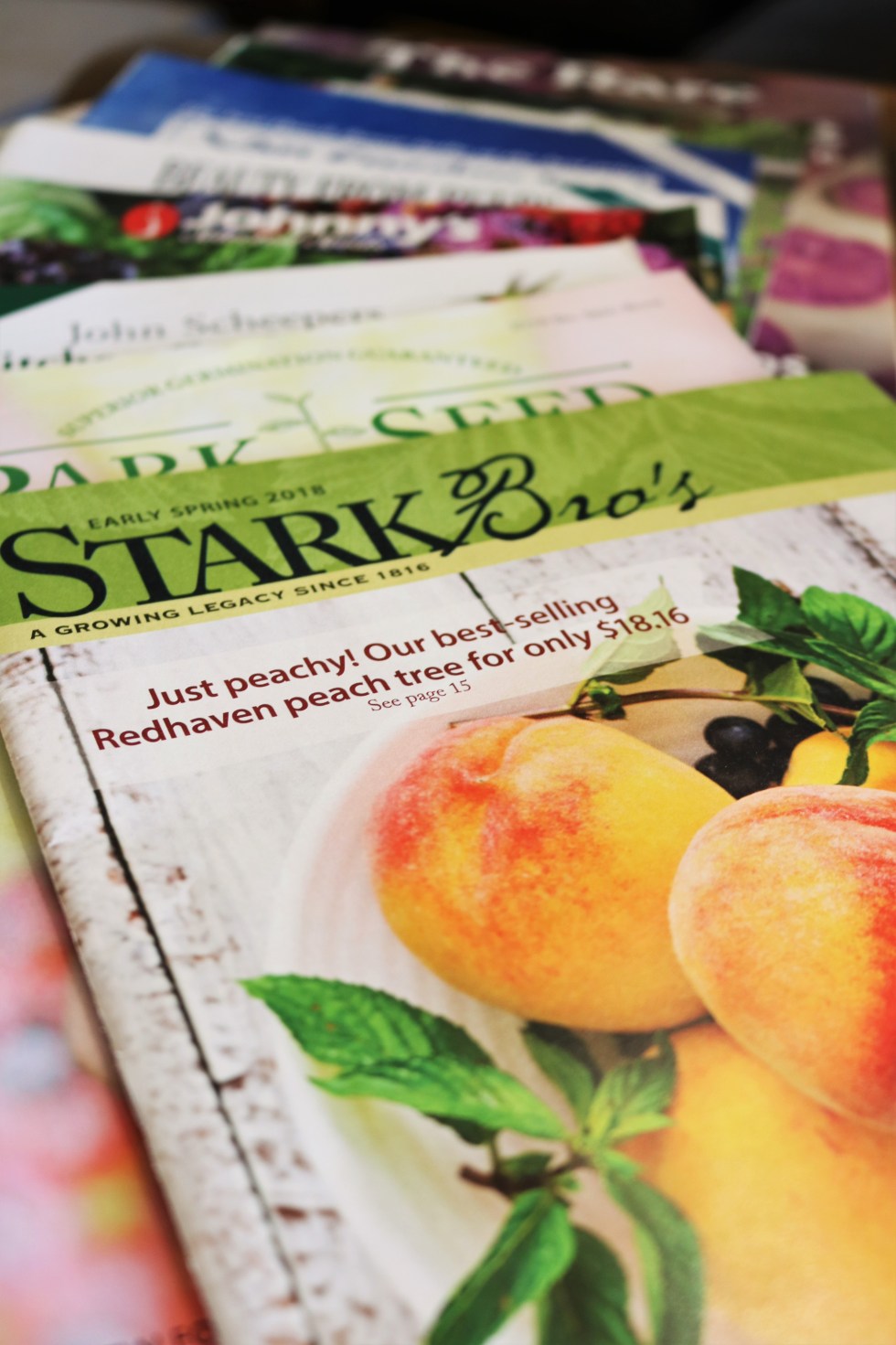
We are in the midst of a blizzard. Mother nature is dumping heavy, wet snow, yet inside my cozy house the growing stack of seed catalogs is whetting my appetite for summer. Johnny’s Selected Seeds has introduced “the first-ever red-colored Chinese cabbage with full-sized heads.” Park Seed has just introduced a bi-colored Echinacea where “yellow petal tips give way to magenta-red on these large, very abundant blooms.” I once again have zone 5 envy as I read about Spark Bros’ new variety of Honeycrisp/Gala apple cross.

My garden is buried, and the branches of my mulberry tree stark. However, I am starting to think, plan, and drool at the promise of a new variety of tomato. The juicy, sweet German Pink variety ensures greater disease resistance and heavier yields.

IMG_4232 (2)

Creating a Garden Plan

These cold, winter months give me time to reflect. What worked last summer? What do I want to do differently? Should I plant more pollinator-friendly plantings? How about more climbing vegetables? I love using my fence for vining peas, beans, cucumbers, and melons. Unfortunately it seems the most interesting seed varieties tend to sell out quickly. For that reason, if there is something I particularly want to try, I need to order soon. These deep, cold temps are essential for many of our native trees and plants, so I do not wish for a warm winter.

The variety of seasons offers a change of pace in our schedules. For me, on this wintry day, I am curled up with a mug of Chai tea with the strains of violin music in the background. A pine-scented candle burns as I nestle up with my garden planning book and seed catalogs.

IMG_4624 (2)

Posted on Leave a comment

Beets

Attributes of the Beet

This deep ruby-colored globe is as delicately flexible to use in your cooking as it is beautiful to behold. The National Garden Bureau has named this “The Year of the Beet.” A justly deserved honor this is!

Beets are an obliging workhorse in the garden. They thrive in a variety of conditions, easily started in spring, after the last frost and not resowed until early August. They prefer slightly acidic soil (pH greater than 6.0) and are fine with a sunny or part-sunny spot.

IMG_4280 (2)
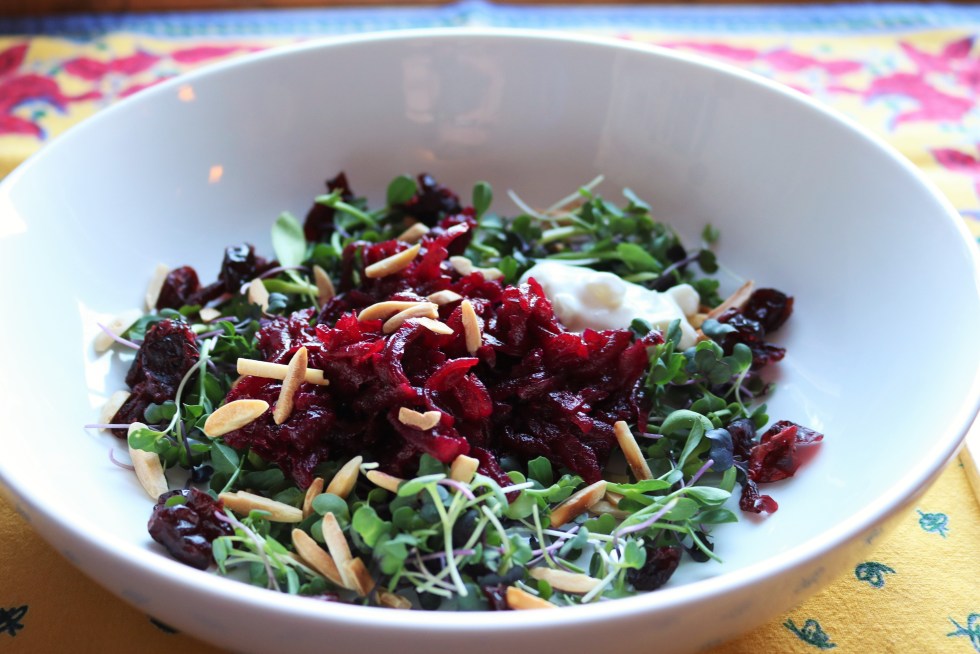
Microgreen salad with shredded beets, toasted almonds, crème fraîche, and dried cranberries in an oil balsamic vinaigrette.

Cooking with Beets

Both the leaves and the root are delicious and packed full of nutrients. I love beets roasted with a little olive oil and sea salt, used as one of the essential ingredients of Russian Borscht stew or boiled then tossed with goat cheese, crisp apple wedges in a toothsome salad. Likewise, the greens contribute well to soups, salads, or even smoothies. Because of their high nutritional value, they’ve taken the health-conscious world by storm. You can buy everything from beet pills or juice to beet powder.

Nothing, however, replaces a good old chunk of roasted beet.

Let’s explore together this versatile vegetable. From its humble beginnings all covered with loamy brown dirt to a rich garnet sliver poking out of a meaty braise, let’s celebrate the year of the beet.

IMG_3828 (2)


Posted on Leave a comment

My Grandmother’s Spoon

Heritage and History

A parallel exists between beauty, heritage, and function. I received this cherished spoon from my grandmother. It was carved in Norway with the Norwegian art form called Rosemaling. This spoon encompasses the mission and goals of Ripe and Roasted. It works to make cooking and gardening into crafts that pass from one generation to the next.

This spoon remains preserved and treasured three generations after its creation. In the same way, the culture of great food does not easily die out over time.

When families raise their children with an appreciation for freshly canned peach jam, pasta sauces simmering on the stove, meat falling off the bone from being tended at the grill all day, scratch whipped cream atop a handmade pie, these delicacies become a part of what makes each day whole. Each child will carry the light of their heritage of cooking to their children. Thus a family creates a continuum of food across the span of time.

IMG_3452 (2)

The Traditions of Our Lives

Rich traditions help to define us culturally, whether they pass down from parents or grandparents or they are something we simply turn into a custom. In our family we prepare foods and dishes that come from the different cultures that compose the patina of our lives. We also hold to traditions that we created many years ago. For example, when my kids were young, we decided that the combination of Chicken Chili and Cinnamon Rolls were a “thing.” So today, if we make Chicken Chili, we are probably going to make Cinnamon Rolls as well.

My grandmother’s beautiful spoon is a symbol of this multi-faceted nature of life. In its great simplicity yet masterfully carved splendor,  it represents the way food, lovingly and skillfully made, can unite family or friends in one moment as well as in all the moments to the end of time.