Posted on Leave a comment

Tokens of Christmas Warmth

Spoon Cookies

The night is waning; dawn has not yet arrived. Pats of unsalted butter melt in the saucepan. With a silicone scraper, I stir back and forth across the bottom, watching the butter carefully. First the surface bubbles, and then a thick foam forms. Finally, I smell it, the nutty aroma of beurre noisette or brown butter. I quickly transfer the pan to a sink of cold water to stop the cooking. I am in the kitchen making my favorite and most time-consuming Christmas cookie, spoon cookies. 

IMG_4149 (2)
Beurre noisette or brown butter

Spoon cookies are so named for the spoon that forms their shape. It must be an old silver spoon. These ancient beauties have deep bowls, so they work perfectly for filling with cookie dough. This morning, the favored teaspoon came from my Aunt Ada. Its smooth surface aids in helping the pressed cookie easily slide onto the cookie sheet. As I fill, press, and slide the cookie dough, my mind drifts back to memories of the generation that went before mine. They were children of immigrants, their lives steeped in traditions from the old country. These are traditions I have come to cherish, traditions I try to teach to those in my life.

After placing the tray into the oven to bake, I warm raspberry jam on the stove. Once strained, a smear of this jam will serve as a delicious glue between two baked cookies, forming what in the end looks a bit like a little egg. Each Christmas season, I look forward to the complex taste of the nutty beurre noisette against the sweet jam.

Caramels

Next on the agenda are caramels. Creamy and sweet, these are another labor intensive favorite. Between you, me, and the fence post, they have proved a challenge for me to perfect. Each time I make them, I seem to discover another idiosyncrasy of these delicious candies. This year’s batch, while a delicious and rich confection of sugar, butter, and cream, is a touch on the chewy side, which I of course blame on my ancient candy thermometer. 

Yulekage: Christmas Bread

Next up, Yulekage. A favorite Scandinavian spice, cardamom, enlivens this tender sweet Christmas bread. To amp up the flavor, I always freshly grind my cardamom for this recipe. This distinctive spice together with the mix of golden and red raisins and topped with a crest of luscious frosting makes for a festive bread indeed. Thanks to the magnitude of the recipe, eighteen loaves have already left my kitchen to date, and this bread is my go-to baked Christmas gift. 

IMG_4652 (2)

Lefse

I would be remiss if I failed to mention the ubiquitous Norwegian delicacy, lefse. This potato-based flatbread defines December menus in the north country. It has to be paper thin, soft with light brown spots scattered across its surface, and with tiny dots of Russet potatoes. Lefse-making is a two-day affair that should be embarked on just before your kitchen needs a deep cleaning. Trust me, I know whereof I speak…  

Cookies Et Alia

Other gems that might make their appearance in my comestible gifting include my Aunt Joyce’s thin sugary ginger snaps, my brother-in-law Bill’s butter balls, nutmeg-laden Kranse Kake, and crisp, frosted sugar cookies. The list could go on, but the variety and supply of goodies depends on how much the schedule expands in early December.

IMG_4574 (2)

A Modicum of Our Christmas Joy

Why do we go through these tasks in the holiday season? What is the reason we shop and wrap, cook and bake, and assemble trays and tins to pass out to family, friends, and neighbors? Why do we put in the additional effort to make things extra special? The Christmas season is already a busy time of year, yet we add to it by making such effortful goodies to give to others.

IMG_4596 (2)

There are many people in my life who hold a special place. Some are family, some are friends. It just seems that in this unlikeliest of seasons, the coldest, darkest days of winter, when we grace others with an act of kindness, a small array of culinary delights, we offer them a modicum of our joy. We are saying the world is better because of their presence in it. We are saying you are important to me. In giving something of ourselves to others, whether it’s our time, our talents, created gifts, or purchased items, we are telling them they are significant and special. 

I will always get up before dawn or stay up into the wee hours to create tokens of my affection for those I hold dear.  

Posted on 2 Comments

Apples are Autumn

I step outside, and the clear, cool air of autumn greets me. A breeze rustles the leaves above. I look up and catch my breath at the electric orange and red leaves of the sugar maples that dot the neighborhood. My shoes rustle through golden piles of leaves that have blown across the sidewalk. An orchestral cacophony of geese honk overhead as they head off to the south.  

Autumn is a time for closure. We are cleaning up our gardens and yards. Raking and bagging. Harvesting and canning. Tucking our yard in for a long winter’s nap. 

It’s also a time of beginnings. The school year has begun. The sound of marching bands and football games is our background music as we work outside. Our community has sprung back to life with concerts and theater performances filling the schedule once again. Colleges are back in session. Backpack-laden, Patagonia vested students stroll the campuses.    

The Comfort of Apples

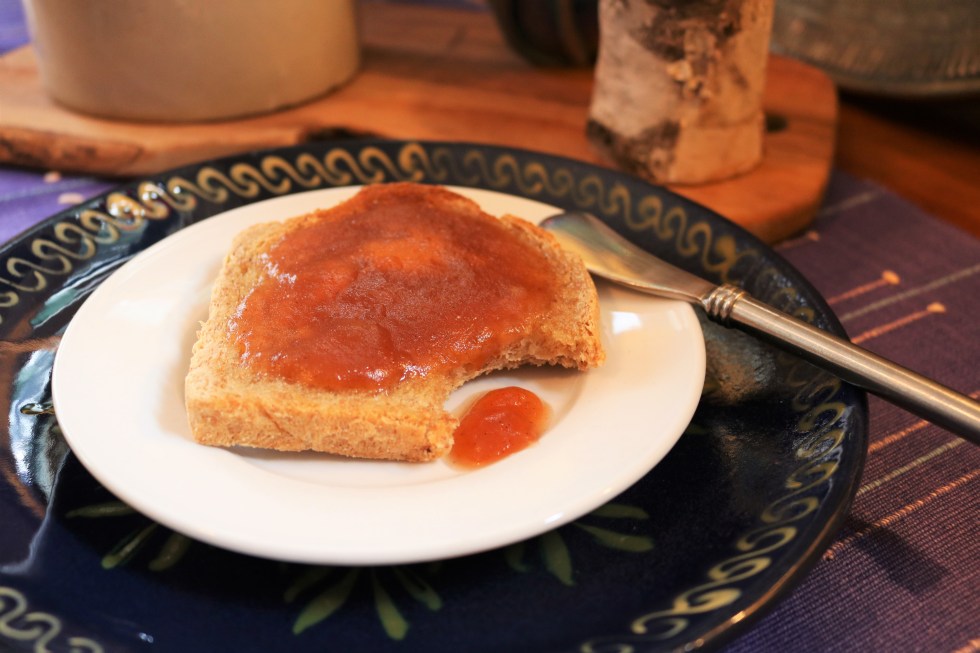
For me, apples are the quintessential definition of fall. Freshly picked from the local orchard, they are crisp and sweet and juicy. In this statement, one could include all things apple. Apple orchards, apple pie, apple butter, applesauce, apple crisp. In fact, the intoxicating aroma of apple butter stewing on the stove replete with cinnamon, cloves, and allspice is something I could live with all year. Waking up each morning to the delightful end product smeared on hot toast brings a perfect start to the day.

IMG_3593 (2)

Apples define home. They are the warp and weft of our autumnal tapestry. We all relate to the saying, “as American as apple pie.” In the north country, the annual family trip to the apple orchard remains a tradition not to be skipped. Getting lost in the corn maze, sipping hot cider, sticky mouths and fingers from finagling with an enormous caramel apple; these are precious memories. 

Apple Cooking Creations

Free form apple tartlets are my go-to dessert at the moment. They are as quick and mindless as they are delicious. I roll out pie crust dough and cut it in large irregular circles. Thin slivers of apples splay in pinwheels in the center of the dough. Over the top I sprinkle a mixture of cinnamon and white sugar, and pats of butter dot the surface. I fold the edges of the dough over in such a way to capture the syrupy juice that develops with baking. When this sweet pleated orb bakes on a hot stone, the bottom is crisp yet flaky, the filling perfectly tender.
IMG_3498 (2)
Freeform apple cinnamon tartlet

From easy to complex, from breakfast to a midnight snack, apples fit the bill. When I want things as simple as can be, I slice then dip the wedges in almond butter. For a special occasion I step up my game and make the iconic French dessert Tarte Tatin. Omelets filled with sauteed apples and cheddar cheese make for a brunch your guests won’t soon forget. Slivers of apples topped with Gorgonzola cheese, local honey, and Durango Hickory Smoked sea salt is an easy hors d’oeuvres that will get you nominated for your neighborhood’s host of the year award.  

This year let us soak in this delightful season. Autumn is not going to be a wedge season. Instead of jumping over the narrow stream called fall, let’s bask in its glorious colors and delicious aromas, creating memories that last. Maple trees as brilliant as a summer sunset will stay etched in my mind throughout the grey light of winter. I am willing time to slow, enjoying every step. When winter arrives, I’ll be refreshed, renewed, and ready for parkas and boots. 

Posted on 1 Comment

A Garlic Obsession

Is it possible to create a new food group? How about an additional nutrient? Maybe it was one of the treasures found in the pyramids of Egypt. Questions fly around such as, “Is it a vegetable or an herb?” Aaahhh, yes, you know I am talking about garlic. In my kitchen there are few things that sneak themselves into my cooking more often than that firm but juicy bulb named garlic.

Cooking with Garlic

I must admit, I have a self-diagnosed and historical obsession with the culinary bulb. As a way of denial, let’s call it a garlic penchant. Garlic has been inching its way more and more into my dishes and menus for several decades now. It started innocently enough back in the mid ‘80s when a little garlic powder sprinkled on my garlic bread was a natural accompaniment to spaghetti sauce with meatballs. When I moved from opening a jar to creating the sauce for the afore-mentioned spaghetti sauce, I realized the value of its culinary pungency. It was uphill (or should I say downhill?) from there.

I seem to regularly make dishes that just happen to have it as an ingredient. Or do I search for dishes that include it? In the back of my mind, I remember, “An apple a day keeps the doctor away.” In my way of thinking, it is “A garlic clove per day…”

IMG_2904 (2).JPG
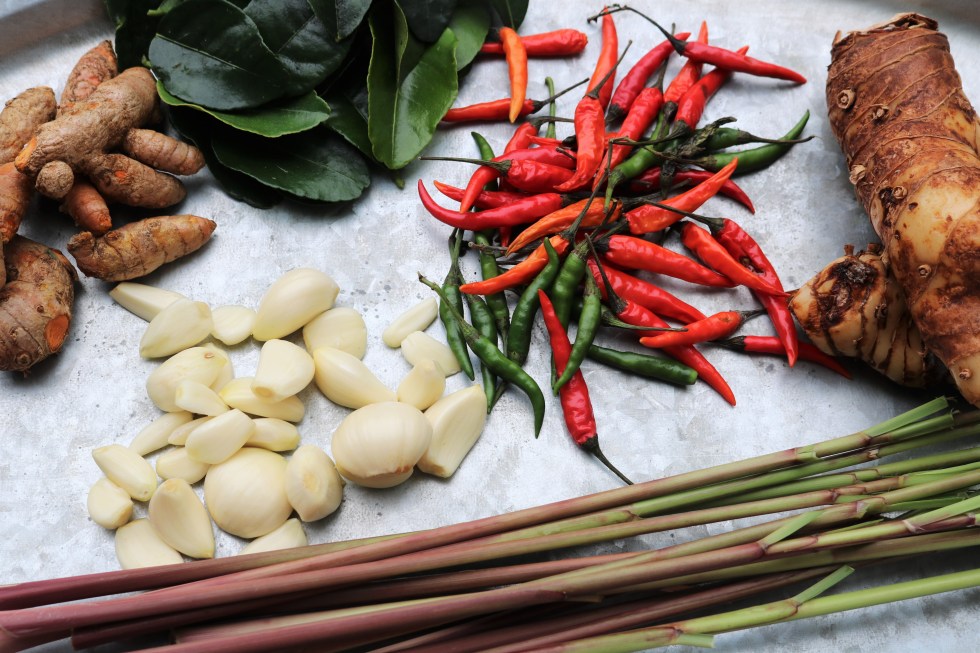
Ingredients for a Cambodian chicken curry featuring scratch lemongrass paste made with garden garlic and lemongrass.

Three square meals of garlic per day, you say? That is possible. Garlic for breakfast? Yep. A necessity in mushroom crepes. Lunch? Of course. The classic French oil and vinegar dressing drizzled on my garden greens by all standards Françoise must contain a minced clove. Then from 4:00 p.m. and onward, it shows up everywhere, working its way into every dish. Garlic is an essential part of the tomato, basil, fresh mozzarella cheese crostini I’m currently addicted to. Whether I make a Mexican dish like pork green chili, a toothsome Tuscan garlic and kale soup, a Creole classic Maque Choix, or Spanish paella, they are all rife with garlic.

IMG_2395 (2).JPG
Garden tomatoes, basil, and garlic with mozzarella over French bread.

Growing Garlic

Garlic has been much more easily consumed in my kitchen than grown in my garden. My issues with growing a successful crop has included forgetting to harvest it in a timely fashion (it needs to come out of the ground once about half of the green tops have dried and turned a sandy color and in mid July), overcrowding the cloves when planting, locating the garlic plot in a sunny location, planting smaller cloves (large cloves=large bulbs the following year).

Well, this year I’ve finally arrived! I successfully grew garlic! Last summer I decided it was time I took the time and effort to buy and plant this beloved vegetable properly. After reading up on the specifics of growing garlic, I shopped around online and ended up ordering from Seed Savers in Decorah, Iowa. I chose the sunniest spot in my garden beds and prepped the soil. Garlic bulbs are heavy feeders, so I added extra compost to the area. In late September I buried them in the ground, layering inches of dried leaves overtop to insulate against our frigid winters. I secured these with battened down cardboard. Lo and behold, they even survived this winter’s Polar Vortex.

About the Bulb

Regarding garlic, it belongs to the onion genus, Allium, which in turn is a part of the lily family. In the garden, it has almost no enemies. I suppose the same odor that, when consumed by you and me, scares away friends and family also keeps away garden pests. As it turns out it is also rather easy to grow (a fact that previously seems to have eluded me). When you give it sun and space, it rewards you first with scapes and then large bulbous heads.

The only catch to success is that you have to plan a year in advance. In the upper Midwest, the bulbs need to go into the ground in the fall nine months before they are harvested. If you have a sunny corner and an interest in growing garlic, it is almost time to plant. You can check your local greenhouses or look at online vendors, bearing in mind that favorite varieties sell out quickly.

Varieties

The garlic that you find in the vegetable section of your grocery store usually is not successful in your garden. There are several reasons for this. First, much of our grocery store garlic comes from China and they treat it with a chemical to prevent it from sprouting. Secondly, most garlic you find in grocery store is soft neck garlic which isn’t hardy north of zone 6. If you live in zone 6 or south and want to try planting these soft-neck varieties, do it in the very early spring while it is still cold out.

The rest of us have to “settle” for the wonderfully interesting hard-neck varieties. These little gems we’re settling for, why do we love them so? I know I’ve mentioned juicy before, but that’s one of their prime descriptors. Juicy and crisp. Very different from your grocery store bulbs that have been sitting around for months before they get to the produce department. And quite honestly, the taste is fresher. Something is delicious about them because they are disappearing out of my kitchen faster than I can say “I am crazy for roasted garlic soup.”

Health Benefits

I know you are asking, is garlic actually healthy for me to eat? There has and continues to be a great deal of research around this bulb and its health benefits. What the holistic community has been touting for millennia the modern scientific community is working hard to confirm. From acting as an antimicrobial to helping to improve lipid profiles to aiding in the prevention of some types of cancer, more of garlic’s attributes are being discovered or confirmed every year.

This really is a “which came first, the chicken or the egg?” situation. Do we love the ethnic foods from every continent because they contain our beloved garlic, or is it because of our preoccupation with this crisp and flavorful bulb that we snatch up all available fresh heads at the local farmers market to work into our evening menu?

Does it matter? I say go forth. Indulge. And if you can’t convince your friends and family to join you in your garlic-feeding frenzy, make sure you have a stash of breath mints handy.

Posted on Leave a comment

Lettuce: The Shoulder Season Crop

My garden is planted. The carrots, beets, and kale are poking through the ground, the strawberries still little green orbs. Tiny flowers adorn the tomatoes and peppers in preparation for their future bounty. The rhubarb is mostly finished, having been transformed into many toothsome desserts. Alas, as far as gardens go, the middle of June is known as “shoulder season.” We are waiting, waiting for the vegetables we have planted to be laden with their bounty. Yet something is ready to be picked and eaten in all its tender beauty, lettuce.

A Time for Lettuce

My garden is bountiful with a host of lettuces. Purple and red varieties, lettuce with red speckles, lettuce with curly edges, and of course, green lettuce. These colorful leaves grace our gardens and plates.

This green loves to germinate and grow in the cool, wet weather of spring and early summer. In fact, it has a hard time germinating in the heat of midsummer. In the early spring and late fall, however, it goes to town.

The ground was barely free of snow when I planted the first seeds this spring. I’ll do this same thing again when the crisp days of fall are on the horizon. Planting in a sunny spot or one that gets a bit of afternoon sunshine will ensure that the plants quickly poke their little heads through the earth’s surface.

The spring rain showers help keep the ground moist. I usually scatter the seeds randomly in a square space. When they come up, they’ll be very crowded. I thin them as they grow, eventually leaving several inches between plants. In this way I get to harvest lettuce for weeks. I always leave a few plants to go to flower and then to seed. The flowers serve as food to the bees and little beneficial insects that drink their nectar. Once they go to seed, these seeds drop to become new plants next season.

Eating Well with Lettuce

We used to think that lettuce was basically just glorified water. We thought it did not have much nutritional value, but we now know this is absolutely not true. Lettuce and greens of all kinds are packed with nutrients, vitamins A and K, folate, and molydenum to name a few. Flavonoids and phenolic acids are just a couple of the antioxidants present that work their magic in you to help prevent diseases and keep you healthy.

If the nutritiousness does not propel you to make lettuce cups for your grilled salmon salad, the fresh crunchy flavor will. The taste of just picked lettuce is unlike any green I have tasted all winter. This is my launchpad into summer garden goodness.

IMG_8869 (2)

Garden lettuce is the first ingredient in any number of salads. It is the thick layer of crispness in my sandwiches. It adorns my platters of hors d’oeuvres. I fill the thicker romaine cups with endless variations of meat or vegetable salads.

Cleaning Garden Greens

One of the deterrents to eating garden lettuce is cleaning garden lettuce. I have found the fastest way to clean a pile of dirt-laden lettuce is to soak it in a sink full of cold water. Stir gently with your fingers to dislodge any soil from the leaves and stems. The dirt will sink to the bottom of the sink so that when you drain out the water, the dirt drains out first. I then refill the sink with cool water and repeat the process until the leaves are clean. This may take two or three rinses.

Finally, I scoop out the leaves and spin them in a salad spinner for a minute until they are dry. You can store it for a few days in the refrigerator by wrapping it loosely in a paper towel and sealing it in a plastic bag. Personally, I upped my intake dramatically once I started washing my lettuce in this way, and I always tend to use things faster that are washed and ready to go in the refrigerator.

IMG_8612 (2)

It is the season for eating lettuce. Just picked leaves of all stripes and colors is waiting for you. I, for one, will thoroughly enjoy waiting for the second wave of produce from my garden as long as I have lettuce on my plate.

Posted on Leave a comment

The Rise of Spring

Awakening Creation

Spring. Warm, sunny days. Cool rains. The green of the budding trees is almost electric, and emerging plants are the same. Their lime color is cheerful yet soothing. I am daily transfixed by the new strawberries poking their leaves up through the caramel mulch. Lily of the valley are slowly uncoiling their leaves. Soon the intoxicating perfume of their flowers will greet me each day.

The garlic cloves I buried in a corner bed last fall have long been up and stretching toward the sky. I cannot stop thinking about the garlic scape pesto I will be creating from the curly scapes that will swirl up from each plant. As I look across my other garden beds, I see the tiny evidence of early spring peas, lettuces, and pak choi.

IMG_7104 (2)
Garlic shoots

Spring Preparation

The time has not yet arrived for planting my summer seeds and plants. In this part of the country, we wait for the soil temperatures to warm up. What I am doing now is collecting. My stack of vegetable seed packets increases by the day. A wide array of pepper and tomato plants are hardening in my yard and garage. Flowers and plants with interesting foliage await being planted into ceramic pots.

IMG_7072 (2)
Collecting plants

Gardens with multi-season plantings bring life to the spring season when we have been without outside color for months. Some of my favorites are the early bulbs such as the subtly-hued Lenten rose, stubby crocuses that almost look like they are laughing at late winter as they push themselves up through the frosty remnants of winter, muscari with its clusters of tiny indigo grape-like flowers standing at attention up and down the stem, and fritillaria whose upside down tulip-shaped flowers look like miniature plum checkerboards. These are of course in addition to the many varieties and shades of daffodils and tulips.

The First Market

Just as I welcome the visual freshness of spring, so I also eagerly anticipate the clean crispness of spring fruits and vegetables. The weekly summer tradition of going to the farmers market began this weekend. Like walking through a seasonal portal, the opening of the farmers market is, for me, the start of my summer gardening season. Catching up with the farmers, scouting their new offerings, listening to the bluegrass band, buying something here, tasting something there. The aroma of coffee beans grinding or pizza baking in a wood-fired oven. It all comes together to lift my spirits. It is saying, “hello spring,” “hello warm sunshine,” “hello cool rich earth!” “Are you ready to welcome and nurture what I’m planting this year?”

IMG_7076 (2)
Farmers market bounty

Cooking for Spring

Of course, I brought home some culinary gems; trumpet mushrooms, Japanese spinach, and bok choy. These formed the components of our evening meal. So upon returning from the farmers market, I had to create in the kitchen. The ingredients called for simple dishes. We needed to hear the crunch of the bok choy and feel the bite of the emerald Japanese spinach. I decided to do an Asian interpretation by tossing in some pistachios and drizzling the greens with a mixture of peanut and sesame oil, Tamari sauce, freshly grated ginger root, minced garlic, and rice wine vinegar.

The just-harvested trumpet mushrooms that I buy at the market are so marvelous that I had to do the classic preparation of sauteing them in butter albeit with the twist of a sprinkling truffle salt. Strips of Ataulfo mangoes topped with coarsely ground pepper and charcoal-grilled chicken thighs marinated in a mixture of Vietnamese lemon curry, sea salt, and black pepper rounded out the dinner plates.

IMG_7139 (2)

I wake up to the multitude of birds chirping outside my bedroom window and go to sleep to the sound of gentle rain. Digging into the chocolate dirt, I carefully place my seeds within. I clean windows, sweep sidewalks, wash off yard furniture, and for the next five months we move our lives outdoors. Yes, spring has arrived. She has flung her bountiful self upon us, and I am basking in her presence.

Posted on Leave a comment

The Inspiration Beside Me

Greeted with Open Arms

We had been driving all day and arrived at the cabin just before dinner. What greeted us was beyond the scope of our imagination. My sister, Margit, and brother-in-law, Bill, had been working for two days to create a feast for us. Not any old feast, a Chinese feast.

They had been preparing Peking duck with all the trimmings and accompaniments. Peking duck is basically an extremely delicious Chinese duck soft taco. It is almost impossible to find in the United States because it takes so long to prepare. Yet at a little cabin deep in the rugged wilderness of Montana, they had made this amazing meal for us. The emanating aromas pulled us inside. If you have ever been on the receiving end of a labor of love, you know it warms your being with a sense of belonging.

Another time we were welcomed to their home with a meal of slow roasted cassoulet. This is also a meal that is two days in the making. And then it was grilled seafood paella. Then it was fish tacos using rock fish they had just brought back from a fishing excursion on Puget Sand. We would regularly wake up to French press coffee and hot-from-the-grill sourdough pancakes (another multi-day affair). Bill’s homemade Worcestershire sauce goes on everything. The list continues.

Delicious Mastery

Margit and Bill have not only set an impossibly high bar for exquisitely crafted meals, but they have modeled for me the increasingly rare gift of hospitality. To be welcomed with a glass of perfectly aged Willamette Valley Pinot and creamy country pâté is a treat rarely enjoyed these days.

It is a privilege to say that I have not had to go far to find culinary inspiration or knowledge. A phone call always produces an answer. “Bill, tell me where I can find duck pâté.” “How do I perfectly roast a standing rib roast?” “Do you have a good recipe for chimichurri?” “How about a made-from-scratch horseradish sauce?” “Demi-glace, would you ever share the recipe?” Questions asked. Questions answered.

Apart from the technical side of cooking, there is the more nuanced rhythm of entertaining. Margit is a fantastic cook, but also she is a master at the presentation and flow of an evening. It starts at the curb with beautiful landscaping and flowers spilling from planters. One is guided inside, accompanied by string quartet music and burning candles. Vases of daffodils and ranunculus, a tray of tasty hors d’oeuvres, perfectly decanted red wine, an inspirational atmosphere; this is how one embarks on the evening.

To receive guests, whether friends, family, or stranger, with a warmth and generosity of spirit, a table spread with lovingly-made dishes, and delightful conversation; those are the lessons I have learned from my sister and brother-in-law.

The Quintessence of Grace

It takes a certain selfless grace to master the gift of hospitality. It requires you to slow down and look outside yourself to find how you can create a welcoming and genial event. The meal and accompaniments can be simple; it is the thoughtfulness to create a special time and space that speaks. Margit and Bill have developed this into an art form.

My final meal with Bill exemplifies this. It was a warm August evening in Montana. A dinner of short beef ribs, slowly baked in a tawny red wine, eaten outside under a grape-laden pergola. Strands of Edison bulbs and chunky candles provided the lighting. A warm plum galette serving as the capstone. This poignant night is forever etched in my memories. Selfless grace. A fine-tuned culinary wisdom camouflaged by an ease of service. Craftsmanship belied by hospitality.

These two culinary and hospitality muses have been right beside me along my life journey. They have gifted me with not only heartwarming memories but also an appreciation for what makes life truly sublime.

Posted on Leave a comment

Gifts to Myself

There it is. In black and white. I have finally admitted it. Twice in my life I bought myself a gift. The first time it happened, I was shopping for others. I promise I was. It started innocently enough, with the best of intentions.

Staub Roaster

I was in a kitchen store poking around in the clearance section, as I am wont to do. I noticed an indigo blue enameled pan on a lower shelf. Curious, I pulled it out. It was a small Staub roasting pan.

Now I don’t know if you’ve noticed or not, but I have a not-so-cleverly disguised penchant for enameled cast iron cookware. Let’s also just admit that the French-made Staub is the Range Rover of enameled cast iron.

IMG_5760 (2)

I realize that one doesn’t need a Range Rover in the “I need a large glass of water in the middle of the Sahara desert” sort of way. But there’s something about its superb design and construction that pulls you in. (Pardon me for not using a French car as an analogy, but I just can’t think of one that fits the metaphoric bill).

As with a first-rate automobile, Staub cookware’s carefully researched qualities work. Its thickness makes for evenly dispersed heat that is very forgiving. The black matte enameled interior has nonstick qualities and is quite tough. The covers for the cocottes are flat, their insides covered in nubs. The condensation that naturally builds up on the inside of these covers during cooking constantly drips back onto the food. This self-basting results in the tenderest and juiciest dishes imaginable.

Giving into Temptation

All these compelling factoids were swirling around in my head as I stared at this little roasting pan I’d just pulled out. I hadn’t planned to buy anything for me on this trip to the store. But it virtually had my name on it. The color was perfect. The size was also handy, a little smaller than your typical 9”x13” pans yet a little deeper. Just the dish for a cozy dinner party. And then there was the heft. This pan was not going anywhere on a windy day. And the price, did I mention clearance?

You know the rest of the story; I took this beauty home with me and have not looked back. It was the holiday season, so I wrapped it up, marked it “To Cami, From Cami” and placed it under the tree.

It’s been years now, but this little pan still brings me joy every time I use it.

IMG_3757 (2)
Two pairs of Felco shears. The original purchase was the pair on the top left.

Felco Shears

The other time I self-indulged was early in my journey as I gardener. I had been struggling to prune because of a pair of horribly dull shears I had acquired on the cheap. The task at hand was reining in a long row of red-twig dogwoods and my collection of grape vines. There is nothing like a cheap, dull tool to lengthen an already big job. After struggling for a while, I up and got into the car and drove to the garden store where a nice selection of Felco shears awaited me.

My sharp Felco shears have served me tirelessly for more than twenty years and have at least that much life left in them. Like my knives, I have been known to tuck them into my luggage if I suspect I’ll be doing some pruning during my travels.

IMG_3761 (2)

Whether in the kitchen or the garden, procuring and correctly maintaining the right tools for the job at hand makes life much more efficient and pleasurable. As passionate about foods and plants as I am, I am also passionate about having the needed equipment and tools to cook and garden well, be it a sharp knife, an enameled cast iron pot, or a pair of Felco shears.

Treat yourself today to a great tool…and don’t look back!

Posted on 1 Comment

Love through Food

Of all the days in the year, Valentine’s Day is the day that has been set aside to show those dear to you that you care about them, that they are important to you. Sometimes this show of affection is outright. Other times it is hidden.

Valentines of Old

I remember one year when I was in elementary school, our teacher had set up a post office in our classroom. It was festively encased in pink and white crepe paper. Inside were post boxes for everyone in the class. Prior to the day, students carefully made valentines at home or chose them in a store. When the day finally arrived, we each went to the post office to “mail” our cards. At the end of the day, we celebrated with a party where we could go to the post office to pick up our mail. It was all so exciting for the young me.

Cooking to Show Love

Today that excitement remains but has grown into a more refined essence. This holiday arrives in the midst of cold February. It seems many are feeling the winter blues, yet here comes this day, inserting itself into the busy schedule that life brings. Today gives us the opportunity to look outward to those around us whom we hold dear. We share kindness, say we love someone, and stop what we are doing to celebrate others.

When the trees and landscapes are at their starkest, we brighten with colorful bouquets of flowers. We also receive, for this day is reciprocal. If we love, it is likely we are loved. In addition to giving, let yourself bask in the love showered on you. Just as we want to affirm, let yourself be affirmed.

Sweet Celebration

Not surprisingly, I tend to cook for my loved ones on this day. Let’s start at the end. Dessert. It has to be something special. Not necessarily time consuming, just something that says, “you are the most important to me,” and “I love you”.

Because food always seems to appear in celebrations, we give chocolate. Today we indulge with chocolate mousse. Not just ordinary mousse, but the kind where I separate eggs, whip whites, add espresso, melt rich dark chocolate, and fold whipped cream into the mix. It’s that sort of mousse.

We bake decadent chocolate cake, offer chocolate-dipped ruby strawberries, serve cocoa dusted chocolate truffles. Or we lean towards a red theme, whether a gooey cranberry dessert or the always classic red velvet cake. Those who want to dine in make special meals, those who don’t go out to favorite restaurants. We write our thoughts on poignant cards, forgetting ourselves to think of our loved ones.

The Main Course

Because the temperature is dropping below the floor, the substance of our meal has to be piping hot, such as a meaty stew. Leafy greens with slivers of roasted red peppers (of course, on this day it has to be red!) tossed in a red wine vinaigrette make up the salad course. A pungent cheese and seedy crackers accompany. Lit candles and early Jazz tunes in the background complete the festivity.

We love and are loved. In and of itself, this is a gift. Know this every day of the year. Especially today on this Valentine’s Day, let us collectively pause, look to those around us, and say “thank you for being in my life.”

Posted on Leave a comment

Taking Stock, Making Stock

It is a new year, the height, or should I say depth of winter. As such, it is the time for both new beginnings and comfort foods. This two-sided seasonal coin seems to serve disparate agendas. On one hand we seek change in the form of resolutions, and on the other we yearn for the trusty, classic dishes like a hearty soup that define winter in the North.  

IMG_6837 (2)
Pot of New Orleans style chicken stew

Starting Fresh

At the start of every year, we give ourselves permission to analyze, to look over our past year and reflect upon successes and failures. Our society does this from the very personal up to the large-scale corporate and even governmental level. We aim to improve our lives, communities, businesses, country, and world.

We come down from the busy high of the holidays into the calm of a new year, and we yearn to take this time to reset ourselves. This practice stems thousands of years and numerous cultures, and it is perhaps driven by an innate need for redemption and a fresh start. So this is the time. Is there something you have been thinking about transforming in your life? Use this season as an opportunity for yourself.

The Coziness Factor

The other side of this winter coin is the fact that it is just plain cold outside. Really cold. This brings us into our homes. We crave warm and cozy foods, blankets, and sweaters.

My oven is always on for roasting meats or finishing a braise. The soup pot has taken up permanent residence on my stove. It seems that delicious beefy stews, bisques, and chowders have become a daily food. I roast bones and then create rich stocks that take hours of simmering to come into their own. The always classic French onion soup rises to new heights when made from this homemade beef stock. I really do tend to eat in a seasonal pattern. Soups like French onion, borscht, or ham and bean happen only in the chilly climes of winter.

Comfort Cooking

Even though hot foods do not in actuality heat us up from the inside out (our body works very hard to maintain its constant temperature), the act of cooking warms us. As we hover over a simmering pot of soup or hold a piping hot bowl to inhale the steamy aroma, we become warm. Whether the warming effect is literal or psychological, to me it makes no difference. I love hot foods on a cold day. They warm my soul. They tell my loved ones that I care for them, that I want to warm them up as well. There is nothing that says “I love you” more than a bowl full of chili on a chilly day.   

The word restaurant in French means “something restoring.” In the 16th century in France, restaurant was the word commonly used to describe an inexpensive soup that was sold on the streets of Paris. When an enterprising Parisian opened a shop where he made and sold soup, it was called restaurant. This is the origin of the current use of the word restaurants today.

IMG_4918 (2)
French onion soup with homemade beef stock

The parallel between restoring and soup holds forth in our mother’s chicken noodle soup served to us when fighting the flu or a cold. The funny thing is the rehydrating nature of the ingredients did help us mend.

These subzero temperatures are definitely good for something. Whether we are taking this time to improve a facet of our lives or simply to slow down and savor a cozy meal, the cold awakens a strength within us and reminds us what it means to be human.

Posted on Leave a comment

Coffee Brewed

All we want to do these cool, winter days is curl up with a hot mug of freshly brewed coffee. With the morning news. In a Yeti mug as we go out the door to work. Meeting friends at a coffee shop. Weak church brew in the narthex on Sunday mornings. Espresso and chocolate truffles after dinner. When is it not a good time for coffee?

The Many Faces of Coffee

It can be made as simply as the “dirty stick coffee” we would make when hiking in the mountains. With this method, we mix water and grounds and place them in a pot over a campfire and stirred with a stick (hopefully not a dirty one) from the nearby forest. Coffee also takes on an artform created by a master barista such as the sage latte made by Avery Burke of the Temporarium in San Francisco. In this drink deemed by many to be the world’s most complicated, he starts by frosting the rim of the cup in pomegranate molasses, curry powder, and cayenne pepper. This drink then involves cream steeped in blackened (a blowtorch is involved here) sage leaves and cream, anise, and brown sugar then poured over espresso. Coffee can include ingredients from all the food groups, from brown butter to pumpkin to hazelnut to cinnamon.

Straight Coffee

So whatever happened to plain ol’ coffee? Straight up, hot, and black? Well, that’s out there too. Sometimes as a pour over, other times a cold brew, French press, or Chemex, only a few of the many methods of brewing pure, black coffee. Last year I attended a series of coffee tasting events called cuppings. These are much like a wine tasting.

Single origin beans from a specific country, region, and/or farm are brewed at an ideal temperature and for a specific length of time to show off the coffee’s best traits. Cuppings include smelling, swishing the drink across the taste buds, and then spitting it out (which, of course, I could never bring myself to do). In places such as these, you can appreciate the taste of beans from Guatemala versus Ethiopia and how fermentation, rainfall, or elevation affect the flavor of the drink. Furthermore, you can hear stories of the hard working farmers who toil in all sorts of conditions to bring us the most delicious beans possible.

At its Finest

My many rich experiences with this drink have inspired me to slow down and smell the process. To appreciate what goes into a great cup. The aroma of the freshly ground beans or the steaming richness of the elixir poured from my French press to my tall pottery mug. As with so many other things in life, we can drink coffee, or we can savor it. I first dipped my toes into this proverbial coffee stew by drinking conventionally percolated grocery store brew.

As time progressed so did my palate. Mostly this happened gradually as the coffee culture in our society developed. I do, however, have some hallmark memories of firsts. For example, the first time I walked into the original Dunn Bros. on Grand Avenue in St. Paul, Minn., and smelled beans roasting in their massive Probat roaster. Or the time I sipped my first perfectly crafted espresso, crested with just the right amount of crema. I was standing at a espresso bar just feet from the Duomo in Florence, Italy. Those Italians…and their coffee…

The Cup

One can’t leave the topic of coffee without also discussing mugs. Everyone has their favorite size and shape. Mine tend to be tall, narrow at the top to keep the drink hot, and hand crafted. On the other hand, I’m also drawn to ones that carry poignant messages such as the simple heavy white ones with “call your mother” inscripted on the side. Maybe you use vintage cups given to you by your grandmother or ones collected on a particularly memorable trip. Whether it’s squat and wide to show off a talented barista’s design in the froth or sturdy with a tight lid to bring on a car trip, we all seem to have a preference.

IMG_4318 (2)

For me, as much as I love my coffee brewed in just the right way and as much as I like drinking it out of a mug of my choosing, the most important thing about this drink is who we drink it with. As interesting as the history and the story, coffee is simply the vehicle, or rather the impetus that brings people together. Family, loved ones, friends. In your kitchen, on your front porch, or on the patio of your local coffee shop. It’s the conversation over the drink that’s the memory created. Enjoying coffee you love with people you love. That is the good life.

Posted on 3 Comments

Savoring our sweet hygge

The snap and pop of a fire in the hearth, the twinkle of lights on the mantle, a steaming mug of cocoa, Wynton Marsalis playing a jazz version of “Winter Wonderland,” candles burning; these are the sights and sounds of hygge in December in the north. Cinnamon, cardamom, pine, nutmeg, apple, ginger, bread baking; these are the aromas that linger.

IMG_2451 (2)

A Scandinavian Christmas

In our house Nordic traditions include round after round of tender lefse coming off the grill, savory Swedish meatballs with lingonberries providing a sweet counter, a delicately carved rosewood crèche on the side table, the rich scent of Yulekake and cardamom buns baking in the oven, gingersnaps cooling on the counter. Smoked salmon, Jarlsburg cheese, and pâté made of goat cheese and dill served on thin crisps of rye bread. Glasses of eggnog or hot buttered rum are raised in toast.

Tis the season to be cozy and warm, to create hygge in our homes and lifestyle. Hygge is the Scandinavian (particularly Danish) way of simplifying to create a cozy sense of well being. Choosing the essential and eliminating the unnecessary. Sometimes the build up of to-do lists, parties, and the tasks that we take on to make the season that much more special actually detract from its beauty.

IMG_2510 (2)

Charming simplicity

The seasonal starkness has a beauty all its own. As I sit writing in the dusky dawn gazing out at the grey outdoor light and then at the flickering amber candle, I cannot help but think of my ancestors who hailed from above the Arctic Circle. Did they love this diminished daylight as much as I do? Cloudy skies the color of Tahitian pearls. Our ornament-laden Christmas tree virtually glows in this milky light.

What is it about the wintry north, where absence has a reverse effect of heightening our appreciation of what we do have? This is nature’s version of hygge. When the sun emerges on those crystalline December mornings, the crunch of snow beneath our steps is louder, the song of the ruby cardinal on a far off branch is music we dance to, the diamond-like sparkle of frost takes our breath away. I’ve often thought necessity inspires creativity. The need for warmth became the beautiful and intricate Norwegian sweater, where the more involved the Fair Isle design, the more layers of yarn used, resulting in an almost opulent but necessary coziness.

IMG_2949 (2)

Subtraction becomes resplendent multiplication. Friendships seem to matter more. We linger longer over coffee and conversation. Friends gather and sip from hot cups of soup. We roast and bake and share with others. The gratefulness on the faces of needy neighbors when presented with a loaf of bread fresh from the oven warms our souls more than any down jacket could.

Treasured tradition

The dark cold months focus our priorities. It seems that in the lush green of other seasons we venture into the unknown. We try new activities, taste new foods, travel to new places, establish new goals, or start new habits. But at the holidays, we treasure the tried, the true, the traditions that we hold dear. For me this means remembering the Christ Child’s birth, singing favorite carols, preparing time-honored foods, hearing the crackle of Ponderosa Pine logs burning in the fireplace, smelling the heady aroma of roasting meats, listening to Handel’s Messiah, or hearing the ringing sound of handbell choirs.

Music runs along the season as a common thread. Christmas tunes play everywhere. When walking down Main Street or in the grocery aisle, we are constantly serenaded. We are cheered. I find myself flitting from inspirational John Rutter choral pieces to the nostalgic Tchaikovsky’s Nutcracker Suite, then on to the husky voice of Louis Armstrong or the peaceful sound of Laurance Jube playing his guitar.

Embracing the season 

Apart from the other times of the year, the cold winter tranquility stirs passion and a strong sense of fearlessness in our souls. We venture out into the brisk nights bundled up in our coats and boots, the biting winds and looming darkness unable to dampen our spirits. Then after a long, full day, we nestle into the warmth of our homes to soak in the sounds, smells, and beautiful sights that define the serenity of the season.

Winter, December, waiting, Christmas, laughter, darkness, stockings on the mantle, Advent candles, baby Jesus, cold, joy, warm sweaters, ice skating, Christmas concerts, red velvet, snow, white fur, Kransekake, light, bells, icicles, kindness, gingerbread houses, shearling slippers, cedar and holly garland. So many indispensable words, these words of the season.

This year I have whittled and parsed all the while clarifying. The essence of my own Christmas season becomes a marriage of the most unsuspecting companions. The pairings of cold and family leads to memories created. Elimination of the unnecessary makes for times all the more treasured thanks to their poignant simplicity. This is my holiday hygge.

Posted on 2 Comments

Celebrate with a Thankful Heart

Tradition

It seems that everyone has stories to tell about their Thanksgiving traditions. The preparation for this meal usually involves several days. Turkeys are bought days ahead. They fill our refrigerators as they thaw. The aromas begin to fill our homes: cranberry sauce cooking on the stove, pies baking in the oven. These are the reminiscent smells that welcome family as they gather.

The actual day of Thanksgiving arises early as the final rubs and fillings are applied to the big bird before we slide it into the oven to roast. If you are like most cooks, you breathe a sigh of relief once this step is done. The day is still early, and the house is quiet. It is the perfect time to sit for a minute and sip some coffee.

Next up, think about the side dishes, the hors d’oeuvres, and last but certainly not least, the desserts. Vegetables need scrubbing, potatoes need peeling, green beans need trimming. Time to start mixing up the dinner rolls. We must always include favorite foods. Is your pie of choice pumpkin, apple, or pecan? Do you eat marshmallows on your sweet potatoes?

Our culinary traditions bring us together as friends and families, but also together as a country. This is the time we remember to give thanks. We give thanks for loved ones, food, warm houses, freedom, friendships. We also think about and give in record amounts to those who do not have loved ones, who are going hungry this November, and who lack a warm house to call their own. This is a time for thankfulness, and out of this full heart comes generosity.

Our Past

The tradition of a harvest festival grew up with our country, starting in the early 1600s. This celebration took many forms in fits and starts before it finally settled in to what it is today. George Washington declared a national day of Thanksgiving on September 25, 1789. This was sporadically observed for a number of years following his declaration.

The idea of a designated Thanksgiving Day, however, was championed by a most unlikely suspect. Sarah Josepha Hale, a poor young widow who then rose to become the editor of the most popular magazine of its time, Godey’s Lady Book, talked about this idea for many years, presenting it to multiple presidents. Finally Abraham Lincoln listened and declared in his Thanksgiving Proclamation in 1863 that the last Thursday of November should be set aside. It wasn’t until 1941, thanks to President Roosevelt, that Congress officially established that day as a national holiday.

New Twists

In our home, Thanksgiving tends to be tradition with a twist. While the basic food items such as turkey, potatoes, sweet potatoes, cranberries, etc, are present at the Thanksgiving table, their form and what dish they show up in is constantly changing. One year cranberries are in the stuffing, the next year they appear in the beverage, the next, in a dessert. Likewise with apples or pecans.

Our turkey may appear green thanks to the herb paste stuffed under the skin or have copper sheen due to being glazed with sweet mix of pomegranate molasses and orange juice. Sometimes we roast it upside down, other times on high heat. Some years we stuff it with apples, onions, lemon, garlic, and sage leaves, other times with cornbread sausage stuffing. Every year is an opportunity to try new versions of the trusty old ingredients.

Trio of cranberry sauces: cranberry pear, cranberry jalapeño, and cranberry fig.

This year the cranberries are going to have some added kick, sauteed with shallots and jalapeno peppers. A second sweet variation will include Bosc pears, quince paste, and ginger root. A butternut squash will be pan-roasted with sage leaves, tossed with fresh mozzarella cheese, and then drizzled all over with pistachio pesto. Our stuffing will be gluten-free by using a base of wild rice.

Roasted butternut squash with fresh mozzarella, sage, and pistachio pesto.

With so much change, does anything stay the same? Yes, the tender, fresh from the oven dinner rolls. These never change. They must show up every year. They are so pristinely baked that a goodly number of them never make it to the dinner table.

Find your own recipe for melding tradition with change. We are a blessed people, so this Thanksgiving, both give and give thanks.

Posted on 2 Comments

Autumn: The Season of Abundance

The mornings are crisp, the evenings almost nonexistent. The sidewalks are piled with yellow and golden leaves from the ubiquitous maple trees. They crunch underfoot. Squirrels busily scurry through them, burying then digging up and reburying their walnuts, searching for the perfect spot to hide their cache.

We pass through fall entertained by the sounds of distant football games and geese honking overhead. On our schedule are trips to the apple orchard, hot mugs of cider shared with friends, getting lost in a corn maze, and listening to the tales of our farmers who have been combining into the early morning hours to get their crop harvested before the snow flies.

Autumn’s Garden

Let us linger in this autumnal doorway. We come inside into our kitchens bringing in pumpkins, squash, fat fennel bulbs, thick stalks filled with Brussels sprouts. We carry in armloads of hardy vegetables and greens. Mounds of lacinato kale and ruby-ribbed Swiss chard spill out from garden baskets. Magenta carrots, pale leeks, sweet onions, and beets make their way into braises, stews and bisques. Any more bounty and my refrigerator will burst.

So we chop. We cook. We roast. Ripe tomatoes, garbanzo beans, and kale meld into a richly flavored Pomodoro Sauce. Green tomatoes become pickles or are sautéed with roasted peppers and curry and then served over rice. I wait all year to assemble beefy Borscht out of freshly scrubbed beets.

Cooking the Bounty

For tonight’s dinner party, I have stuffed juicy sweet apples with sauteed leeks that were tossed with goat cheese. I baked these in a pool of Sauvignon Blanc, butter, and bay leaves. Now as they finish cooking, the cozy aroma welcomes the arriving guests.

The main course is a large hen stuffed with sprigs of rosemary, sage, and thyme. Lemon quarters, cipollini onions, and pats of butter peek out of the cavity. I then rub the outside with a paste of olive oil, minced garlic, sea salt, and crushed black peppercorns. This bird is surrounded with root vegetables, carrots, parsnips, beets, and potatoes. Finally, slivers of kale, red onion, and Pecorino Romano tossed with a grassy olive oil and champagne vinegar comprise the salad.

Finally, warm from the oven free-form pear galettes drizzled with lavender honey serve as the capstone to this harvest meal. The meal fills with rich laughter and the garden’s final offerings.

Life celebrated by friends and food: fall is the perfect time of year for this. Now neighbors have returned from their summer travels. The bitey cold is not yet on the horizon. Autumn is certainly the season of abundance. Therefore invite friends, prepare your table, and savor the verdant plentitude.

Posted on 1 Comment

Why Preserve?

A Way of Life

Preserving has been a longstanding tradition in our kitchen. Come August and September, we are canning the summer’s bounty. A day in the raspberry patch and a trip to the apple orchard yield jams of ruby elixir and fragrant apple butter. Pasta sauces, salsas, catsup, pestos, bisques, pickles, savory jams, giardiniera; these and more fill the pantry by the time the first hard frost kisses my garden in October.

This savory rhythm has become an essential element of the treasure we call home. At the finish of every semester, our kids would neatly tie ribbons and thank you notes to their favorite flavors of jams and present them to their teachers as gifts. A preserve of one sort or another has become the hostess gift of choice. Be it a topper for toast, the spicy sweet counterpart to a stack of smoky meat, or the sauce in a hearty lasagna, I turn to my stash on a regular basis.

So why do this? Why go to all this work when the grocery stores are brimming with aisles of canned offerings? It is so much easier to just load up your grocery cart.

It is because the golden sweetness of peach jam made at the height of juicy ripeness is irresistible. The complex aroma of a pasta sauce stewing on the stove will bring memories of those warm, summer days into your mid-winter meals. A gift crafted from the labor of one’s hands is the definition of kindheartedness. The modeling of these increasingly rare culinary arts perpetuates these rich traditions, weaving them into the fabric of our families.

Long Held Tradition

The history of preserving foods goes back thousands of years. It was a way to stretch out the meat, fruits, and vegetables into the seasons where they were not available. In the northern climes, our ancestors could freeze foods. In my Norwegian culture, transforming potatoes into a flatbread called lefse enabled them to enjoy potatoes all winter long. Meats were slow smoked over fires using local woods for the fire, local salt, and herbs to flavor. All over the world, people preserved using the elements and ingredients of their particular environment. Fermentation was used to turn grapes to wine. Honey, fruits or grains, and spices became mead. The early American settlers filled large earthen crocks with layers of pork, salt, and fat. Then these were kept cool in cellars, providing protein for these hungry families throughout the winter months.

Canning using glass jars was invented by Frenchman Nicolas Appert in 1809 after he was commissioned to find a way to preserve food for France’s army and navy. After much experimentation, he noticed that when foods were tightly sealed in glass, then heated to a certain temperature, they did not spoil. It would take 50 years before Louis Pasteur came along to discover and explain that heat killed to microorganisms and that sealing kept other microorganisms from entering and contaminating the contents. In the meantime, however, others were making their own discoveries. Peter Durand in England discovered and then patented the use of tin-coated iron cans instead of glass. This method was used by the British Royal Navy to feed their troops on long forays across the oceans.

Canning Today

What started long ago as a necessity has now morphed into almost an artform. From strawberry balsamic black pepper jam to pickled fennel with orange or lemon garlic pickled cauliflower, the delicious taste matches the beauty. This year, try smearing roasted onion sage jam over your Thanksgiving turkey before baking it. The variations of preserves are as many as your imagination is creative.

I have been both recipient and giver of the results of creative preservation. The smear of Bill’s Worcestershire sauce on a freshly grilled hamburger, Cindy’s cucumber hot pepper jam on my goat cheese crostini, Tami’s blackberry preserves on warm toasted slices of crusty baguettes; these are tokens of generosity. They remind me of friendships both present and past. Through their preserved creations, they have brought me into their lives. I cannot help but feel blessed by their kindness.

I remember the sounds and smells of their kitchens, their blackberry patches, dinners under the lights of their pergolas. Family, friends, jams, pickles, capacious conversations extending late into the evening. These are the ingredients to the jam called “A Heritage Preserved.” They are our heritage preserved.

Posted on 1 Comment

My Garden Muse

Starting Out with Gardening

By the time I was launching into my adult life, I had lived on three continents and had at one point or another been fluent in multiple languages. However, I did not have any idea how to garden (my cooking skills were not any better, but that is a story for another time).

I limped along every summer, reading what I could, listening to family and friends, and using a lot of trial and error, mostly error. I loved the idea of gathering fresh produce from my garden for the upcoming evening’s meal. My knowledge, however, was accumulating at a glacial pace.

Glenn the Gardener

My family then moved to a new house in a new city in a new state. Our next door neighbors were Cindy and Glenn. My garden muse presented himself in the unsuspecting form of Glenn, my new neighbor. A teacher by trade, he is a coupling of all that is both brilliant and quirky.

I had never heard of using corn gluten meal as an organic herbicide on lawns. Creating a garden conducive to attracting pollinators and other beneficial insects was a new concept to me. I knew not of the advantages and how-to of companion planting. It seemed that all my questions and garden challenges were answered with a wise solution or a “let’s figure this out.”

When Glenn planted a collection of prairie flowers on a strip of our adjoining properties, he introduced me to the multitude of benefits that come from using native wildflowers in your landscaping. Glenn has since graduated his prairie yard into an actual prairie on his 20 acre property just outside of town. If you want to see butterflies and other pollinators, this is the place to go. As they say, “Build it, and they will come”. Well, Glenn planted it, and they came in droves. Long before it became popular, he has been intentional about fostering a climate for pollinators.

Learning from the Master

As someone with many questions, learning was made simple because of being able to walk a few feet to the south and know I could get the answers. Glenn introduced me to collectible lilies, composting, building living soil, catching rainwater, how to grow grapes, garlic, fruit trees, seed saving, and so on.

Gardening wisdom oozes from Glenn and Cindy’s property. Cindy, Glenn’s wife, quickly became a dear friend, and together we cooked, preserved, and all ate from the bountiful quantities. As is so often the case in life, as much as I loved the ease from their proximity, I appreciated his wisdom even more after we moved away. Having a garden guru at the ready jump started my passion for gardening, and I have carried his many lessons with me ever since.

Although there have been many other wise garden savants since Glenn, he was my first garden muse. My yard and gardens blossomed profusely under his careful tutelage. As a result, I have adopted his passion as my own. I will always be grateful to Glenn for living next door to me.

Posted on 2 Comments

Farm to Your Table

If it’s Saturday morning and it’s summer, our farmers market is open for business. The center aisle is packed with shoppers. A folk music group serenades us with background tunes. A young couple meanders, sipping their steaming cups of freshly brewed Cherrybean coffee. Others are loaded down with bags of vegetables or a massive bouquet from Alissa’s Flower Farm. The aroma of wood-fired pizza wafts through the air, welcoming us in from the parking lot. We bump into friends, catch up on the latest happenings, compare loot, promise to get together soon, and then move on.

Produce at the Market

I have so many favorite stops. I make it a habit to buy a little something from many. Sunnyside Gardens is my go-to for unique and colorful annuals that make up the flower pots flanking my front door.

John at The Cornucopia was kind enough to bring me a bushel of basil last year when I was binge-making pesto. He carries gorgeous greens like red bok choy and long, curly garlic scapes. He is always ready to tell an interesting story. We know about how he had to harvest his 1400 heads of garlic early because of flooding.

I count on Jensen Sweet Corn for their purple, lime green, and pale orange cauliflower. True to its name, their sweet corn is deliciously sweet.

I have become quite obsessed with the pearl oyster mushrooms from Daniel at Dakota Mushrooms and Microgreens, often making the trip to the farmers market with the intention of picking up some of these tasty fungi. Pearl oyster mushrooms, when sauteed in a little olive oil, finished with sherry and truffle salt, and served with roasted new potatoes is positively addictive.

The middle of August is the time for picking up flats of tomatoes from Carper Sweet Corn and Produce or Seedtime and Harvest. These ruby heirlooms are an essential component to canned salsa, pasta sauce, and tomato basil bisque.

I must not forget to give a shout-out to a recent farmers market addition, Darin at D’s Smoked Nuts. Darin slow-smokes a variety of nuts, then adds some spicy heat. His nuts are almost as good as his quirky videos on his website, or should I say they’re much better.

Cauliflower from Jensen Sweet Corn roasted with green olives and golden raisins

A Rich History

The history behind markets such as these goes back thousands of years to when farmers would bring their wares to the nearest town to sell in a centralized space. This central plaza was the place to be. Business was conducted, and people met to socialize.

In the history of our country, the first official farmers market was located in Lancaster, Pennsylvania. They actually designed the town around a central lot that was designated as the Central Market. This market continues to thrive today with many of the vendors being multi-generational. From that first market, farmers markets grew into a movement. Today there are approximately 8000 official farmers markets in the U.S. This of course does not include roadside stands and other pop-up markets (originally called “curb markets”) that you come across as you drive our nation’s byways.

Farmers Markets Today

What is it about a farmers market that is so magnetic? Why do we go to it even though we often have our own gardens at home? Perhaps it is the pervasive sense of celebrating community. Or is it about honoring our local family farmers and food artisans? A century ago the average family farm produced over fifty different kinds of crops or products. The resurgence of this sort of diversified farmer with just-picked organic produce faithfully offered each week, rain or shine, is an inspiration.

Supporting their commitment and hard work is crucial to their success. Crafting delicious dishes from these nutritious gems is beneficial for all. In our house, the weekly summertime tradition is such: Saturday morning, go to the farmers market and pick from our garden, then Saturday evening, cook from the bounty.

From cheese that is cultured just up the road to freshly-baked pastries. From hand-made soaps to cuts of bison, eggplants to zinnias, it’s all there at your farmers market. You just need to bring it home to your table.

Posted on 2 Comments

Bugs, Bees, and Butterflies

Insects Galore

The other day, when picking produce from my community garden, I was enthralled by a bumble bee buzzing in front of a cucumber blossom. It landed on the edge of the flower, burying its head inside. Soon it moved on to another blossom, then a third. Later, little hoverflies worked their way across a collection of white cilantro blossoms. It is the height of summer; plants have full leaves, and they are flowering. Fruits and vegetables are growing larger and ripening.

All of this verdurous growth creates a buzz in the insect world. A number of years ago, after deciding to garden organically and soaking in the wisdom of entomologists I have had the pleasure of learning from, both my tolerance of and fascination for bugs have markedly increased.

For the purposes of this discussion, I will focus on three categories of insects. First, there are the insects that eat or otherwise destroy your plants, like the cucumber beetle I recently killed. Second, there are the insects that are very helpful, the above-mentioned bumble bee and hoverfly are two examples. Finally, there are the insects that “worm” their way into our hearts because they kill harmful insects (we love these guys!).

Fostering a Healthy Insect Population

There are many things one can do to foster the symbiotic relationship that insects have with one another and with our plants. As a baseline, it is wise to take the time to search for and plant disease resistant varieties of seeds or plants. I learned my lesson this year when I planted four kinds of cucumbers. A couple are resistant to cucumber wilt bacteria and a couple (that I just HAD to try) were not. Guess what? The varieties that aren’t resistant have cucumber wilt. This is a disease that is spread by the cucumber beetle, and the bacteria overwinters in the soil. This is happening in my community garden, where the history of what was planted in years past is unknown. (I might have been given a little bit of a break if I had known where cucumbers had been and planted this year’s in a different spot.)

A great way to help the pollinator insects is to let some of your plants go to flower and then seed. The butterflies, bees, and hoverflies will love you for it! I always leave a portion of my cilantro, arugula, lettuces, bak choy, basil, mint, among others to flower and seed. Those plants are very busy places right now. In addition, I scatter flower seeds throughout my garden. Nasturtiums, marigolds, and sunflowers are all edible and thus beneficial in several ways. Then there are the blossoms on tomatoes, eggplant, cucumber, watermelon, squash, peas, beans, etc. What a plethora of options for our insect friends!

Another helpful practice is to plant things that are specific foods for certain desirable insects. I let my fennel reseed itself every year and plant dill everywhere because that is what the black swallowtail butterfly larvae eat. With Monarch butterflies, their larvae only eat milkweed, so including that in your landscape will help them multiply.

One of the more interesting groups of the insect world are the predatory insects. We all know about ladybugs eating aphids, but other examples include the cicada killer wasp as well as spiders. One of the more voracious predators, and maybe the most maligned, are spiders. Let’s just say spiders are not vegetarians. They eat other insects, many of them harmful to our yard and garden plants. So instead of cleaning up all those cobwebs in your garden, leave them. I’m not saying to leave the cobwebs around doors, windows, and house. But in your garden, these hungry critters are doing your work for you.

Think twice before you buy packages of earthworms, lady beetles, praying mantis, etc. I could write an epistle on the downsides of introducing foreign bugs into your environment. Instead, foster the conditions to help the native bugs that are already present thrive and do their thing.

It goes without saying, use insecticides either not at all or very, very sparingly. Most insecticides don’t discriminate between helpful and harmful insects.

It doesn’t take much to change your way of thinking and your practices. Just like many of us try attract birds to our yards, we can attract insects. In fact, it is easy to do this because much of what attracts insects is leaving your garden alone. Don’t harvest some of your greens, don’t apply insecticides, don’t pick all your flowers. This laid-back approach will, in the end, increase your insect population, which will increase the health of your plants and lead to higher production.

Posted on Leave a comment

Early Summer Bounty

Abundant Produce

Now that summer is in full swing, gardens are following suit. I find myself wandering to my garden beds before almost every meal prep, snipping this, gathering that, filling my basket. After all, marinated Italian white beans need mint. Furthermore they have to be served on a bed of bitey arugula. Lettuces are necessary for a whole host of summer salads. Bok Choy works itself into almost every meal; a tossed salad with mulberries, a quinoa salad, marinated in lemon and oil then served in a pulled pork sandwich. Because I tend to put everything in my morning smoothie, in goes the extra Bok Choy. A vase of its tiny yellow flowers even sits on my counter.

Grilled peach arugula prosciutto pizza anyone? How about mulberry mojitos? Frosty cucumber mint brews straight from the garden? Purple basil blossoms seem to dot everything nowadays. Baby Italian kale sauteed with almonds and lemon zest makes a delicious side.

While my tomatoes, beets, and eggplant are at least a month from being ready, there is still plenty of produce to get crazy with right now. Our strawberries are so sweet that the only option is to eat them straight up, unadorned. I planted these beauties three years ago and have been impatiently waiting for them to produce. This year’s bumper crop has been much anticipated.

A Garden’s Fine Routine

It seems that summertime brings an interesting shift in routine. All winter, we walk the produce aisles, filling our carts with those cold-weather staples like potatoes, parsnips, and onions. Sweet Texas grapefruit and Cara Cara oranges notwithstanding, there isn’t the same olfactory allure to the produce. These dog-days are different. Right now, I wait to plan menus until after scoping out the farmers’ market and bringing home what catches my eye. Even more, what is ready in my backyard garden or my community garden makes all the difference as to what meals I make.

Harvest, then create. It seems backwards compared to wintertime ways. But I can’t help myself; cooking this way is truly satisfying! When purple or green cauliflower or oyster mushrooms somehow end up on my kitchen counter, my mind starts racing…grilled veggies, oyster mushroom crepes…the dishes start rolling out. Freshly slivered basil and freshly cut cilantro inspire me, so one only needs to eat and enjoy.

Summer bounty is a long awaited pleasure. In these cold climes, when the grey days call on us to light candles, listen to Bach, drink lavender lattes, and peruse seed catalogs; this is what we’ve been waiting all winter for.

I, for one, am taking full advantage.

Posted on 4 Comments

Mulberries: The Forgotten Fruit

An Unsuspecting Gift

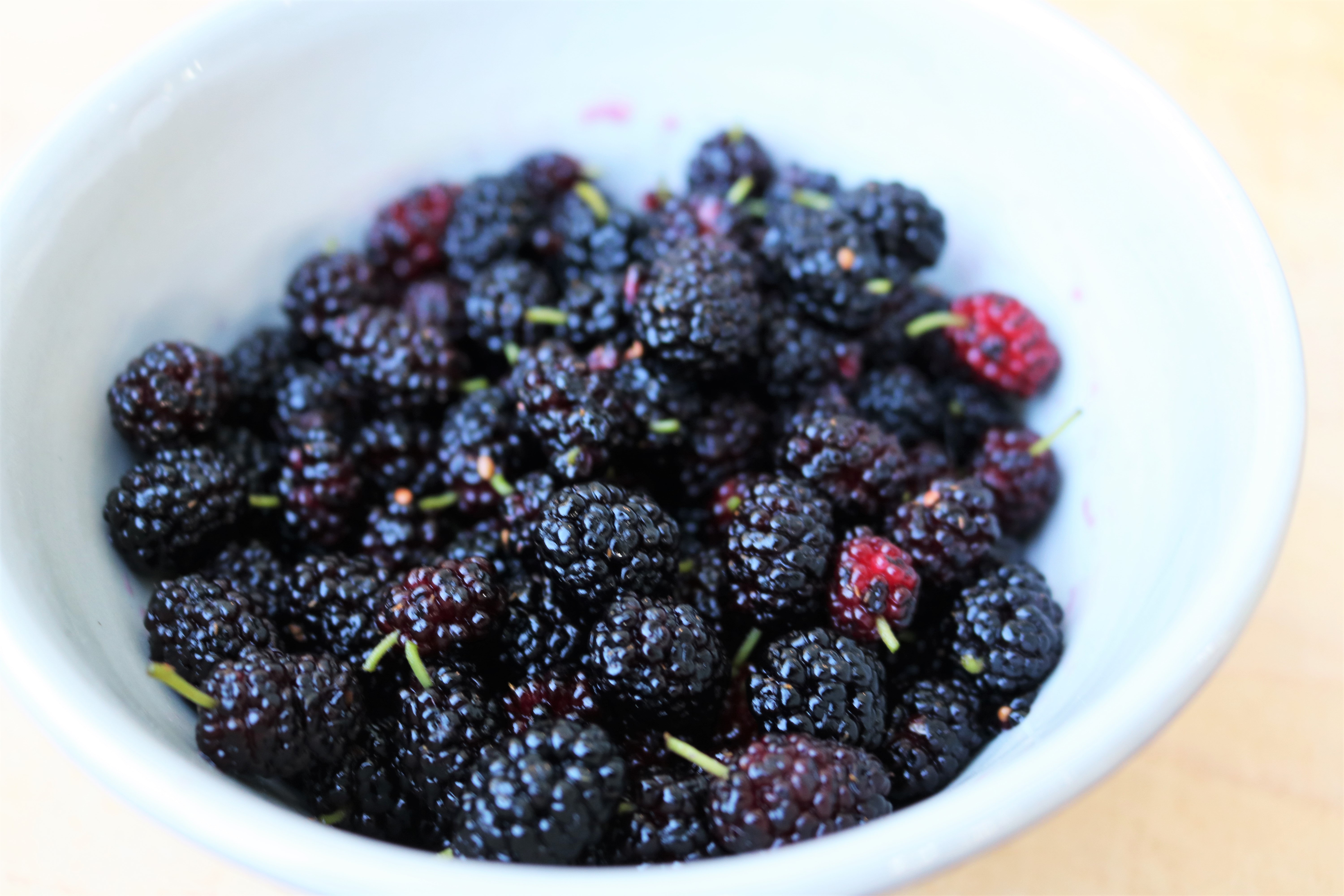
When we moved into our house, a weird, little tree was growing in the corner of our garden. I didn’t think much about it for a couple of years. One June I noticed berries forming on the branches. They looked like little blackberries. After doing some research, I discovered that this was a White Mulberry tree and that the mulberries were edible. We picked the dark juicy berries and popped them in our mouths. They are not quite as sweet as a blackberry, but they have a very nice taste that the whole family has grown to love.

People tend think mulberries and blackberries are almost the same fruit. While they do look a bit alike, they are actually very different. In fact, mulberries are not even a berry. They are a fruit that grows on a deciduous tree, whereas blackberries are a true berry belonging to the rose botanical family.

Summer Pickings

Ever since the mulberries first appeared on our tree, from mid-June to mid-July, I stop and nibble on these little darlings every time I pass under the branches. In fact, you can count on me taking three to four minutes extra every time I walk under it. One of the most enjoyable things about this tree is to listen and watch the robins go to town in the branches. They sing and fight with each other, but mostly they are busy stuffing their little beaks full of the nutritious, little berries.

People often call the mulberry tree a weed because said birds deposit the seeds elsewhere. For my part, I am glad they do. That, no doubt, is how we got ours. Next time, however, I will tell the birds to plant it on the back corner of our yard instead of the front corner, as I do spend a bit of time sweeping the berries off our sidewalk!

White Mulberry trees are quite a common tree in our region, probably for the above reason. They have an interesting trait in that they have leaves of three distinctly different shapes. One is unlobed, one is shaped a bit like a mitten, and one can look a little like a two-thumbed mitten. The tree originated in China where its leaves are used as the main food for the silkworm. The leaves are edible for humans if cooked first. They can be used in wrapping foods as you would with a grape leaf.

Cooking with Mulberries

This year I’m drying the berries to add to muffins and granola. They are also great served fresh in both savory and sweet dishes. After slightly crushing them, they are delicious sprinkled with superfine sugar and served over a lemon curd tart. They add depth to icy drinks by muddling them with fresh mint leaves. They make for a sweet/savory fresh salsa with lime and cilantro. I enjoy using them as an interesting counter to the savory taste of a bok choi salad. For breakfast, they are a great addition to crepes with brie cheese and cinnamon. Creating with these tasty little berries has kept my creativity working overtime.

Mulberry, brie cheese, and cinnamon crepes.

I love the idea of eating such an interesting berry from a tree that was planted by those chatty, fat robins, that many consider a nuisance. While mulberries don’t come close to matching the sweetness of raspberries or strawberries, I am thoroughly enjoying having this tree around. It is a part of my edible landscape. It truly is a multi-purpose tree: it feeds us, feeds the robin population, keeps us entertained, looks good with strands of twinkle lights wrapped around its branches, and provides nice shade and vertical dimension to that corner of the yard. We don’t dance around it singing nursery rhymes– wait! Maybe we should do that as well…

Mulberries over a lemon curd pie with homemade whipped cream.

Posted on 1 Comment

Rhubarb: The Vegetable That Thinks It’s a Fruit

The Heritage of Rhubarb

When I think of the classic plant that has anchored the corner of every Midwestern garden for the past century, I think of rhubarb. Some of my favorite dessert recipes are based on rhubarb. Rhubarb custard pie is oh, so delicious! I remember with fondness my Mom’s strawberry rhubarb freezer jam which we spread on warm toast. Warm Spilling Rhubarb over vanilla ice cream. My friend Jill Jorgensen’s gooey sweet Rhubarb Rolls. All these come from an unassuming plant that is so easy to grow you almost forget it’s even in your garden.

Rhubarb is a perennial vegetable that can flourish in most parts of the country. Rhubarb is delicious and easy to add to your garden. There are many recommended varieties to choose from. In my experience, the pinker the stems, the better they taste. Once planted, it can be left undisturbed to come back year after year.

Growing Rhubarb

Growing rhubarb is very simple. The plants make a nice addition to the perennial section of a vegetable garden or even a perennial landscape. In milder climates where they can overwinter without freezing, rhubarb also grows well in pots if you give it enough root space.

Spring is the perfect time to plant. Working some well-rotted compost or manure into the rhubarb bed will increase production. However, don’t pick any stems in in its first year. The plant needs all its foliage to help it establish a strong root system. In the second year, a small percentage of the stems can be harvested. In the third year and after, removing up to a third of the plant every year will keep it healthy and producing strong stems year after year. Dividing the plant every five years keeps the roots from getting too crowded. Which of your friends would turn down the offering of one or two baby rhubarb plants?

Uses of Rhubarb

Even though rhubarb had been used medicinally in China for thousands of years, its use as a food really started in England in the 17th century once sugar became available to counter its tartness. In the U.S., its use didn’t take off until the 1930s.

Nutritionally, rhubarb is high in fiber and loaded with vitamins, minerals, antioxidants, and phytochemicals. It can be a healthy addition to your diet if you curb the often added sugar. The stems (or petioles) are the only part of the plant we can cook and eat. The leaves contain oxalic acid, which is toxic to ingest and irritating to the skin if there’s prolonged contact.

Rhubarb is a great addition to desserts such as pie or crisp, cake, muffins, jams and jellies, and more. It is also great as a tart chutney over meat such as pork. My favorite completely unsweetened way to regularly include rhubarb is in fruit smoothies. The sweetness of the other fruits counters the tartness of the rhubarb, which lends a refreshing brightness to the final product.

Common Questions

  • Can you eat the leaves? No, they contain oxalic acid, which is toxic to humans. So throw away the leaves, and use the stems.
  • We just had a late spring frost that has damaged my rhubarb. Can I still eat the stems? No, when the plant has been affected by frost, the oxalic acid migrates from the leaves down into the stems, leaving them also toxic. If this has happened, throw away the whole plant. Look in your farmer’s market or grocery store for this year’s supply. If you live in a region prone to early or mid spring freezes, plant your rhubarb in a protected part of your yard. Last spring many in my area lost their rhubarb to freeze damage. Mine was spared because it is planted in a corner, protected on one side by a shed and on the other by a fence. The other option is to keep track of the weather forecast and cover it if a frost is on the horizon.

If you haven’t already, make this the year to add rhubarb to your yard. Like a long-time friend, it’ll always be there for you, but you never have to tend to it.