Posted on 1 Comment

12 Beginner Garden Tips for Growing Your Garden

Gardening should be simple, but it’s often more involved than it seems. Especially if you’re new to growing your garden, what can you do to ensure your plants have the best chance of succeeding? What beginner garden tips will help you get a bigger harvest and healthier plants? 

There are several strategies that can help you as you go through the garden season. Often, learning from other people’s mistakes and experiences with growing a garden can help you make fewer mistakes yourself.

I’ll discuss 12 beginner garden tips that will help you give yourself the best chance of success with your space. Implement these strategies, and you’ll see your garden take off. 

1. Supplement Your Soil 

Your soil is the lifeblood of your plants, and healthy, rich soil produces larger, more productive plants. Good soil will nourish your plants’ roots and improve the success of your garden year after year. 

One of the key beginner garden tips is you should supplement your soil regularly. This will feed the microorganisms that live in the soil. A few tried-and-true supplements for your soil include:

  • Heated compost – add twice a year, in spring and fall
  • Compost tea – add monthly throughout summer
  • Mycorrhizal fungi – add when planting 
  • Fish emulsion – add monthly throughout summer

2. Water in the Morning

One of the key garden tips for new gardeners is to learn how to water in a way that minimizes the potential for disease and maximizes the benefit to the plants. First, ensure you water in the morning. This will allow time for the water to dry out before nightfall, when the likelihood for disease is higher. Second, watering in the morning will help your plants make use of the water to protect their roots during a hot summer day. Moisture is the primary defense against high heat, so watering will help your plants tolerate a hot day. 

Another way to help decrease the risk of disease is to focus your watering on the dirt below the plant rather than the leaves. Avoid getting the leaves wet, and just focus on watering the roots. 

Get in the habit of watering your garden in the morning rather than in the evening.

3. Weed Your Garden

Weeds will grow bigger and stronger than your plants, and if left alone, they will deter your plants’ growth. Weeds can also attract harmful insects and cause disease in your plants. Therefore, it’s important to keep them out of your garden. It’s ideal to weed before you plant your garden, again about two weeks later, and then throughout the rest of the season as needed. 

4. Use an Organic, Compostable Mulch 

A great way to keep most weeds away is to apply a compostable mulch to your garden beds and aisles. Weeds need heat, light, and moisture to survive, so when mulch covers the ground, weeds will grow less easily. Mulch will also help by providing nutrition to the soil as it decomposes. 

Remember to apply mulch after you’ve removed weeds from the space and after your seedlings are large enough to see so you don’t cover them up. A few of my favorite options for types of mulch you can use include: 

  • Seed-free straw
  • Hardwood shredded mulch (not cedar or cypress)
  • Dried leaves
  • Shredded newspaper
  • Partially decomposed compost
Add a high-quality, compostable bed covering to your garden aisles and around your plants.

5. Use Organic Insecticides

When following organic practices, it can be hard to know how to handle insect control. My garden tip for this is to use products that are safe and organic, as they will help protect your plants from disease and invasion. A couple of the best organic insecticides to use in your garden include Neem and Bt (Bacillus thuringiensis), which you can apply on your plants several times throughout the summer. 

6. Plan Your Placement

Where you put your plants matters. Look at the instructions on the back of your seed packets or plant labels, and place your crops in sun, partial sun, or shade depending on what each one prefers. 

It’s also important to think about the sun and how tall plants may shade the plants north of them, as well. Therefore, I recommend drawing out a garden map and planting your space with a clear plan for why you’re putting each plant where. 

7. Use Companion Planting

Companion planting is a perfect way to improve your yields and set your plants up for success without needing to do much extra work. The concept of companion planting is that certain plants do better when they are planted near other plants. On the other hand, some plants do worse when next to certain others. 

Therefore, do your research, and incorporate companion planting when designing your garden. A couple examples of easy companion plants include: 

  • Corn, beans, and squash
  • Tomatoes and basil, carrots, or lettuce
Implement companion planting strategies to benefit your plants.

8. Fence to Keep Animals Out

A simple garden tip for growing your garden and not having it eaten by rabbits and deer is to build a fence around the garden space. This can be as easy as digging a few t-posts and using chicken-wire, or you can build a more substantial wooden fence. The key with garden fencing is to ensure there are no big holes where animals can sneak through to grab their lunch. 

9. Space Your Plants for Maximum Growth

Crowding out your plants by planting them too close together can stifle their growth. When you’re planting plants, remember to plant them far enough apart to give the adult plant plenty of room to grow.

Space plants like onions, garlic, tomatoes, and peppers far enough apart for the adult plant to grow.

On the other hand, you will end up thinning the crops you plant from seed. Therefore, plant your seeds according to the directions on the back of your seed packet. Once your plants germinate, remove the extra seedlings by pulling them with your fingers. Thin the seedlings until you achieve the correct distance apart, as found on the seed packets for each variety. 

10. Add Pollinator Plants

Incorporating pollinator plants into your garden is a garden tip that is practical as well as beautiful. The flowers of pollinator plants will attract beneficial insects like bees and butterflies into your vegetable garden. Not only are pollinator plants beautiful, but also having more of these insects around means they will pollinate your vegetables, thus helping your plants produce higher yields.

Plant flowers within your vegetable garden to attract beneficial pollinator insects to your garden.

11. Deadhead Your Flowers

When growing your garden, one great way to ensure your flowers keep blooming throughout the summer is to deadhead them. Deadheading means removing the dead or dying flower heads, and when you do this, it promotes further growth and blooms on other parts of the plant. 

12. Plant Mint in a Pot

Another foundational garden tip is to never, I repeat never, plant mint in your garden bed. Mint is an invasive plant, and its root system will take over and crowd out your other plants you have growing in your garden. It will also be hard to remove because it will return year after year.

Instead, plant your mint in a dedicated pot just for mint. You can plant multiple varieties in the pot if you desire. This will enable you to enjoy mint without the negative effects of it overgrowing in your garden. 

Always plant your mint in its own pot.

Learn More About Growing Your Garden

Gardening in your own backyard is a rewarding experience for anyone. My online vegetable gardening course walks you through the entire process of growing your garden, from deciding where to locate your garden to planting and taking care of your young plants. 

To learn more about how to design and plant your garden, visit the garden course and sign up. 

Posted on Leave a comment

Random Beauty: Self-Seeding

It was a cool, late spring afternoon. The sun shone, but there was a slight bite in the air. We were itching to dig outside in the dirt. My kids inspected the garlic patch, which was by now a foot tall. They called out to me, “Mom, we can’t believe you haven’t weeded the garlic. Look at all the weeds coming out of the ground.” I came over to inspect, and then I started to explain each little plant. This one was arugula. That one was fennel. Over here was dill. There was cilantro. These weren’t weeds at all. They were self-seeding plants from previous years.

Self-Seeding: What is it?

Self-seeding happens when a plant is left to flower and then go to seed. In the summer sun, these seeds dry out and drop onto the ground or are blown by the wind. They sink into the soil and stay there until the time is right for them to germinate and grow into a new plant. This is nature’s way of sustaining itself. It’s also how a weed can go from one plant to 300 in no time flat.

Over the past number of years, I have been increasingly intentional about letting my herbs and vegetables produce flowers so the beneficial insects have nectar to eat. On any summer day, fennel, cilantro, arugula, and lettuce flowers are covered with little hoverflies or bumblebees busily sucking in the sweet nectar these flowers provide. As they move from flower to flower, these diminutive bugs play the essential role of pollinating our fruit and vegetable plants.

Why Self-Seed?

Many might say that letting plants self-seed is the lazy gardener’s way of operating. That is true in some respect. It can also be a frugal way to garden. When you let plants self-seed, you don’t have to buy the seed or plant the seed. It just comes up on its own.

I tend to have a favorable perspective on the philosophy of self-seeding. I love the whimsy of a coleus flower poking up in the middle of my radishes or a bachelor button in my beets. Cilantro taking root within my carrots brings me joy. Loveliness arises when a broad, white dill flower stands proudly next to the cucumbers. Order is laced with beautiful disarray.

Ordered Chaos

Yesterday as I was harvesting berries, tucked up under the branches of the mulberry tree which the birds planted years ago, I noticed that the clematis had vined up around a lower mulberry branch. The plum-colored flowers intertwined with the dark purple berries. This simple artistry caught me and drew me in. The intentional encircling the accidental, the fanciful result of order marrying chaos.

Many gardeners set aside a designated garden space for self-seeding plants. Sometimes they combine this with their perennial vegetable garden. Perennial vegetables include plants like asparagus, rhubarb, raspberries, strawberries, walking onions, thyme, chives, and oregano. If these two categories mix in the same space, technically one never needs to plant these vegetables and herbs again. As the saying goes, “One only plants tomatillos once.” Tomatillos are famous for self-seeding.

Exceptions to Self-Seeding

There are a few caveats in this whole discussion. I do weed extensively in places where I do not want self-seeding plants to grow. For example, a lot of dill came up in a section where I had planted beets. I harvested the dill when it was five or six inches tall, opening up the space for the beets to grow and thrive. A similar thing happened where I planted my Basil Genovese. Arugula was happily growing very tall, shading the tiny basil plants. Guess what I ate for dinner last night? An arugula salad. The dill is going to top a baked slab of fish shortly.

Another point I want to be sure and mention is to not let invasive plants self-seed. As much as the bees go crazy for mint flowers, I am fastidious about plucking them off the mint plants before they can drop their seed and spread around the garden. The same holds true for both regular and garlic chives. Heirloom tomatoes can be included as well simply because if you let tomatoes drop onto the ground and they rot there for the rest of the summer, a tight collection of tomato plants will sprout the next year. These will undoubtedly be planted in the wrong spot and too tightly together. You can carefully transplant a few of them into the intended spots, but the rest will probably go into the compost pile.

Compost Plants

Speaking of compost piles, there’s many a squash or plant that has emerged from its surface because someone discarded their extras the previous summer. Again, the delightful unintended consequences occasionally graced upon us by nature. The idea of something as delicious as squash growing out of the rot of compost is a concept paralleled in many aspects of life. I suppose this is what attracts me to the random beauty of self-seeded plants.

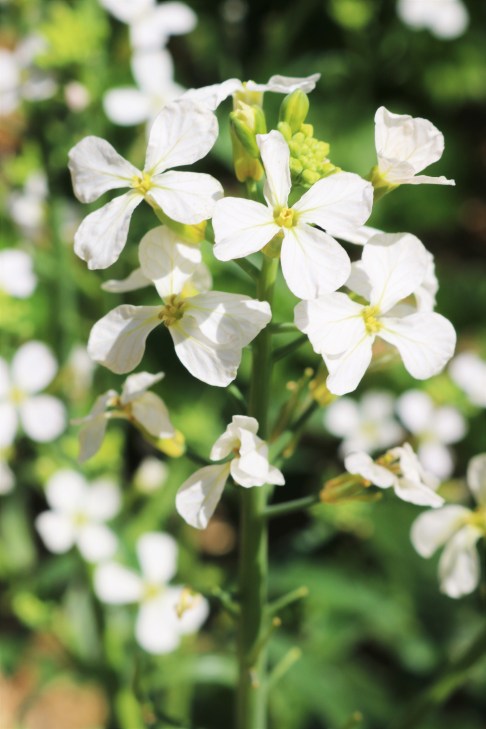
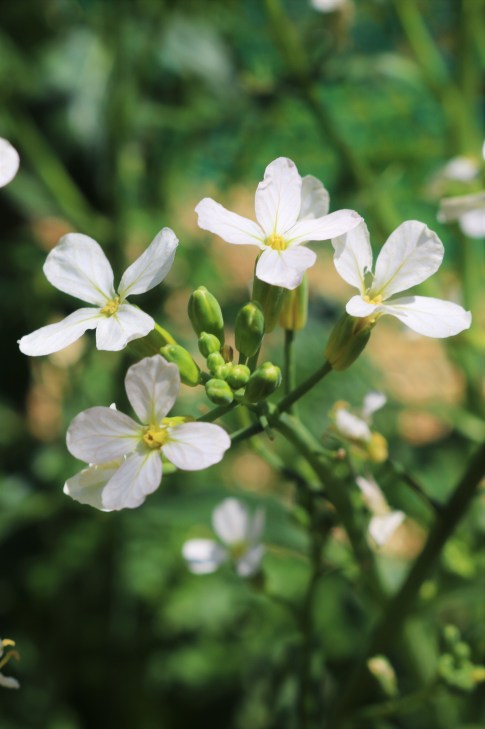
I will savor the cilantro in my mango salad. The radish flowers (a plant I’m allowing to self-seed for next year) are going into a bouquet on my dining room table. The sunflowers and bachelor buttons will bloom and then dry to drop their seeds for another year. Beauty moves forward, magnifying into the future.

Posted on Leave a comment

Lettuce: The Shoulder Season Crop

My garden is planted. The carrots, beets, and kale are poking through the ground, the strawberries still little green orbs. Tiny flowers adorn the tomatoes and peppers in preparation for their future bounty. The rhubarb is mostly finished, having been transformed into many toothsome desserts. Alas, as far as gardens go, the middle of June is known as “shoulder season.” We are waiting, waiting for the vegetables we have planted to be laden with their bounty. Yet something is ready to be picked and eaten in all its tender beauty, lettuce.

A Time for Lettuce

My garden is bountiful with a host of lettuces. Purple and red varieties, lettuce with red speckles, lettuce with curly edges, and of course, green lettuce. These colorful leaves grace our gardens and plates.

This green loves to germinate and grow in the cool, wet weather of spring and early summer. In fact, it has a hard time germinating in the heat of midsummer. In the early spring and late fall, however, it goes to town.

The ground was barely free of snow when I planted the first seeds this spring. I’ll do this same thing again when the crisp days of fall are on the horizon. Planting in a sunny spot or one that gets a bit of afternoon sunshine will ensure that the plants quickly poke their little heads through the earth’s surface.

The spring rain showers help keep the ground moist. I usually scatter the seeds randomly in a square space. When they come up, they’ll be very crowded. I thin them as they grow, eventually leaving several inches between plants. In this way I get to harvest lettuce for weeks. I always leave a few plants to go to flower and then to seed. The flowers serve as food to the bees and little beneficial insects that drink their nectar. Once they go to seed, these seeds drop to become new plants next season.

Eating Well with Lettuce

We used to think that lettuce was basically just glorified water. We thought it did not have much nutritional value, but we now know this is absolutely not true. Lettuce and greens of all kinds are packed with nutrients, vitamins A and K, folate, and molydenum to name a few. Flavonoids and phenolic acids are just a couple of the antioxidants present that work their magic in you to help prevent diseases and keep you healthy.

If the nutritiousness does not propel you to make lettuce cups for your grilled salmon salad, the fresh crunchy flavor will. The taste of just picked lettuce is unlike any green I have tasted all winter. This is my launchpad into summer garden goodness.

IMG_8869 (2)

Garden lettuce is the first ingredient in any number of salads. It is the thick layer of crispness in my sandwiches. It adorns my platters of hors d’oeuvres. I fill the thicker romaine cups with endless variations of meat or vegetable salads.

Cleaning Garden Greens

One of the deterrents to eating garden lettuce is cleaning garden lettuce. I have found the fastest way to clean a pile of dirt-laden lettuce is to soak it in a sink full of cold water. Stir gently with your fingers to dislodge any soil from the leaves and stems. The dirt will sink to the bottom of the sink so that when you drain out the water, the dirt drains out first. I then refill the sink with cool water and repeat the process until the leaves are clean. This may take two or three rinses.

Finally, I scoop out the leaves and spin them in a salad spinner for a minute until they are dry. You can store it for a few days in the refrigerator by wrapping it loosely in a paper towel and sealing it in a plastic bag. Personally, I upped my intake dramatically once I started washing my lettuce in this way, and I always tend to use things faster that are washed and ready to go in the refrigerator.

IMG_8612 (2)

It is the season for eating lettuce. Just picked leaves of all stripes and colors is waiting for you. I, for one, will thoroughly enjoy waiting for the second wave of produce from my garden as long as I have lettuce on my plate.

Posted on 2 Comments

What Should You Plant First?

As early spring begins, I am starting to think about what seeds I want to plant in my garden beds for the first planting of the season. You are probably thinking it is too early to start thinking about one’s summer vegetable garden. However, this is the ideal time to plan and purchase those first seeds. Some of the most interesting varieties of seeds sell out fairly quickly, so once you know what you’re hoping to plant, get the seeds while they are still available.

A number of types of vegetables thrive in the cool, wet days of spring. Many plants need this weather to really do well.  I take the temperature of my garden soil, and when it’s around 50 degrees, it is time to plant.

The vegetables I am planting this early spring include:

Radishes

Last year I planted “D’Avignon,” the traditional French breakfast radish. This year I am trying two very different varieties. Early Scarlet Globe is a very dependable radish. It is ready in 20 to 28 days, so we can enjoy eating them early. And because I like to try new things, I am planting Purple Plum, a purple radish with a great flavor. A second new venture for me is Watermelon, a white radish with a stunning, dark pink center. This variety shines in the very early spring. It lends itself well to pickling, so I may play around with doing that later this spring.

Sweet Peas

I’m going all out on three completely new varieties of snap or snow peas this year. I chose two from Seed Savers Exchange (an organization that preserves historic and heritage varieties of seeds, saving them and also reproducing some for sale) The first pea variety is the Amish Snap. This is a pea that was been grown by the Amish community long before our present varieties existed. It vines tall and vigorous. The other choice from Seed Savers is Swenson Swedish. This heirloom variety was brought to Minnesota from Sweden in 1876. It is sweet, flavorful, and productive.

Another seed company that is doing great work in preserving rare and heirloom varieties is Baker Creek Heirloom Seeds out of Missouri. I chose my third variety of sweet pea from them. This hypertendril snap pea produces more tendrils instead of some of its leaves. These, along with the beautiful pink blossoms, are deliciously edible and taste just like peas.

Lettuce

With lettuce I like to plant several kinds. I start early in the spring and reseed several times throughout the summer so I have a constant supply. I am planting two mixes, a Mesclun blend that contains some peppery lettuce varieties and a lettuce blend. All the Romaine lettuces are wonderful, so this year I am planting Red Romaine. A large variety, it is both a colorful and tasty addition to salads. Lastly, I am planting an English variety Craquerelle du Midi, sweet and crisp with dark green curled leaves. Its slowness to bolt in the heat of summer is another desired trait.

Carrots

I am starting with two varieties of carrots this year. One is an old faithful I have used for years, Scarlet Nantes. It is sweet, tender, and a proven producer. The other is a red carrot called Dragon. I love the beauty of red carrots. This tasty variety is red on the outside and orange in the center.

Arugula

The arugula I planted last year will come up again this year. I am also, however, planting a bitey variety that will nicely complement what is already out in my garden. Wasabi arugula has the spicy taste of wasabi, a very helpful addition to Asian dishes. It is more tolerant of swings in weather than other varieties. I’ll also be picking the edible blossoms to throw into salads or pasta dishes.

Kale

Lacianto Dinosaur is my kale choice this time around. This Tuscan variety dates back to at least the early 1800s. It is beautiful with dark green, deeply savoyed leaves. It is quite flavorful, making for a fabulous addition to soups and stews. This grouping of vegetables prefers the cool wetness of spring. At least a month before the final frost, I am out cleaning my garden beds and burying the these little nuggets in the ground. They don’t mind a little snow, frost, and cold spring rainstorms. They get to work, germinating and soon popping their little heads through the surface of the earth. The unsuspecting surprise of eating sweet lettuces or crunchy peas in the middle of May when most of us are just starting to put in our summer vegetables is refreshing indeed.

These early vegetables in an otherwise dormant space is like spring opening her door and saying, “Welcome to my home.” And, in fact, welcome it is!