Posted on Leave a comment

Summer Flower Cards: About the New Art Collection

Every summer growing up, my family would pack into the car and travel across Minnesota and North Dakota. We’d end up just into the eastern slice of Montana at my grandparents’ ranch. As we drove west, we couldn’t help but notice the countryside getting more and more arid. As we drove past the stunning North Dakota badlands, the multicolored lines in the rock formations jumped out at us in their stark beauty. As we drove, fields of sunflowers and corn turned into rolling hills with rock outcroppings, and fields of wheat transformed into cattle pastures.

Petunia

My grandparents’ ranch was located on a great, open prairie. Rolling fields of wheat, barley, and hay greeted us as we drove down the gravel road leading to the homestead. Upon turning into their driveway, however, our eyes turned to another scene. Billowing beds of brightly colored petunias circled the white stucco house. My grandmother, always one to turn a challenge into something of beauty, had found one of the few flowers that thrives in hot sunny spaces. Give petunias some soil, water, and sun, and you’ll have a colorful profusion of flowers all summer long.

On the hot, dry expanse of northeastern Montana, she created and tended a garden so lovely that it welcomed visitors into her space. The desolate nature of the location was lost in the colorful floral greeting.

Zinnia

In recent years, I have followed in my grandmother’s footsteps by planting an inordinate number of flowers in my vegetable garden. Planting flowers not only helps out the pollinator insects, but it also allows me to share flowers far and wide. After all, flowers always seem to lift our spirits and brighten the day of everyone who gets to enjoy them.

The flowers I leaned into were zinnias. I purchased them in many colors and sizes and proceeded to plant them in every nook and cranny I could find, and they did not disappoint. They flowered, and flowered, and flowered some more from late June until frost finally took them in October. Zinnias will always hold a special place in my heart because of their uniquely colorful hues and their ability to bring life to a kitchen table.

Nasturtium

I’ve had trouble deciding who loves nasturtium more: me or the robins. Promptly after I plant my nasturtium seeds, the robins descend, feverishly digging around in my planters, searching for the seeds to eat for dinner. On the off chance that one of my seeds evades their notice long enough to become a flowering plant, nasturtium tend to bloom with abandon.
All parts of the nasturtium plant are edible. The flowers and leaves appear as often in my salads as they do in my bouquets. Then, the seeds produced after the flowers are done blooming taste delicious when pickled with other garden vegetables.

Nasturtium plants’ brightly colored flowers, quirky twisted stems, and circular leaves are an essential addition to my planters. Together with basil, I tuck them in and around my tomato plants, using companion planting to my advantage. The flowers cascade down from the pots, acting as both an attractor for pollinating insects and a deterrent to the destructive ones that might want to do harm.

Yarrow

In xeriscape landscaping, the goal is to choose plants that thrive on neglect. In this area, yarrow is a frontrunner. Yarrow prefers hot, dry, sunny conditions, so it is an obvious choice for water-challenged regions of the country. Yarrow is also an excellent pollinator flower. On any summer day, you’ll find it covered with bees and other pollinating insects. Yarrow comes in colors ranging from white and yellow to pink, red, and burgundy, so it can compliment many types of flower beds.

The downside of yarrow is that it has a tendency to multiply, so regular weeding of the baby plants is necessary if you want them to stay in the boundaries of your landscaping. When you’re weeding yarrow, dig down at least a foot to get out the whole rhizome. Any broken off piece of the rhizome can become a new plant.

In addition, remove the flowers as soon as they are fading to control the spread through seeds. A single plant can produce thousands of seeds, which can remain viable in the ground for up to nine years. While there are many great reasons to grow yarrow, don’t plant it unless you can keep it in check.

Rose

Roses are in full bloom, the billowy bushes covered in red or pink. Their aroma captivates me as I walk through the neighborhoods. I come upon an old wooden arch covered in the climbing pink variety. These look to have been growing here for years, their tangly branches reaching up and over the arch, forming what would be the perfect backdrop for a garden wedding.

I think of my mother-in-law, who was a gardener and grew the old fashioned hybrid roses. These varieties possessed a fragrance that is challenging to find in current varieties. What I would give to have some of her rose bushes in my garden.

Garden roses elicit memories of times past. A small bouquet of roses sitting in a vase next to my cup of coffee: This was a common scene when visiting my mom, aunts, or mother-in-law. Fresh roses, hot coffee, a spot of something sweet, and meaningful conversation make for fond remembrances.

Pansy

Pansies tend to be the first flower I purchase in the early spring. As the tiresome gray winter months transition to spring, the weather slowly warms, and the days lengthen. 

As the spring dawns, the purples, oranges, yellows, and pinks of pansies are the perfect antidote. The faces of the flowers almost look as if they’re smiling, and their colors no doubt brighten anyone’s day. 

As soon as the nights warm, a planter full of pansies settles in by my front door. As neighbors pass by, the pansies tell of times to come, affirming that more color is on the way. Green grass, yellow daffodils, red tulips, and purple iris will be here soon. The pansies are just the doormen to the gateway of spring.

Sweet Pea

Sweet peas are the iconic spring vining flower that climb up trellises and over garden gates, spilling over the tops of large planters. Their intoxicatingly sweet scent brings me back to the cottage gardens of our grandmothers. Long treasured for its sweet fragrance, this flowering legume has graced the walls of gardens since the 17th century. 

Sweet peas are easy to grow, and they quickly add color to any garden space. Being a legume, they enrich the soil because of their nitrogen-fixing quality. These early flowers will also bring pollinating insects into your yard, a much desired trait. 

One of the best ways to plant sweet peas is to intermingle them with other vining plants, such as pole beans, around the base of a tall bamboo tripod. Place this in the center of your garden, and the birds and insects will be sure to visit. 

The Summer Flower Cards

Flowers abound, filling my garden and my vases. The gray of winter seems more bearable contrasted against the vibrance of flowers present in the summer months. I’m soaking up the beauty while it lasts.

These flowers have inspired the creation of my latest watercolor art and greeting card designs, the summer flower collection. Composed of designs of eight distinctive summer blooms, I hope this collection warms your heart and the hearts of those to whom you send them.

Posted on Leave a comment

The Charm of Garden Bulbs: New Watercolor Art

It seems like spring has had to work overtime to get winter to exit the scene this year. But finally, the rains are here, the grass is greening up, and the trees are beginning to bud. More than anything, the lovely spring bulbs are starting to bloom. In this vein, I’d like to introduce you to my new collection of garden watercolor art, the flowering bulbs.

Spring Bulbs

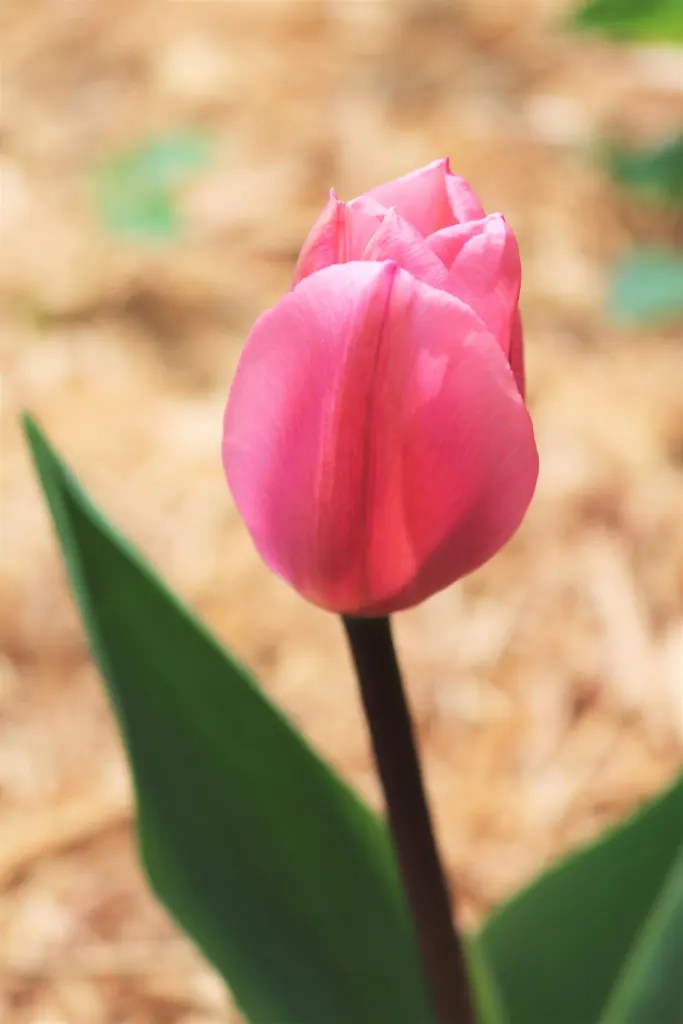
I have always had a thing for early spring flowers. Maybe it’s the grayness of winter; maybe it’s the stark empty branches of the trees. First, I see crocuses and muscari, then daffodils, and then tulips and irises. As these flowers begin to shine their colorful faces for all the world to see, it does something to my spirit. Just like that, life is new and fresh. 

The birds’ chirping seems louder and happier. People are starting to move outdoors. Runners and cyclists are taking advantage of the warming days to exercise on the paths and streets of my city. In every spring thaw, life emerges after a deep winter sleep.  

Gardening with Bulbs

Years ago, I sort of went wild planting bulbs around my yard, choosing everything from fritillaria to muscari to many unique interesting varieties of tulips, daffodils, irises, and lilies. I planned it in such a way that we had bulbs of many kinds constantly blooming from early spring well into summer. 

Some of the advantages of planting bulbs in your landscaping and garden beds include: 

  • They are perennials, so they come back year after year.
  • Spring bulbs are often early to emerge, offering spring color. 
  • Most bulbs are low maintenance.
  • Bulbs multiply on their own, so you can divide them and spread them out in your beds or give them away to friends.
  • Many bulbs are deer and rodent-resistant (amaryllis, daffodil, snowflake, crocus, muscari, iris).
  • Lilies have a long bloom time, and you can stagger the bloom times of the various bulbs by planting a mix that bloom at different times throughout the spring/summer. 

This year already, I have seen muscari, tulips, and daffodils in bloom, and they never cease to enhance the landscape with picturesque vibrance.  


Learn more about creating a garden this year through my virtual home gardening course. You still have time to sign up and get started with planting your garden this spring.

The New Garden Watercolor Art Collection

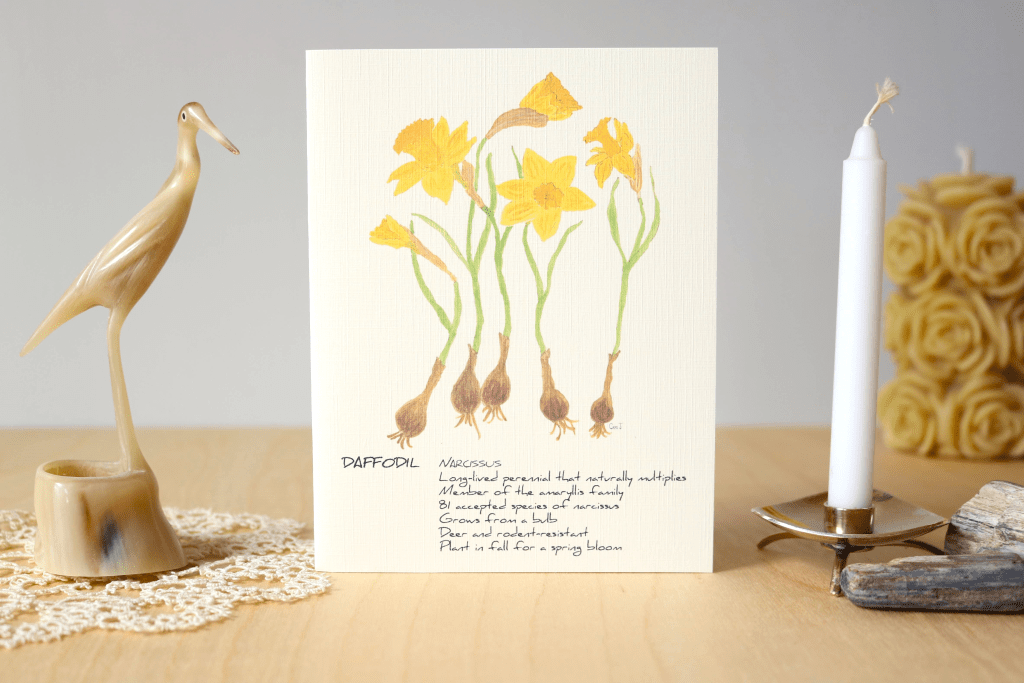
It is with these flowers in mind that I painted the new garden watercolor art bulb series, choosing to include lilies, tulips, iris, and daffodils. I painted them with the bulbs attached, hailing back to the many vintage botanical paintings I’ve enjoyed looking at over the years. 

I’ve created these designs into both cards and art prints. The cards are available individually as well as in packs. I’m also excited to announce that for the first time, I’m offering these four flowers as smaller individual art prints, matted into an 8×10 inch size.

Posted on Leave a comment

Random Beauty: Self-Seeding

It was a cool, late spring afternoon. The sun shone, but there was a slight bite in the air. We were itching to dig outside in the dirt. My kids inspected the garlic patch, which was by now a foot tall. They called out to me, “Mom, we can’t believe you haven’t weeded the garlic. Look at all the weeds coming out of the ground.” I came over to inspect, and then I started to explain each little plant. This one was arugula. That one was fennel. Over here was dill. There was cilantro. These weren’t weeds at all. They were self-seeding plants from previous years.

Self-Seeding: What is it?

Self-seeding happens when a plant is left to flower and then go to seed. In the summer sun, these seeds dry out and drop onto the ground or are blown by the wind. They sink into the soil and stay there until the time is right for them to germinate and grow into a new plant. This is nature’s way of sustaining itself. It’s also how a weed can go from one plant to 300 in no time flat.

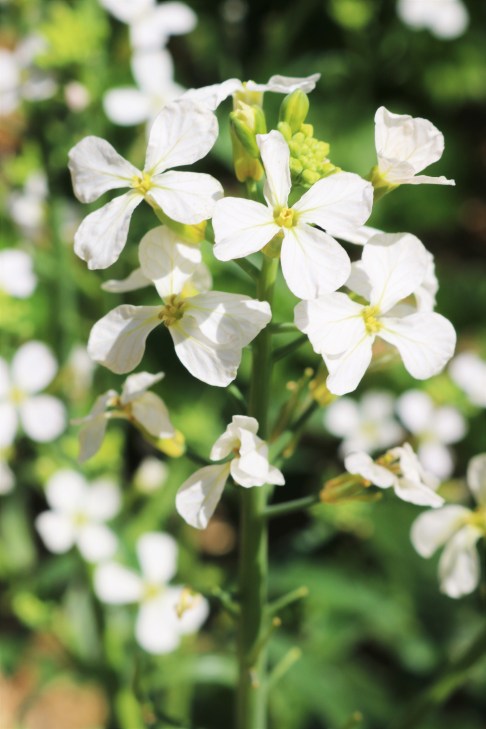
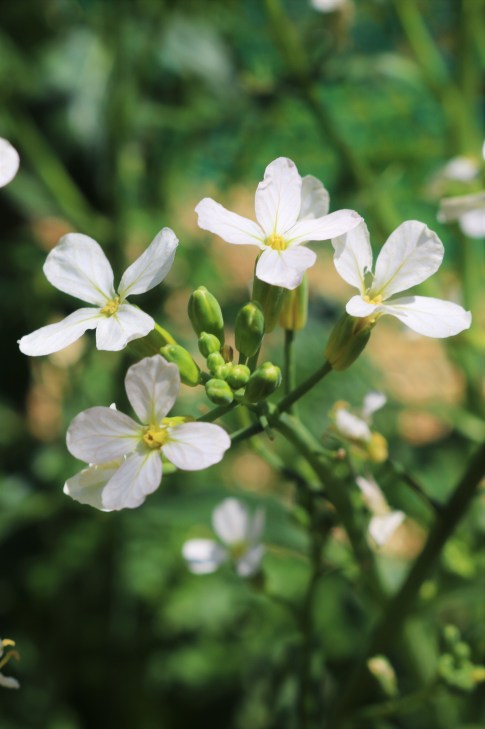
Over the past number of years, I have been increasingly intentional about letting my herbs and vegetables produce flowers so the beneficial insects have nectar to eat. On any summer day, fennel, cilantro, arugula, and lettuce flowers are covered with little hoverflies or bumblebees busily sucking in the sweet nectar these flowers provide. As they move from flower to flower, these diminutive bugs play the essential role of pollinating our fruit and vegetable plants.

Why Self-Seed?

Many might say that letting plants self-seed is the lazy gardener’s way of operating. That is true in some respect. It can also be a frugal way to garden. When you let plants self-seed, you don’t have to buy the seed or plant the seed. It just comes up on its own.

I tend to have a favorable perspective on the philosophy of self-seeding. I love the whimsy of a coleus flower poking up in the middle of my radishes or a bachelor button in my beets. Cilantro taking root within my carrots brings me joy. Loveliness arises when a broad, white dill flower stands proudly next to the cucumbers. Order is laced with beautiful disarray.

Ordered Chaos

Yesterday as I was harvesting berries, tucked up under the branches of the mulberry tree which the birds planted years ago, I noticed that the clematis had vined up around a lower mulberry branch. The plum-colored flowers intertwined with the dark purple berries. This simple artistry caught me and drew me in. The intentional encircling the accidental, the fanciful result of order marrying chaos.

Many gardeners set aside a designated garden space for self-seeding plants. Sometimes they combine this with their perennial vegetable garden. Perennial vegetables include plants like asparagus, rhubarb, raspberries, strawberries, walking onions, thyme, chives, and oregano. If these two categories mix in the same space, technically one never needs to plant these vegetables and herbs again. As the saying goes, “One only plants tomatillos once.” Tomatillos are famous for self-seeding.

Exceptions to Self-Seeding

There are a few caveats in this whole discussion. I do weed extensively in places where I do not want self-seeding plants to grow. For example, a lot of dill came up in a section where I had planted beets. I harvested the dill when it was five or six inches tall, opening up the space for the beets to grow and thrive. A similar thing happened where I planted my Basil Genovese. Arugula was happily growing very tall, shading the tiny basil plants. Guess what I ate for dinner last night? An arugula salad. The dill is going to top a baked slab of fish shortly.

Another point I want to be sure and mention is to not let invasive plants self-seed. As much as the bees go crazy for mint flowers, I am fastidious about plucking them off the mint plants before they can drop their seed and spread around the garden. The same holds true for both regular and garlic chives. Heirloom tomatoes can be included as well simply because if you let tomatoes drop onto the ground and they rot there for the rest of the summer, a tight collection of tomato plants will sprout the next year. These will undoubtedly be planted in the wrong spot and too tightly together. You can carefully transplant a few of them into the intended spots, but the rest will probably go into the compost pile.

Compost Plants

Speaking of compost piles, there’s many a squash or plant that has emerged from its surface because someone discarded their extras the previous summer. Again, the delightful unintended consequences occasionally graced upon us by nature. The idea of something as delicious as squash growing out of the rot of compost is a concept paralleled in many aspects of life. I suppose this is what attracts me to the random beauty of self-seeded plants.

I will savor the cilantro in my mango salad. The radish flowers (a plant I’m allowing to self-seed for next year) are going into a bouquet on my dining room table. The sunflowers and bachelor buttons will bloom and then dry to drop their seeds for another year. Beauty moves forward, magnifying into the future.