Posted on 1 Comment

How to Grow Garlic: A 7-Step Guide

SUMMARY: The process of how to grow garlic is simple once you know the key points. First, decide what varieties to plant, and prepare the soil. Plant and cover the garlic in autumn. Uncover it in spring, watch it grow, and pick the scapes and harvest the heads during the summer.


Are you interested in growing garlic in your yard, but you’re not sure how to get started? Garlic is a low-maintenance and high-reward plant to grow as long as you understand a few key principles. 

I’ll walk through the seven steps for how to grow garlic so you can order them and get them in the ground by this fall. 

1. Decide What Varieties to Plant and Order Them

The first step in how to grow garlic is deciding what type of garlic to grow. At the grocery store, you generally only see one or two varieties, but when you’re growing your own, you have a myriad of beautiful options. 

You’ll plant your garlic in the fall, so it’s best to order it early, in late spring, for the best selection. Recently I’ve been getting my garlic from Keene Garlic, but another great option is Seed Savers. You can find garlic heads for planting through local farmers or garden shops. Grocery store garlic is typically a softneck garlic, which isn’t hardy in northern parts of the U.S., so it’s best to order garlic intended for planting. 

Hardneck Garlic

The first type of garlic is hardneck, which means that the stem is stiff and woody, and it can’t be braided like softneck varieties. If you live in a climate with cold winters, such as the northern parts of the U.S., plant hardneck garlic because it’s hardier and will withstand the winters better. 

Hardneck garlic varieties produce scapes, which are the flowering stem of the plant. You can cut off these scapes and cook with them, or you can plant them. Hardneck garlic generally has fewer larger cloves compared to softneck. 

Best Hardneck Varieties

Here are a few of my favorite hardneck varieties to grow in my upper Midwestern garden: 

  • Music
  • Chesnok Red
  • German Extra Hardy
  • Purple Glazer
  • Rose de Lautrec
  • Russian Red 
  • Spanish Roja

Softneck Garlic

The other type of garlic you can plant is softneck, which means the stem of the garlic is more flexible. These varieties are generally more susceptible to the cold, so they do great in warmer climates with less severe winters, such as the lower parts of the U.S. 

Softneck garlic does not produce scapes, and the cloves tend to be smaller and more numerous than hardneck garlic cloves. 

Best Softneck Varieties

A few great options for planting softneck garlic include: 

  • Inchelium Red
  • French Red
  • Blanco Piacenza 

2. Prepare the Soil

Once you’ve ordered your garlic, you’ll need to plan where you’ll plant it. Garlic is a heavy feeder, so it prefers rich, loose soil, not clay. They do best in full sun. You can replant it in the same place every year if you have good soil, but it’s ideal to rotate its location around your garden.

If you do not have good soil where you live, add compost to enrich the dirt. You can also separate the cloves from each other and soak them in a fertilizer soak before planting, which you’ll be able to find anywhere you buy garlic bulbs. 

3. Plant and Cover the Garlic in Mid-Fall

Plant your garlic in mid-fall. In the upper midwest, I plant my garlic when the maple leaves are golden, which is late September or early October. 

Dig holes 6 to 9 inches apart, 3 inches deep, and place an individual clove in each hole. Place the root side down, and the tip upwards. Then cover with dirt. When you are done planting, cover the patch with 3 to 6 inches of an organic mulch, such as straw or leaves.

After the cloves are buried and covered in the fall, you can forget about them until spring.

4. Uncover the Garlic in Spring

In the spring, you can take off some or all of the mulch after the threat of freezing temperatures has passed. If you leave some of the mulch, it acts as a weed barrier. The garlic will be able to grow through it. 

It’s important to keep the space very weeded, as weeds will compete with the garlic, producing smaller garlic heads. Once the garlic is uncovered, as it grows you can water it as needed. Otherwise, sit back and watch it grow.

5. Harvest Garlic Scapes in June

In mid June, if you planted a hardneck variety, you will notice curly stems called scapes poking out from the garlic leaves. These stems curl as they reach upward and outward. In mid June, if you planted a hardneck variety, you will notice curly stems called scapes poking out from the garlic leaves. These stems curl as they reach upward and outward. If you let these go without picking, they will produce a beautiful white garlic flower. These are the seed heads, and they are delicious.

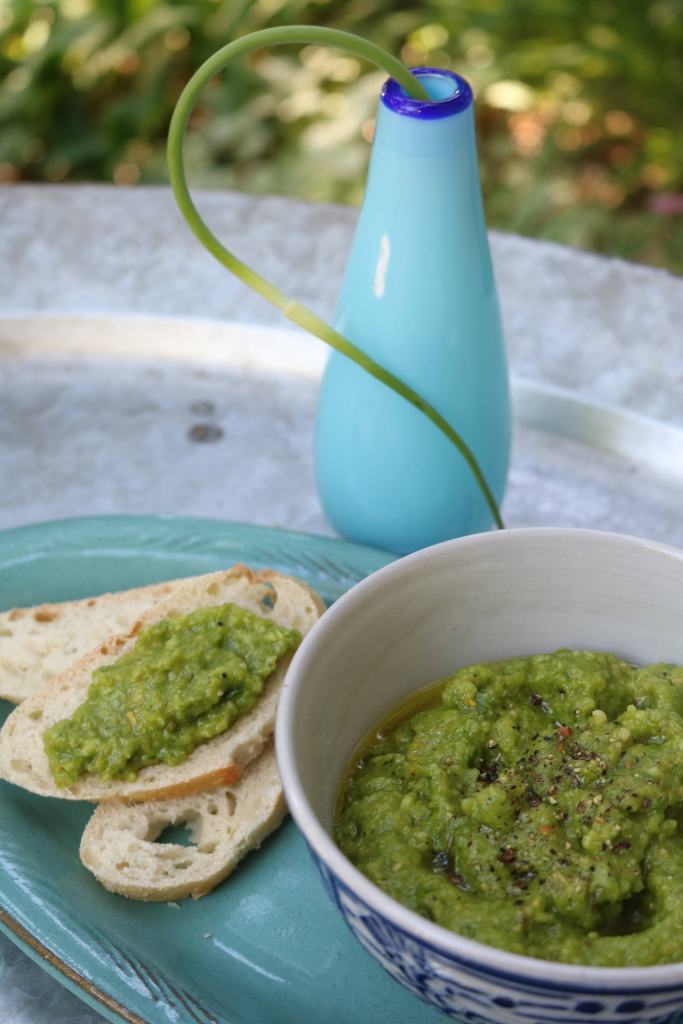
When these scapes get nice and long, you can cut them off and bring them inside to use in your cooking. I add them to everything I would normally use garlic in and more. Because they are a bit like a garlicky green onion, they go into salads, soups, and pastes. Anything savory, really. 

Once all the scapes are trimmed off the plants, I continue to let the garlic plants grow. 

6. Dig Up Garlic in July

Once the tops of the garlic leaves are starting to dry and turn brown, I start keeping track of them again. When you have about 5 green leaves remaining on each plant, or about 50% of the leaves are still green, you can harvest the garlic bulbs. 

First dig up one plant to see if it is ready. You should see big heads with the outside skin sort of papery. Once I deem them ready, I dig them out of the ground carefully with a long spade, being careful not to slice open the heads. 

7. Dry and Prepare the Garlic Heads

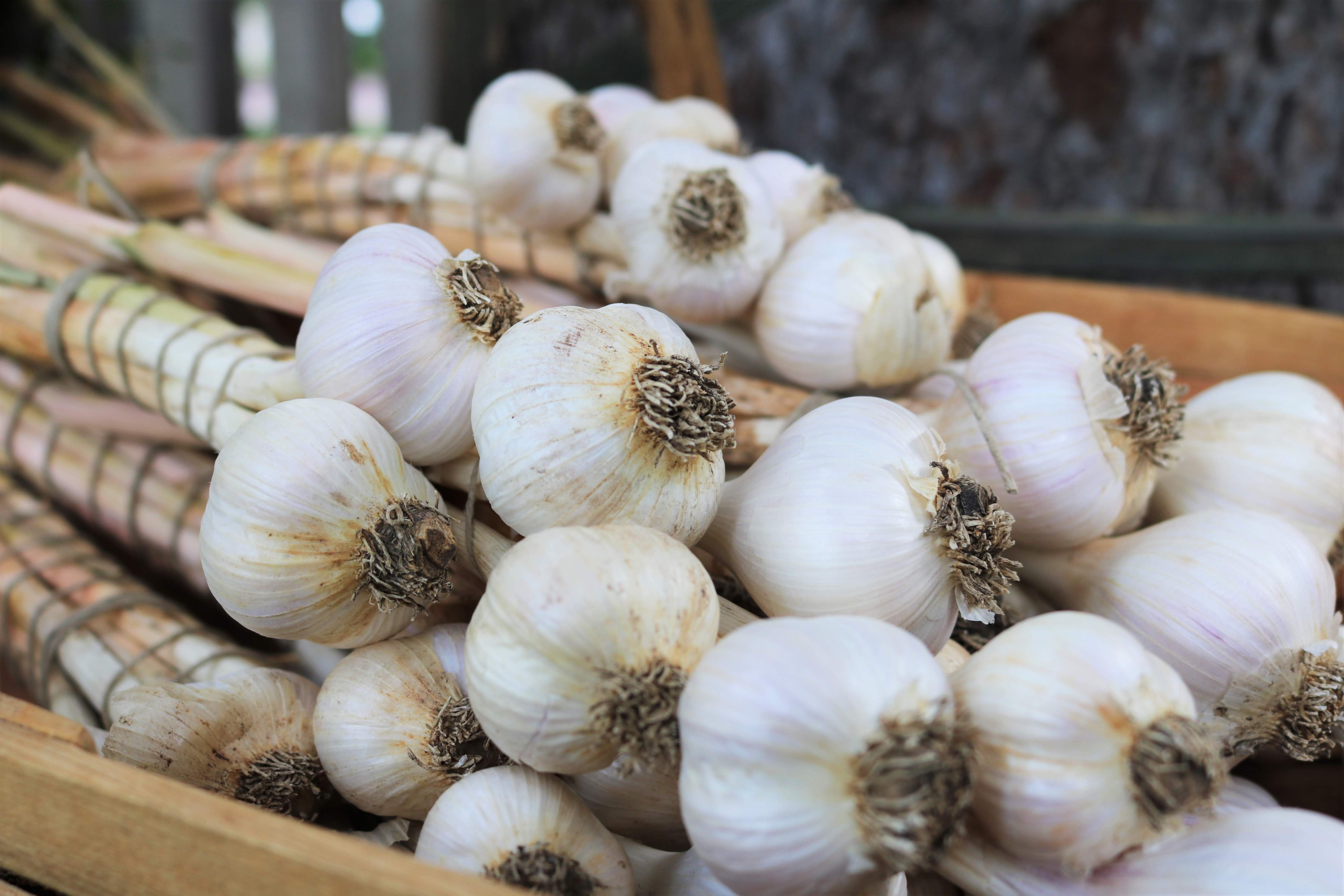
After pulling out my garlic, use a stiff brush to remove the excess dirt. Do not use water. Once they’re brushed off, lay them out in a well-circulated place, not touching each other, for about three weeks. This will allow them to cure. I generally leave them on a tarp in my garage, but you can also put them in the sun or under a tree, or you can tie and hang them in a well-ventilated space.

Once the garlic has cured for about three weeks, then it’s time to finish cleaning it up. Trim the tops and roots so they’re neat, and then tie them by wrapping them with string. By combining the garlic into a nice arrangement, they are beautiful on the wall, and they’re extra convenient when you want to clip a head off to use in your cooking. 

Once the garlic is arranged and ready for storage, place it in a well-ventilated, room-temperature space. I generally like to hang it in my kitchen, and that way, it’s ready for use.

Why Grow Garlic? 

I grew up with minimal garlic in my life, and what did exist came in the form of garlic powder. Later this changed to the minced garlic in a jar, and I thought I was getting pretty fancy at this point. The idea of fresh cloves of garlic came next, but I always bought these from a grocery store. 

It was probably twenty five years ago when I was wandering through a farmers market in late July and came across a stand that had garlic for sale. They had baskets filled with pink garlic, garlic with purple stripes, and white garlic. Some bulbs were large, others smaller. 

The realization that so many varieties existed was quite the discovery for me. Of course I fell in love with the taste and texture of homegrown garlic heads. Newly harvested garlic is very juicy. The individual cloves are firmer and fresher than what you buy at the grocery store. 

A number of years ago, I started my own garlic patch, and I have never looked back. Garlic has become one of my favorite things to grow. It’s such an easy, carefree plant, and I can cook with the garlic year round. My garlic lasts all the way through winter, spring, and summer until I get my new batch in the late summer. 

What to Cook with Garlic

The best part of learning how to grow garlic is getting to cook delicious meals from the scapes and fresh, juicy heads. If I tried to list all the ways I use my garlic, I could go on forever. But a few of my favorite uses for homegrown garlic include: 

  • Garlic scape pesto
  • Garlic scape and sauteed mushroom pasta
  • Grilled pizza topped with fresh garlic scapes
  • Bruschetta with garlic scapes or garlic
  • Garlic bisque
  • Garlic and shrimp pasta

Learn More about Creating Your Garden 

Growing garlic is one of the many joys of starting a garden at home. By growing a garden, you can create a wonderful haven and rich food for yourself and your family. 

The Ripe and Roasted online vegetable garden course with Cami walks you through the steps of how to design and build your garden from scratch. You’ll learn how to choose, arrange, plant, and care for your vegetables and pollinator flowers. 

Visit the garden course page to learn more and sign up. Gardening makes it possible to reconnect with nature while growing fresh, organic food in your own backyard. 

Posted on 1 Comment

The Autumn Garden’s End

One Dreary Autumn Day

It had rained overnight, so as I stepped out the door, a fresh layer of fallen ochre-colored sugar maple leaves greeted me. Like gemstones, when strewn on the wet gray cement, the autumn leaves were almost luminous.

Oak and maple leaves in the fall with the play between the yellow, orange, rust, and wine colors, continue to inspire me. As the world around them is shutting down for winter and is becoming brown and gray, they shine in their brilliant splendor for all the world to see. 

Autumn bounty from the garden

Autumn Animal Visitors

I watch as a squirrel carries a large walnut in his mouth over to a spot in the lawn where he starts to dig. Nope, not quite the right spot. He moves a few feet over, then moves again. Finally he finds what he deems the perfect location to bury his precious nut. He starts to feverishly dig, into the hole drops the nut, and it’s quickly buried.

A mama cardinal lands on the fence and sits, looking over the situation before flying into the feeder to get an afternoon snack. It seems that all the birds are back in our yard. They’ve been out in the bushes, trees, and prairies all summer, but now they’re back at our feeders. It’s good to see them, the little nuthatches, the red-breasted woodpeckers, the slate-colored juncos, the chickadees, and of course the cardinals. 

Kale and green tomatoes from the garden.

Clearing the Garden

I turned away from my little friends. There was a laundry list of things to get done, and I had to get busy. I needed to harvest the last of my vegetable garden before the temperature drops. Working outside in the cold, I picked the season’s final tomatoes. It has been a great year for tomato production, but the vines started to turn brown. I pulled them out of the ground and stacked the cages. 

Next, it was on to digging up the carrots and beets. Then the leeks and onions, Then the peppers, eggplants, and cucumbers. My baskets filled up, and yet there was more to do. I dried the beans to shuck at a later time, so I laid those out on a tarp in the garage. I clip the herbs and store them in freezer bags for me to use this winter.

Autumn bounty from harvest time.

Planting for Next Year

The final task of the day was planting my garlic in my newly empty garden bed. I chose some interesting varieties of garlic this year, and I’m excited to get them planted. There are a couple of purple varieties, one that grills up nicely, and a couple that will be sweet when eaten raw. I picked all of them for their lasting quality, as I hang them in my kitchen to use throughout the winter. First I dug holes in my rich dirt, buried the cloves, labeled the spaces, and covered the bed with piles of the dried oak and maple leaves. At last my work was done. 

Top left: onions from the garden, bottom left: more garden bounty, right: kale leaves from the garden.

Transition to Winter

It’s almost as if I just finished up reading a riveting novel. I’ve thoroughly enjoyed the journey and now am in the final chapters. I don’t want the book to end. But end it does. Such has been this summer, the greenery, the garden bounty, the profuse flowers, the long, idyllic evenings. The chapters in this summertime novel are long and have captured my heart. Closing the cover to this book is bittersweet. 

With late autumn we move our lives indoors. We take the piles of vegetables on our counters and create rich stews and braises. We don sweaters and light candles. Soon the lovely scent of fireplaces burning will permeate our neighborhoods. The next novel, a wintertime one, is at my doorstep, and I’m ready to begin reading.

Posted on Leave a comment

Random Beauty: Self-Seeding

It was a cool, late spring afternoon. The sun shone, but there was a slight bite in the air. We were itching to dig outside in the dirt. My kids inspected the garlic patch, which was by now a foot tall. They called out to me, “Mom, we can’t believe you haven’t weeded the garlic. Look at all the weeds coming out of the ground.” I came over to inspect, and then I started to explain each little plant. This one was arugula. That one was fennel. Over here was dill. There was cilantro. These weren’t weeds at all. They were self-seeding plants from previous years.

Self-Seeding: What is it?

Self-seeding happens when a plant is left to flower and then go to seed. In the summer sun, these seeds dry out and drop onto the ground or are blown by the wind. They sink into the soil and stay there until the time is right for them to germinate and grow into a new plant. This is nature’s way of sustaining itself. It’s also how a weed can go from one plant to 300 in no time flat.

Over the past number of years, I have been increasingly intentional about letting my herbs and vegetables produce flowers so the beneficial insects have nectar to eat. On any summer day, fennel, cilantro, arugula, and lettuce flowers are covered with little hoverflies or bumblebees busily sucking in the sweet nectar these flowers provide. As they move from flower to flower, these diminutive bugs play the essential role of pollinating our fruit and vegetable plants.

Why Self-Seed?

Many might say that letting plants self-seed is the lazy gardener’s way of operating. That is true in some respect. It can also be a frugal way to garden. When you let plants self-seed, you don’t have to buy the seed or plant the seed. It just comes up on its own.

I tend to have a favorable perspective on the philosophy of self-seeding. I love the whimsy of a coleus flower poking up in the middle of my radishes or a bachelor button in my beets. Cilantro taking root within my carrots brings me joy. Loveliness arises when a broad, white dill flower stands proudly next to the cucumbers. Order is laced with beautiful disarray.

Ordered Chaos

Yesterday as I was harvesting berries, tucked up under the branches of the mulberry tree which the birds planted years ago, I noticed that the clematis had vined up around a lower mulberry branch. The plum-colored flowers intertwined with the dark purple berries. This simple artistry caught me and drew me in. The intentional encircling the accidental, the fanciful result of order marrying chaos.

Many gardeners set aside a designated garden space for self-seeding plants. Sometimes they combine this with their perennial vegetable garden. Perennial vegetables include plants like asparagus, rhubarb, raspberries, strawberries, walking onions, thyme, chives, and oregano. If these two categories mix in the same space, technically one never needs to plant these vegetables and herbs again. As the saying goes, “One only plants tomatillos once.” Tomatillos are famous for self-seeding.

Exceptions to Self-Seeding

There are a few caveats in this whole discussion. I do weed extensively in places where I do not want self-seeding plants to grow. For example, a lot of dill came up in a section where I had planted beets. I harvested the dill when it was five or six inches tall, opening up the space for the beets to grow and thrive. A similar thing happened where I planted my Basil Genovese. Arugula was happily growing very tall, shading the tiny basil plants. Guess what I ate for dinner last night? An arugula salad. The dill is going to top a baked slab of fish shortly.

Another point I want to be sure and mention is to not let invasive plants self-seed. As much as the bees go crazy for mint flowers, I am fastidious about plucking them off the mint plants before they can drop their seed and spread around the garden. The same holds true for both regular and garlic chives. Heirloom tomatoes can be included as well simply because if you let tomatoes drop onto the ground and they rot there for the rest of the summer, a tight collection of tomato plants will sprout the next year. These will undoubtedly be planted in the wrong spot and too tightly together. You can carefully transplant a few of them into the intended spots, but the rest will probably go into the compost pile.

Compost Plants

Speaking of compost piles, there’s many a squash or plant that has emerged from its surface because someone discarded their extras the previous summer. Again, the delightful unintended consequences occasionally graced upon us by nature. The idea of something as delicious as squash growing out of the rot of compost is a concept paralleled in many aspects of life. I suppose this is what attracts me to the random beauty of self-seeded plants.

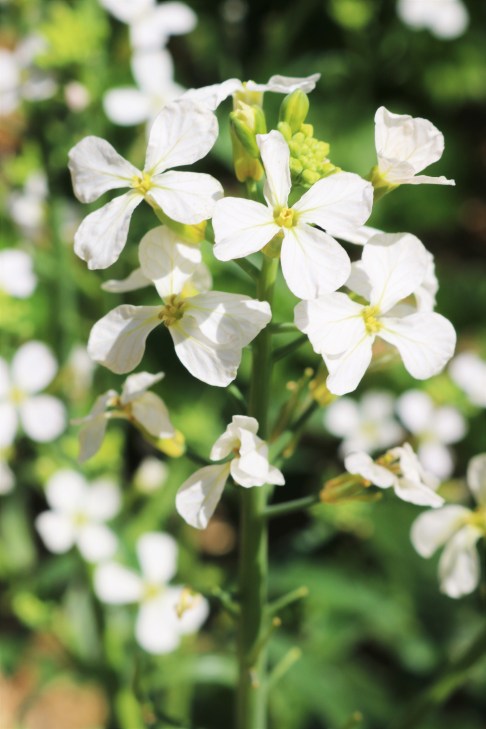
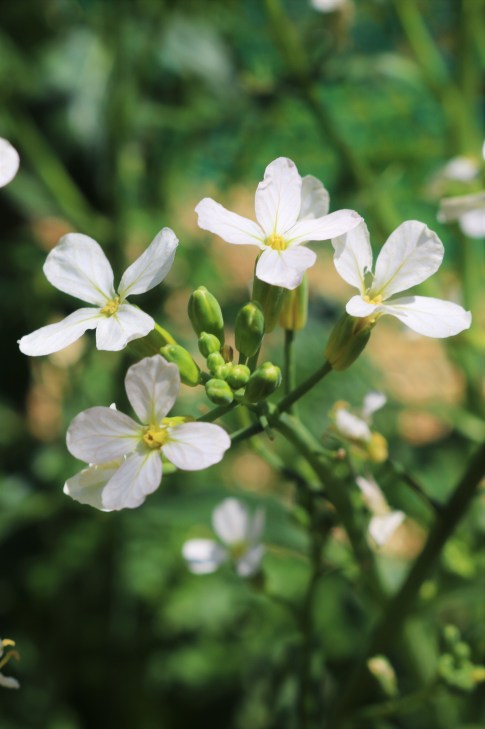
I will savor the cilantro in my mango salad. The radish flowers (a plant I’m allowing to self-seed for next year) are going into a bouquet on my dining room table. The sunflowers and bachelor buttons will bloom and then dry to drop their seeds for another year. Beauty moves forward, magnifying into the future.

Posted on 1 Comment

A Garlic Obsession

Is it possible to create a new food group? How about an additional nutrient? Maybe it was one of the treasures found in the pyramids of Egypt. Questions fly around such as, “Is it a vegetable or an herb?” Aaahhh, yes, you know I am talking about garlic. In my kitchen there are few things that sneak themselves into my cooking more often than that firm but juicy bulb named garlic.

Cooking with Garlic

I must admit, I have a self-diagnosed and historical obsession with the culinary bulb. As a way of denial, let’s call it a garlic penchant. Garlic has been inching its way more and more into my dishes and menus for several decades now. It started innocently enough back in the mid ‘80s when a little garlic powder sprinkled on my garlic bread was a natural accompaniment to spaghetti sauce with meatballs. When I moved from opening a jar to creating the sauce for the afore-mentioned spaghetti sauce, I realized the value of its culinary pungency. It was uphill (or should I say downhill?) from there.

I seem to regularly make dishes that just happen to have it as an ingredient. Or do I search for dishes that include it? In the back of my mind, I remember, “An apple a day keeps the doctor away.” In my way of thinking, it is “A garlic clove per day…”

IMG_2904 (2).JPG
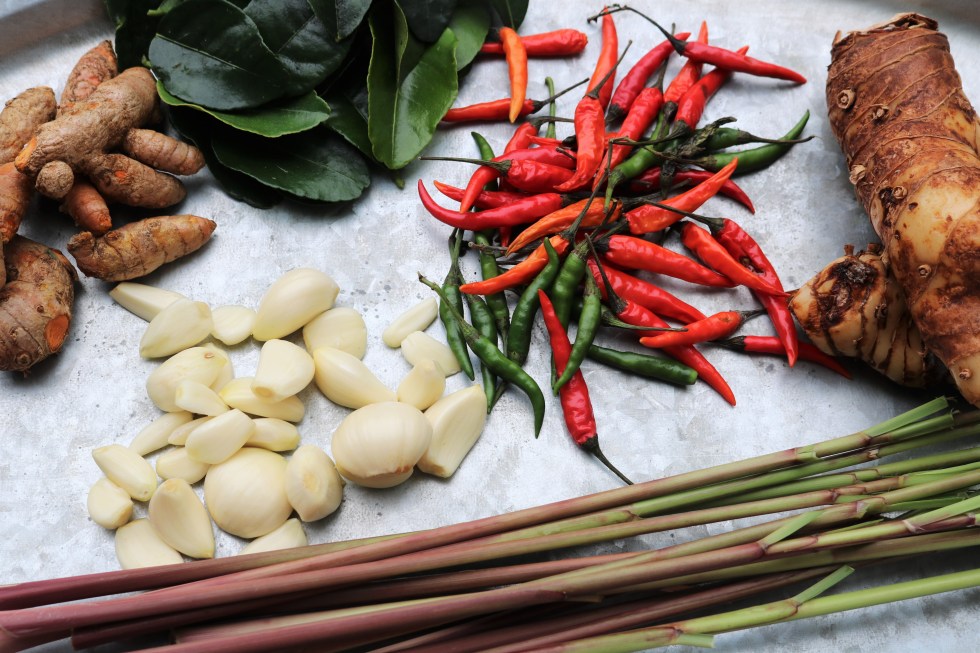
Ingredients for a Cambodian chicken curry featuring scratch lemongrass paste made with garden garlic and lemongrass.

Three square meals of garlic per day, you say? That is possible. Garlic for breakfast? Yep. A necessity in mushroom crepes. Lunch? Of course. The classic French oil and vinegar dressing drizzled on my garden greens by all standards Françoise must contain a minced clove. Then from 4:00 p.m. and onward, it shows up everywhere, working its way into every dish. Garlic is an essential part of the tomato, basil, fresh mozzarella cheese crostini I’m currently addicted to. Whether I make a Mexican dish like pork green chili, a toothsome Tuscan garlic and kale soup, a Creole classic Maque Choix, or Spanish paella, they are all rife with garlic.

IMG_2395 (2).JPG
Garden tomatoes, basil, and garlic with mozzarella over French bread.

Growing Garlic

Garlic has been much more easily consumed in my kitchen than grown in my garden. My issues with growing a successful crop has included forgetting to harvest it in a timely fashion (it needs to come out of the ground once about half of the green tops have dried and turned a sandy color and in mid July), overcrowding the cloves when planting, locating the garlic plot in a sunny location, planting smaller cloves (large cloves=large bulbs the following year).

Well, this year I’ve finally arrived! I successfully grew garlic! Last summer I decided it was time I took the time and effort to buy and plant this beloved vegetable properly. After reading up on the specifics of growing garlic, I shopped around online and ended up ordering from Seed Savers in Decorah, Iowa. I chose the sunniest spot in my garden beds and prepped the soil. Garlic bulbs are heavy feeders, so I added extra compost to the area. In late September I buried them in the ground, layering inches of dried leaves overtop to insulate against our frigid winters. I secured these with battened down cardboard. Lo and behold, they even survived this winter’s Polar Vortex.

About the Bulb

Regarding garlic, it belongs to the onion genus, Allium, which in turn is a part of the lily family. In the garden, it has almost no enemies. I suppose the same odor that, when consumed by you and me, scares away friends and family also keeps away garden pests. As it turns out it is also rather easy to grow (a fact that previously seems to have eluded me). When you give it sun and space, it rewards you first with scapes and then large bulbous heads.

The only catch to success is that you have to plan a year in advance. In the upper Midwest, the bulbs need to go into the ground in the fall nine months before they are harvested. If you have a sunny corner and an interest in growing garlic, it is almost time to plant. You can check your local greenhouses or look at online vendors, bearing in mind that favorite varieties sell out quickly.

Varieties

The garlic that you find in the vegetable section of your grocery store usually is not successful in your garden. There are several reasons for this. First, much of our grocery store garlic comes from China and they treat it with a chemical to prevent it from sprouting. Secondly, most garlic you find in grocery store is soft neck garlic which isn’t hardy north of zone 6. If you live in zone 6 or south and want to try planting these soft-neck varieties, do it in the very early spring while it is still cold out.

The rest of us have to “settle” for the wonderfully interesting hard-neck varieties. These little gems we’re settling for, why do we love them so? I know I’ve mentioned juicy before, but that’s one of their prime descriptors. Juicy and crisp. Very different from your grocery store bulbs that have been sitting around for months before they get to the produce department. And quite honestly, the taste is fresher. Something is delicious about them because they are disappearing out of my kitchen faster than I can say “I am crazy for roasted garlic soup.”

Health Benefits

I know you are asking, is garlic actually healthy for me to eat? There has and continues to be a great deal of research around this bulb and its health benefits. What the holistic community has been touting for millennia the modern scientific community is working hard to confirm. From acting as an antimicrobial to helping to improve lipid profiles to aiding in the prevention of some types of cancer, more of garlic’s attributes are being discovered or confirmed every year.

This really is a “which came first, the chicken or the egg?” situation. Do we love the ethnic foods from every continent because they contain our beloved garlic, or is it because of our preoccupation with this crisp and flavorful bulb that we snatch up all available fresh heads at the local farmers market to work into our evening menu?

Does it matter? I say go forth. Indulge. And if you can’t convince your friends and family to join you in your garlic-feeding frenzy, make sure you have a stash of breath mints handy.