Posted on 1 Comment

The Most Wonderful Time of the Year

The holiday season is upon us. For me, it’s such a meaningful time of year. Candlelit Christmas Eve services filled with pomp and music. The traditions of baking old family recipes, caroling through the neighborhood, sipping hot cocoa, decorating the Christmas tree, hanging stars in the windows; these are dear to my heart. In the same vein, the designs I painted for this year’s holiday series have a special significance for me.

Deer

The animal I chose to paint this year is a stag with a grand rack of horns. Grand racks seem to be all over the place in holiday art. I initially think of the reindeer that pull Santa’s sleigh, but then my mind quickly goes to the stags that are included in many Scandinavian motifs. From knitted Christmas stockings to Swedish straw decorations to cut-out sugar cookies, a buck with large horns seems ubiquitous.

Fraser Fir Tree

The fraser fir also seemed fitting for this year’s collection. Our family has made a tradition of heading out to the local tree farm and cutting down our Christmas tree. This has most often involved gathering the kiddos, bundling them up in warm gear, and sipping on hot chocolate on a chilly early December day. The fraser fir tree has been our tree of choice for the last number of years because of its sturdy limbs, soft needles, and classic Christmas tree shape.

Poinsettia

Poinsettia and I go way back to my childhood in Madagascar, where poinsettia thrives in the landscape. The climate is perfect for it, so it grows tall and wide. Imagine a line of brilliant red-leafed poinsettias the size of large bushes or small trees lining your driveway. They naturally bloom around Christmas time. Spectacular; that’s what poinsettias are!

Dala horse

You all know by now that I cherish my Scandinavian heritage and its traditions. Living in the north country, many winter days find me wearing a cozy Norwegian sweater. A birch wood hand carved star hangs in my window, welcoming visitors to come in and have a spot of something sweet and a warm cup of coffee. Among the many heritage pieces in my home, the Dala horse stands proudly on the desk in my kitchen. It is a simple yet carefully crafted tchotchke that brings nostalgia into my home.

The Dala horse I painted for this collection has a long history, dating back to the 1600s in Sweden where they were given as gifts and used as toys for children. Down through the years, this horse has become a symbol for Sweden and for the region of Darlarna specifically. After being cut out into the horse shape, the horses are hand whittled, dipped in several coats of paint, polished smooth, and then hand painted by artisans.

The nights are getting chilly and the days shorter. We are speeding closer to the cold yet cozy days of the new year. This is the time when outdoor tasks are buttoned up, to be returned to in the spring.

The Christmas season is for celebrating, remembering, and treasuring. Remembering and celebrating the birth of the Christ child and holding this gift near to our hearts. But also celebrating the traditions of the season, remembering our loved ones, gathering them close, and treasuring them as the precious gifts that they are. Merry Christmas to each of you this holiday season!

Posted on Leave a comment

6 Flowers Near and Dear to My Heart

I step outside on a cool afternoon. As I look around, the spring meadows surround me, painted with great swatches of blue flowers. Life is waking up after our strangely mild winter. The arrival of Colorado blue columbine signals the warmer days of summer are just around the corner.

Spring in the mountains is a lovely time. The streams begin to gurgle with the fresh snow melt running off the peaks. It’s tough to be a plant in such rocky soil and at such high altitude. This makes it all the more refreshing when flowers like bittersweet and Colorado blue columbine flourish. Harsh conditions are exactly where they thrive.

Pasque flowers are much the same, except they bloom on the prairies rather than the mountains. Like its mountain counterparts, the pasque flower loves the cool spring and doesn’t mind challenging growing conditions.

Most of my flower collections are structured in a rigid frame, but this unique collection is instead simply a grouping of some of my favorite flowers, some found in the wild and some in the garden:

  • Colorado blue columbine
  • Pasque flower
  • Lady slipper
  • Bitterroot
  • Dogwood flower
  • Poppy

It is with joy and excitement that I present to you this special collection of flower designs.

Colorado blue columbine

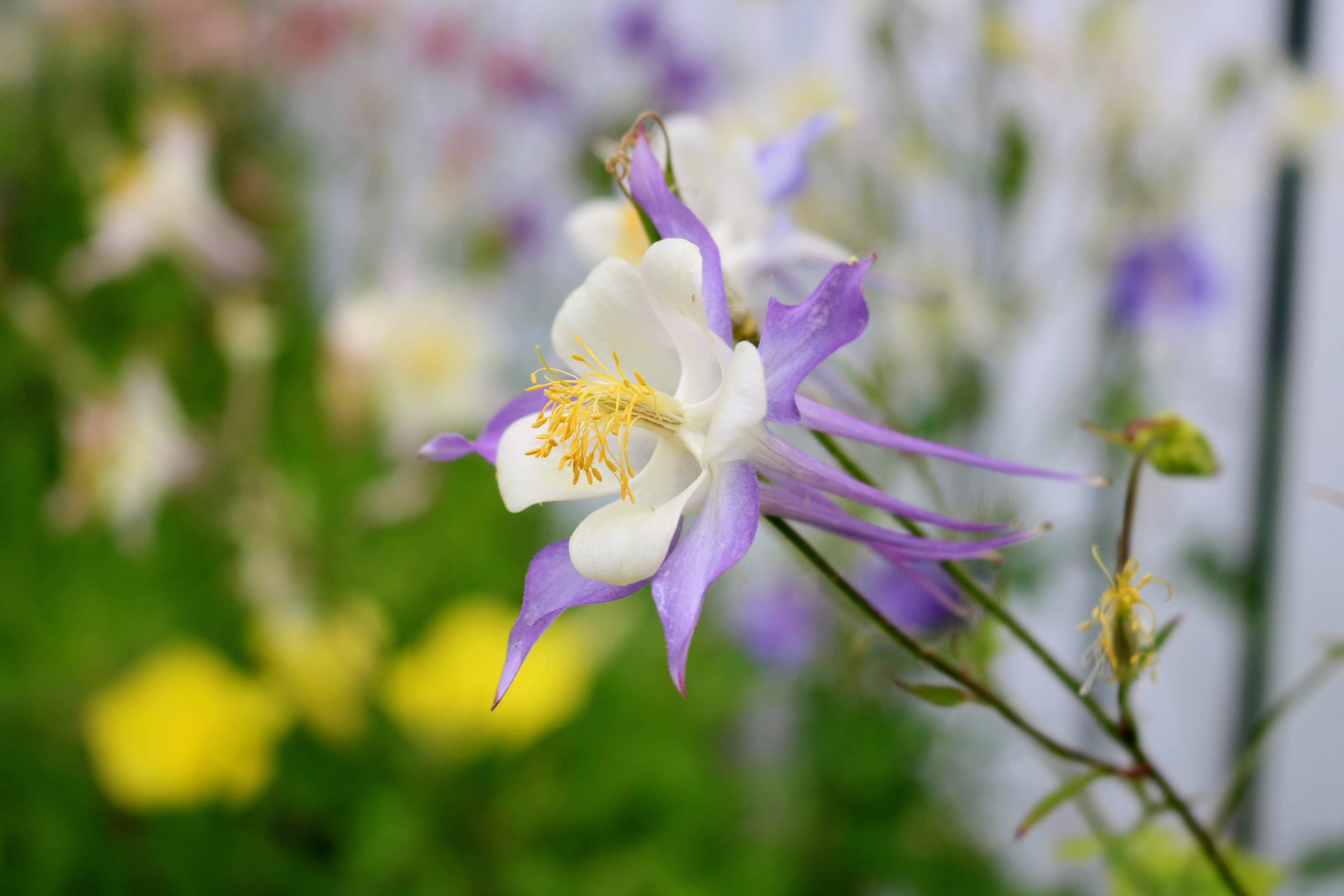
The Colorado blue columbine is one of those hard-to-find state flowers. To see these beauties in all their glory, you need to hike up into the Rocky Mountains during the early part of the summer. These flowers like moist, sunny mountain meadows, and they can also be found tucked into relatively open Aspen groves in the alpine tundra.

Colorado blue columbines are bi-colored, sporting creamy white sepals that extend out from the flower at a right angle. The blue petals jut backwards and extend into long points. The structure of the columbine flower is particularly suited to the hummingbird and hawkmoths, who both help to pollinate these lovely flowers.

Like so many of these high mountain glories, this flower is becoming rarer and rarer. It’s currently against the law to pick it on public lands in Colorado. If you are lucky enough to see it in the meadows of your own mountain getaway and want a bouquet, simply clip the stems off above the ground so the roots stay intact. This way it’ll come back in years to come.

Pasque flower

The pasque flower is another one of those early bloomers. As its name indicates, pasque is the French word for Easter, which is around the time that it usually blooms. It’s the state flower of South Dakota, my home, where it’s one of the earliest flowers seen on the prairie.

The bluish purple petals stand out against the otherwise bland-colored spring ground. These delicate flowers serve as an important early pollinator for many insects that are just waking up in the spring. Even though insects love this plant, it is considered toxic to both animals and humans.

Lady slipper

It was a gorgeous sunny day when I found myself walking on the edge of a wood in northern Minnesota. What suddenly caught my eye were dozens of delicate orchid-looking pink and white flowers scattered around the vegetation.

Some were tucked under the pines, and others poked up throughout the meadow in front of me. The ground in this area was mildly moist and spongy under my feet. In fact, just off in the distance was a swamp. The tall brown cattail heads stood high against the green foliage. These intricate and showy flowers seemed out of place against the wildness of the environment.

Lady slipper is a flower in the orchid family that thrives in the moist, cool forests of central and northern Minnesota. In this native habitat, the plants can live for decades, putting out their gorgeous flowers every year.

When you see a lady slipper in nature, it’s easy to forget how increasingly rare they’ve become. Lady slippers have very specific requirements for growth. They need bees to pollinate them, the seeds depend on mycorrhizal fungi to survive, and they can grow for years before they flower. As their natural habitat is developed and disappears, so also these beauties are becoming less prevalent.

It is with a great deal of awe and reverence that I paint and offer my rendition of this very special flower, the state flower of Minnesota, and one of the most interesting and rare of the state flowers.

For me personally, there are only a few flowers that fall into the “hallowed flowers” category. The lady slipper orchid holds this elevated status for me.

Bitterroot

This darling little pink flower is only found in the most desolate of locations, in the dry, stony areas in and around mountain ranges. It thrives in the poorest of soils and the driest of conditions. It baffles me that something can be so beautiful in spite of such difficult environments, or should I say because of such difficult environments. I somehow find the antithetical nature of this flower personally inspiring.

In the southwestern part of Montana exists a river, a mountain range, and a valley all named after bitterroot. Many Native Americans tribes, who had an innate sense of edible plants, considered bitterroot a delicacy, eaten with meat such as grouse.

That said, if you happen to be wandering through the high country of Montana, resist harvesting this rare plant for dinner, as it is also becoming rarer in recent years.

Dogwood flower

I’m a sucker for flowering trees, and dogwood flowers have to be among my favorites. They almost glow in their brilliance.

One of my many favorite things about spring in the southeast quadrant of our country is the spring flowering dogwoods. The white, yellow, or pink flowers seem to float on top of the branches. These blooming trees are the portal to the beginning of spring.

Botanically, dogwoods have many interesting qualities. They can self pollinate, so you only need one to enjoy flowers and berries. The wood is extremely hard — so hard, in fact, that it’s almost grainless. The flowering dogwood variety actually grows better as an understory tree in dappled shade than it does in full sun.

This tree is so prized that it’s the state tree and/or flower in several states: North Carolina, Virginia, Missouri, and New Jersey. I’ll have to admit, this tree is one of the reasons I suffer from zone 5 envy!

Poppy

The poppy, with its papery petals and colors that look like they came off a painter’s easel, are both tough and delicate. Their petals ruffle in the breeze in the most whimsical way.

The primary reason I painted the red poppy is because of their incredible color. Their vibrant red pops in the landscape (or on a wall). Poppies are one of the most recognizable flowers in the world, even though they tend to flourish in the northern hemisphere.

Their color range is wide from white to pink to rose, red, wine, purple, yellow, orange, and even a grayish purple. Since World War I when poppies flourished in the war-torn fields of northern Europe, the red poppy has been the symbol of remembrance and hope for veterans throughout the United Kingdom. The orange-colored California poppy is the state flower of its namesake, California.

Closing thoughts

I hope this collection of flowers gets you in the mood for spring. Everywhere I turn, trees are budding, bulbs are emerging from the ground, perennials are reviving, and the grass is becoming ever-more green. May each of you have a happy and beautiful spring!

Posted on Leave a comment

Glorious December: The Winter Collection

The frosty grass crunches under my boots as I cut across my lawn. The sunlight is crystalline this winter morning. Daybreak has just arrived; its light sparkles through the branches of oaks and maples. I breathe in the cool air, and it refreshes me down to my core.

The sweet dogs that walk beside me are similarly thrilled to be outside. The noses busily snuffle in the dry leaves, looking for remnant scents of the nightly critters who have occasioned past. Racoons or possums are always a possibility, as are the neighborhood cats. It is an exciting moment when they find a particularly interesting smell.

We are on the cusp of this holiday season, yet it seems surreal. Autumn has been glorious this year. The maple trees were laden with beautiful red and orange leaves. The mornings were cool, but then the day morphed into sunny warm afternoons. All this belying the harsh winter that is certain to come.

I glance up to see a blue jay grabbing an acorn from a big old oak tree and flitting off. Acorns are an important food source for blue jays, especially in the winter. Blue jays spend the warmer months burying acorns around and about. They will only remember where a fraction are, resulting potentially in many baby oak trees. Fondly, I think of what an unsuspecting gardener this bossy bird is.

We return from our walk back to our festive house. The ornamental hawthorn trees and holly winter berry bushes are draped with twinkle lights, a wreath bedecks the side of the house, and Scandinavian stars hang delicately in each of the windows. When lit, they bring magical light to the rooms within as well as the darkness outside. My intention with our lights and decorating is to pull people inside. They say, “Come in, stay a bit, let’s share a freshly baked goodie and for the moment forget our respective to-do lists.”

My cozy home, a warm cup of tea, holiday jazz tunes, the soft alpaca throw I purchased at a darling shop in Big Timber, Montana, the latest knitting project on my lap, these are the things I bask in during these weeks leading up to Christmas.

Here is my seasonal card collection, with four notable additions for winter 2023 designs, including lodgepole pines, a blue jay, holly winter berries, and a snowy home.

I light a fire in the fireplace, throwing in some lodgepole pine cones I gathered this past summer in the Montana Rockies. They quickly snap and crackle when lit, making for wonderful fire starters. As the room warms, I curl up on the couch, soaking in the beauty of it all. The calm, the festive, the hectic, the beautiful — all memories to be stored away. This is December. Glorious December.

Posted on Leave a comment

Colors of Fall: Introducing the Fall Colors Flower Collection

The rustling leaves of the nearby oak tree catch my eye as I pass by on the street. Its leaves have just begun to transform into yellow and brown. Across the street the maple tree is already adorned in oranges and reds. My pagoda dogwood sports hues of deep purple and plum. I feel the magic in nature’s metamorphosis. 

As the days shorten and the temperatures lower, sunlight becomes more prized. We receive pockets of golden sunshine that prompt us to slow down and treasure the moment, which can be difficult to do amid the season’s busyness. After all, a long list of fall chores beckons us. Should I take a moment to savor the crisp weather or use these mild-weathered moments to complete my many garden tasks? The two sides pull at us.  

My garden has transitioned from the bright and clear pinks and magentas of summer flowers to the cozy red and burgundy tones of fall. I’m in the mood to gather the troops and take a trip to our local apple orchard. The delicious result of such an excursion will necessarily be filling the house with the heady aroma of apple butter bubbling on the stove, something that my family always eagerly anticipates.

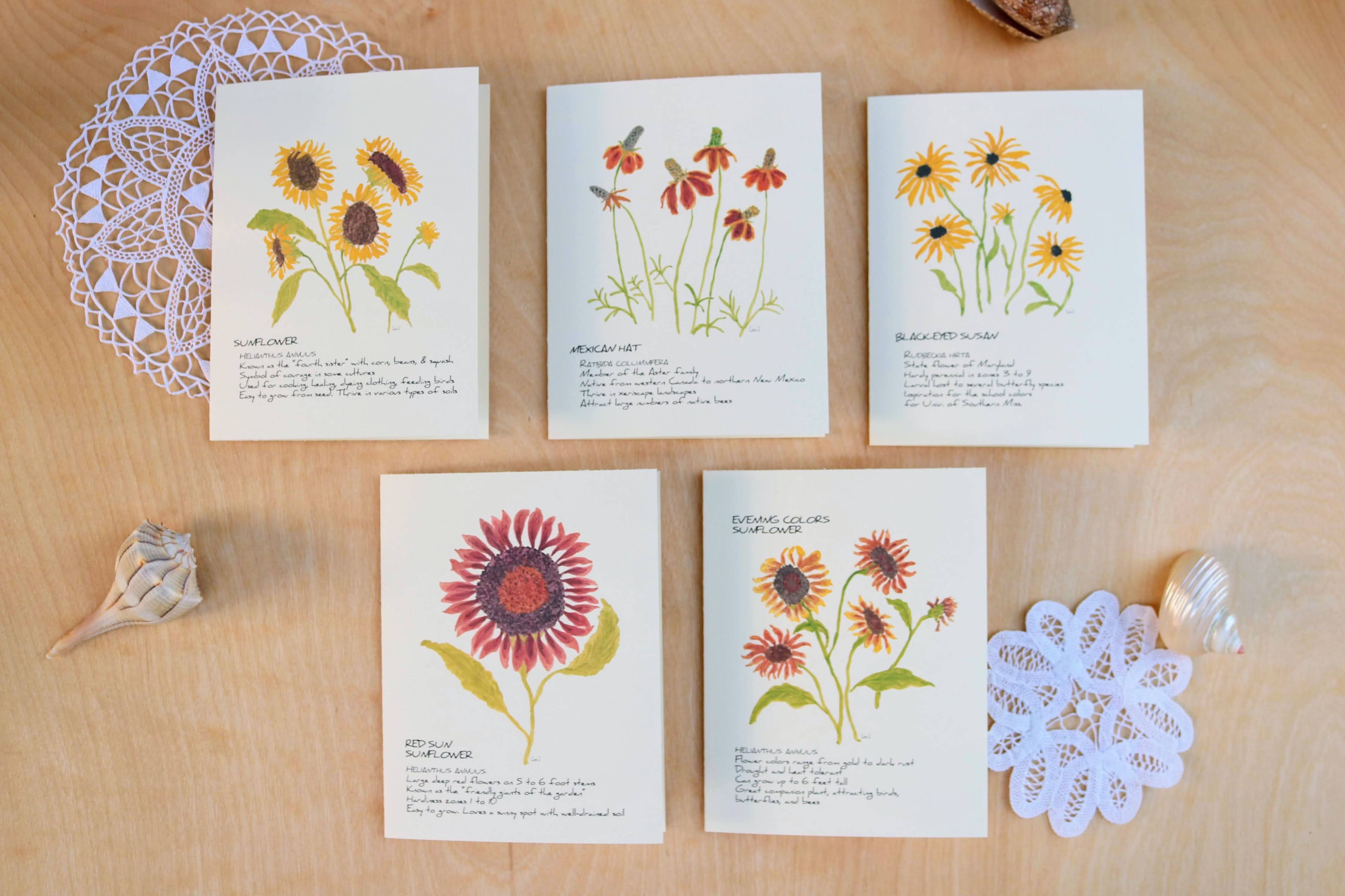
Sunflower

A while back, as I walked up to the tall russet-colored sunflowers in the corner of my garden, I noticed several gold finches flitting between the seedy centers of the flowers and a nearby fence. I paused so as not to disturb their dinner. Later as I looked again, these same seed heads were hosting a collection of native bees and bumblebees. My idea of clipping off flowers to bring home for a bouquet went by the wayside. How could I bring myself to remove this important food source from my garden pollinators only to beautify my kitchen table? So those gorgeous massive flowers stayed in the garden, beautifying that space and feeding the local bird and insect population. 

I finally took them down at the latest possible moment so as to provide a living bird and bee feeder right in the corner of my yard. Who doesn’t adore a chubby little bumblebee or a bright yellow goldfinch? In trying to find ways to attract these cuties, sunflowers are an easy and beautiful solution.

Mexican Hat

One flower I’ve been very excited to paint is the Mexican hat flower, also known, for obvious reasons, as the thimble flower. I first started planting this flower in my garden when I lived in Colorado. It is a little powerhouse in any xeriscape landscape. The delicate yellow-kissed maroon petals belie the workhorse nature of this prairie flower. Mexican hat flowers are not picky about water, heat, or soil. In fact, they will bloom by the hundreds in conditions where other flowers would simply go on strike. I regularly encounter this gem in a prairie garden near my home, and it never fails to make me smile.

Black-Eyed Susan

I have large groups of black-eyed susan rudbeckias in the flower beds in front of my house. Their bright yellow petals provide a cheerful contrast to the lavender-colored veronica and monarda. The black seed centers are command central for the local pollinator population. This fall, while clearing out the faded blooms, I have discovered a bonus treat to an already striking flower, the deep green leaves that blanket the floor underneath. I couldn’t bear to tear them out, so I left them to continue forming a carpet over the earth. 

Evening Colors and Red Sun Sunflowers

The standard yellow sunflower has always seemed to me like it was smiling. If flowers could have emotions, sunflowers would be perpetually happy. The deep, rich tones of red sun sunflowers and evening colors sunflowers remind me of a summer sunset. Just like that golden hour, the saturated petal colors encourage me pause and soak in their rich hues. For several years now, I have planted a selection of rustic/ruby/maroon colored sunflowers. This “variety-pack” of colorful sunflowers have been such a welcome surprise for me each time I see another one open up and wonder which hue this next flower will be. 

The Fall Colors Flower Collection 

It is with these nesting-like emotions that I offer you my latest collection of floral designs to purchase and enjoy. The gold, rust, and ruby petals remind me of pumpkins, flint corn, bittersweet berries, and apple cider.

We are collectively tying up the loose ends in our yards and gardens to prepare for the indoor life of winter. As you soak in the last moments of autumn, it’s my hope that you can sit back and sip cider, breathe in cool air, and jump into a large pile of leaves. And perhaps write a little note to someone you love.

Posted on Leave a comment

Stories of the New Summer Flowers

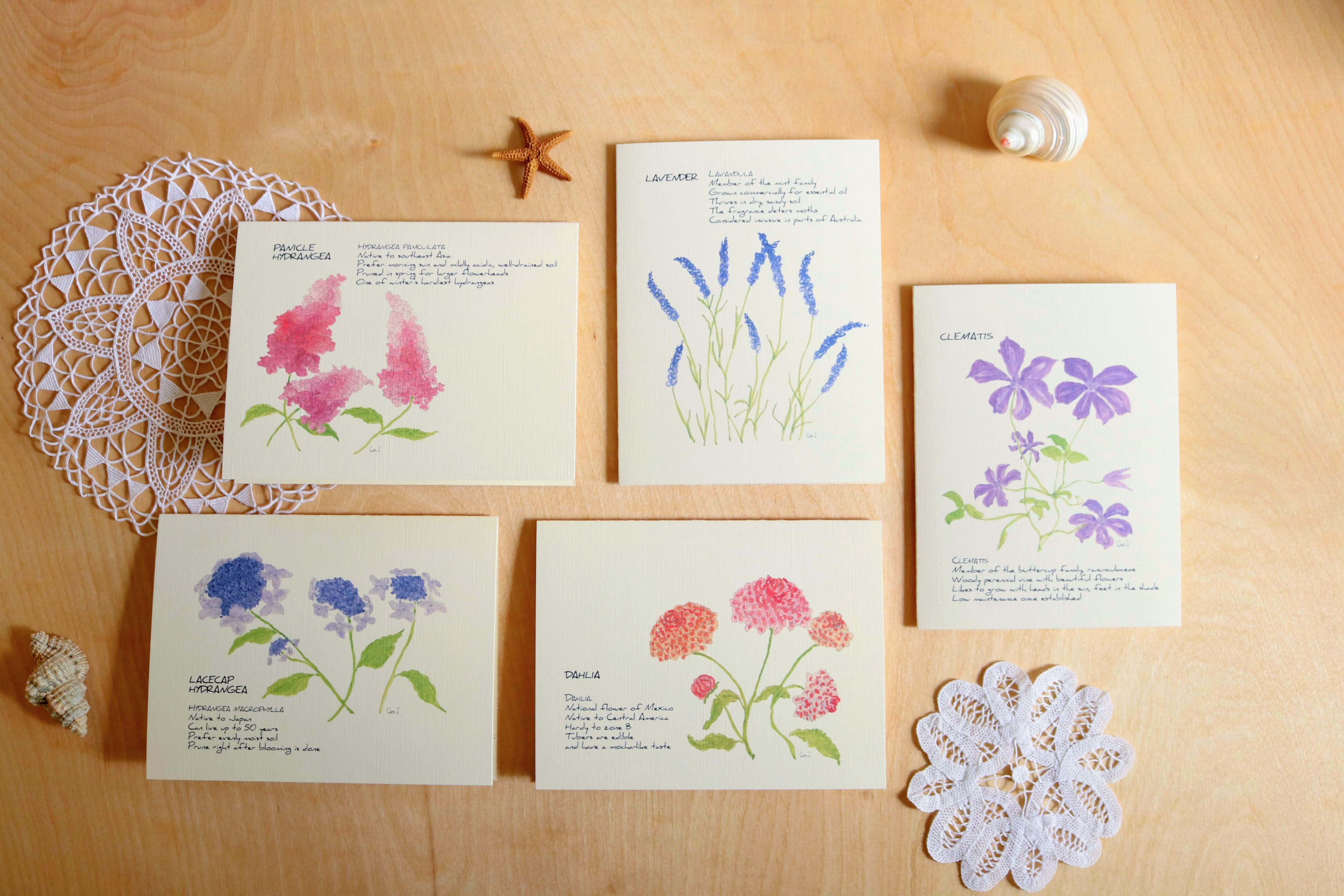
How is it that something so bright and colorful can bring a sense of calm? I admire the tiny florets that combine to form the grand hydrangea and the tumbling clematis vining up the fence. They are at once complex yet simple.

As the cool spring has moved to toasty summer, the buds have grown to ornate blossoms. The sun kisses them, and they grow larger while their color brightens and deepens. When these flower friends greet me each day, they lift my spirit and bring me peace and joy.

Flowers appear simple, yet they are the lynchpin in a complicated food web. For example, as I write these words, two dainty hummingbirds and a rotund bumblebee dart from flower to flower on the honeysuckle vine right outside my door. Flowers truly are the insect and bird world’s kitchen, or should I say dinner plate.

Clematis

For years, I’ve had a whimsical clematis vine climbing my fence. Its delicate tendrils curl around the wrought iron with deep purple flowers poking out here and there. Politely reaching up and out, it slowly expands its reach every year. I try to tell it, “grow faster, grow higher, my beautiful vine. You can never be too much for me.” But it takes its sweet time, growing little by little as the years unwind.

Blossoms envelop my clematis vine for many weeks throughout midsummer. I find myself dreaming up new spots where I could place a trellis and tuck in another variety.

With all its colors and variations, clematis is a vine that the gardening world has been collectively enamored with for centuries. Hailing originally from Asia, it was brought to Europe in the early 1800s and finally made its way to the New World. It is regarded by many as the Queen of Vines, and that it is, possessing both grace and beauty.

Hydrangea

For myriad reasons, I recommend planting hydrangeas more than any other bush. They are like that person in your life who’s practically perfect in every way. Not only are the flowers beautiful, but their bloom times extend for months, from early summer through to the next year when you finally prune them. Additionally, they get more beautiful as they age, often going from ivory or pale green to pink or even deep rose as autumn progresses.

Many plants, trees, and bushes are suited to particular climates, called hardiness zones. Being in a northern climate, there are several southern plants for which I have intense zone envy. Some include the more ornate hydrangea varieties, like the lacecap and mountain hydrangea.

These jewel-toned beauties have graced southern gardens for eons. However, thanks to our busy scientists, more of these colorful varieties are becoming available in the northern zones.

Dahlia

If you’re looking for just one very good reason to live in a southern hardiness zone, it’s the ability to grow dahlias as a perennial. These plants sport massive pom pom-like blooms that can stand several feet tall. Humans have fawned over dahlias for centuries, and for good reason.

The flowers come in every color of the rainbow (except blue and black). They can be a dainty two inches in diameter or a massive 10 inches across. Hailing from Central America, dahlias are the national flower of Mexico.

While I can’t quite imagine digging up this beauty just so I could sauté its root, it was originally classified as a vegetable thanks to its edible, mocha-tasting tuber. I guess the powers that be agreed with me because it was eventually reclassified as a flower. One of its most favored qualities is its late summer bloom time. Right when other flowers are starting to fade, dahlias are going strong, and they continue right up until the frost.

Lavender

As I breathe in the deep purple color and the intoxicating aroma of my newly gathered lavender bouquet, my worries melt away. On gray and rainy days, I often light a lavender-scented votive candle and let the fragrance waft throughout the house, creating a warm, cozy mood.

My love for lavender runs deep, and the scent elicits a deep emotional response in me. I can’t get enough of it. Whether it is in a sachet in my woolens, in the dish soap by my sink, or in a vase on the counter, it’s the one flower I come back to when I’m looking for something special. Maybe it allures me because my northern clime prevents me from growing vast purple fields. Lavender’s relative scarcity up here makes it that much more special.

I suppose until the day I can own a lavender farm, I’ll resign myself to filling my house with lavender-scented tea, lavender candles, lavender soaps, lavender honey, lavender lotion, and lavender water for ironing…Is there ever too much?

The New Summer Flower Art Collection

Now that you see the inspiration behind all of these incredible flowers, you can see why I had to paint them. We really can never have too many flower designs to choose from so here are five more: clematis, lacecap hydrangea, panicle hydrangea, dahlia, and lavender. I hope you enjoy these new designs as much as I enjoyed painting them.

And whenever you sit down to write a note in one of these cards, no matter the time of year, I hope it takes you back to those carefree summer days of sipping iced tea in the garden while the hummingbirds dance all around you.

Posted on 1 Comment

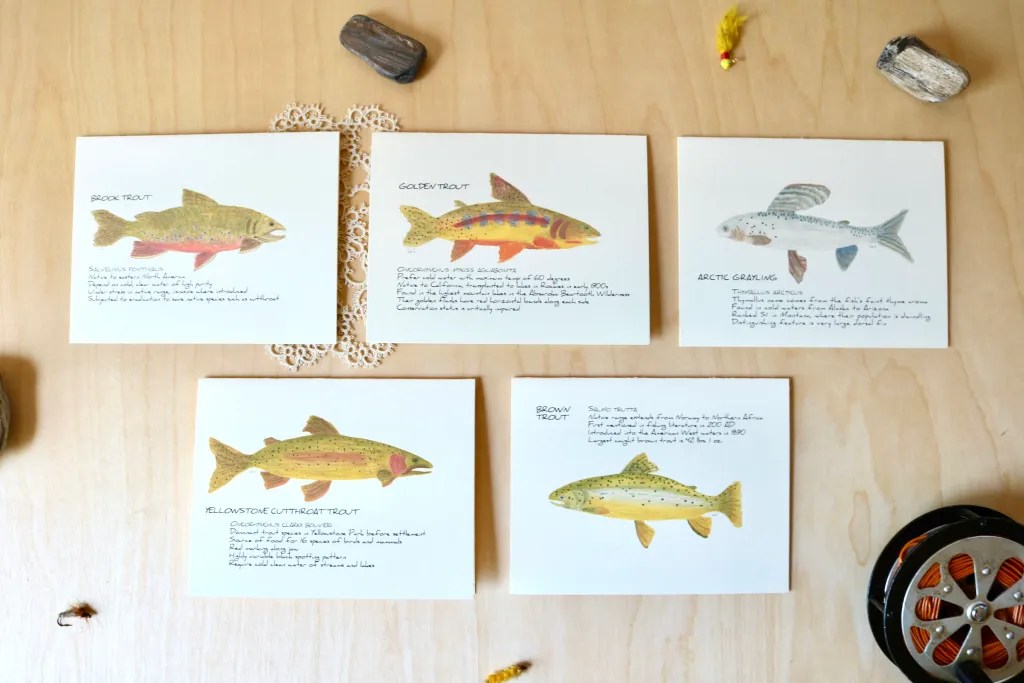
The Trout Collection: Fly Fishing and the Waters of My Youth

As a little girl, summertime brought my family to the Absaroka-Beartooth Wilderness of Montana, where the primary pastime was fly fishing. Still today, the memories remain etched in my mind. I would sit on the rocky bank of the river, watching my father work his way upstream. He elegantly whisked his fly rod back and forth, the line barely grazing the top of the fast-flowing water. If he got lucky, an unknowing rainbow trout would mistake his fly for dinner and take a bite.

My dad famously advised anyone learning to fly fish to “pretend you’re holding a whiskey bottle under your arm. Work your rod back and forth while pretending to hold this bottle.” Now if you knew my father, you’d know him as a borderline teetotaler, not wont to indulge in the beverage. Thus he probably never actually owned said whiskey bottle, making his advice all the more humorous.

Golden Trout

Fly fishing stories and lore intertwined into the fabric of my upbringing. I remember hearing of a handful of high mountain lakes, accessible only by off-trail hiking, that were full of large golden trout. These elusive beauties were always deemed to be the ultimate capstone of trout. As you probably can imagine, these trout remained unreachable and thus safe from our fishing rods simply because we could never get our heads around bushwhacking over mountains to reach them.

Yellowstone Cutthroat Trout

Just a tad closer to our flies and tippets were the yellowstone cutthroat trout. This beautiful trout is distinctive for the bright pink splash of color around its gills and down along its sides. Even though they are considered native to the Yellowstone Park watershed, they historically and naturally migrated across the continental divide from the Pacific drainage into the Atlantic drainage, specifically the Yellowstone Park area.

Only very occasionally has a cutthroat been caught by a member of my family. When we stumble upon these beauties, we immediately release them back into the waters from which they came. Since we’re usually fishing in Montana rivers or streams, per that state’s regulations, we can’t keep them anyway. With such careful management as is happening in the states whether they’re found, these gorgeous fish will continue to flourish and multiply.

Arctic Grayling

One of the most captivating trout designs I’ve painted has to be the arctic grayling. Their too-big-for-their-body dorsal fin gives them a comical air. Then their thin stripe of pink along the edge of the fin is the perfect finishing touch, not unlike a hint of lipstick elevating your look from “everyday” to “evening wear”. Their little splashes of pink and random black dots remind me of a toddler playing with forbidden make-up.

The arctic grayling, while relatively common in Alaska, is quite scarce in the lower 48 states, found only in a handful of high mountain lakes in Montana. Because of this, I’m sad to say I’ve never seen one of these in person.

Rainbow Trout

Ah, the rainbow trout! Possibly the most caught and most talked about type of trout in my fly fishing circle. Every time I see the gorgeous rainbow stripes running down the sides of these trout, I remember again how special these fish are. This beauty graces our eyes for only a few minutes, as I run with the catch-and-release type of fishermen. Thus, these beauties always quickly return back to the waters from whence they came. However short and sweet our encounters, they never fail to delight.

Brook Trout

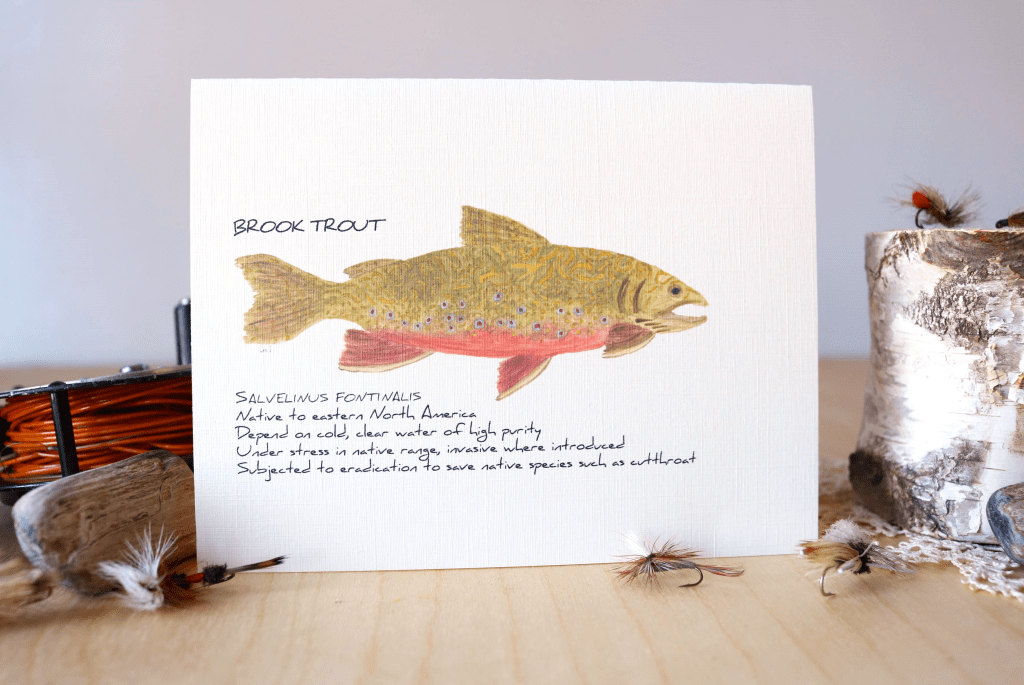
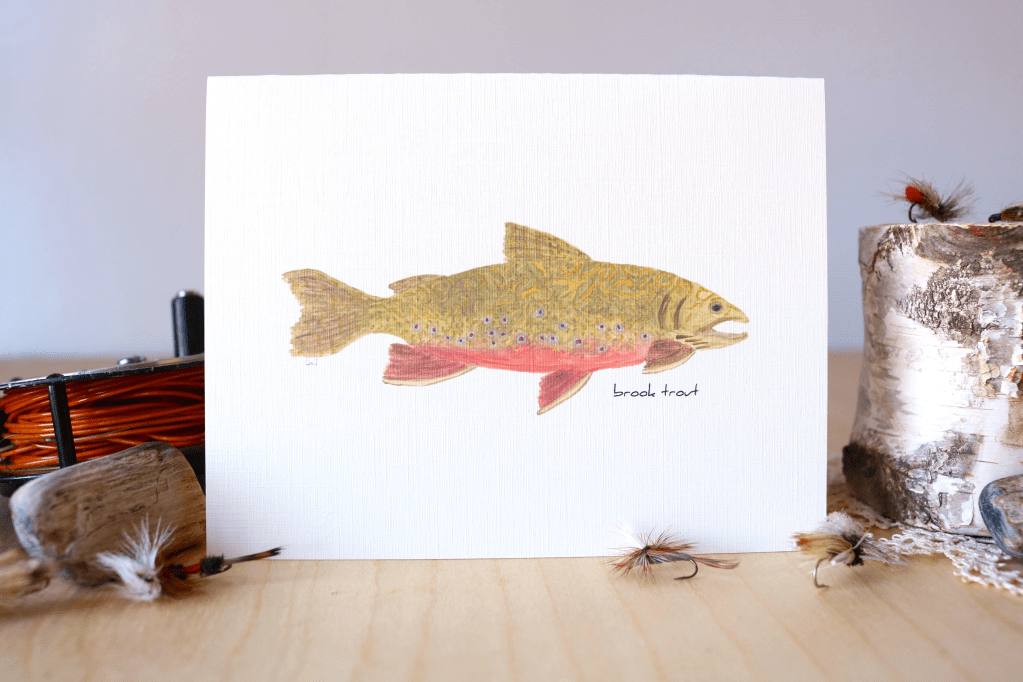
It would seem that brook trout have a bit of an identity crisis. If you live in the eastern United States, where they are under stress, you adore this fish. However, those of us in the mountainous western states don’t have quite so much appreciation. That’s because the brook trout’s ability to flourish is causing populations of native trout to decrease. No matter your level of affection, you can’t help but admit they sport a captivating pattern of yellow and red splotches on their sides. Their squiggly spots made them quite enjoyable for me to paint.

Brown Trout

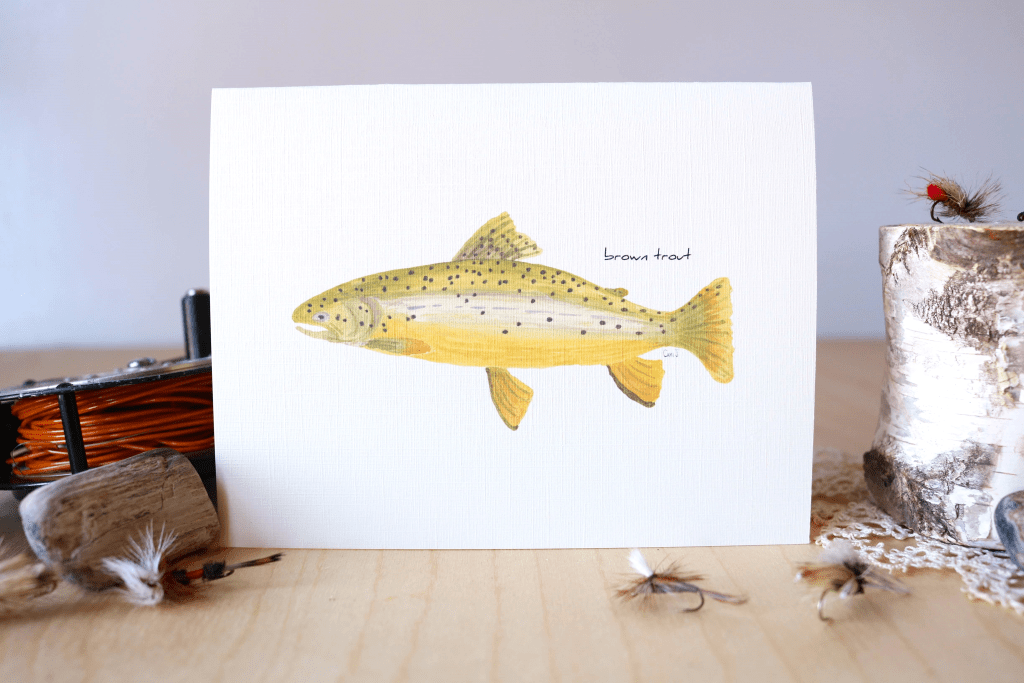
Finally the brown trout, the most spotted of all the trout I painted. I love the coloring of this beauty, with its buttery tan lower abdomen that morphs into brown higher up on the body. Brown trout originated in Europe and were transplanted to the United States in the 1880s. These behemoths run an average length of 12 to 20 inches. Although they can be found in tributaries, they prefer to hang out in bigger waters. They are wily and can be elusive, making them “the one to catch” for many anglers.

The Trout Art Collection

It was pure joy to paint this trout series. Not only do the trout themselves hold a sacred place in heart, but their habitats do as well. Some of my favorite places in the world are the clear waters of the rivers and lakes they call home. The sound of the rushing stream, the smell of lodgepole pine, the flicker of a trout flipping its tail fin above the water during the evening rise…This is where my soul lingered as I painted these beauties. And like a mantra echoing in the recesses of my soul, I heard the voice of my father saying, “Now don’t drop that whiskey bottle!”

Posted on 2 Comments

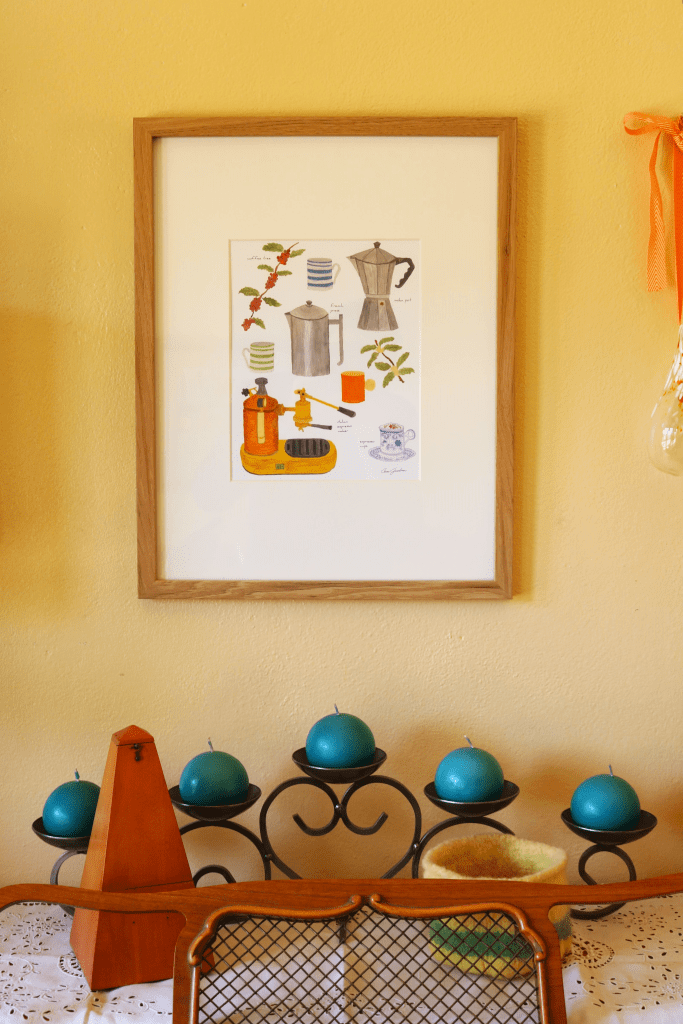
Captivated by Coffee: Introducing the Coffee Greeting Cards

Starting my day with a steaming cup of hot coffee is one habit I particularly enjoy, and one I’m sure many of you share. Coffee is especially comforting in the bleak midwinter, hence the arrival of my new coffee cards.

Coffee’s sweet aroma wafts throughout the house as I grind the beans, and then again as I pour the steaming water over the grounds. This decadent smell seems to float through the air, following me around as the house awakens. I usually take my first sip in the middle of my morning workout. One would think I’d prefer a cold drink of ice water, but hot coffee seems to hit the spot.

A Step Above the Ordinary Cup

On a particularly cold or blustery day, I fire up my La Pavoni espresso maker. This vintage machine has been serving me faithfully for nearly 25 years. It continues to deliver delicious coffee drinks to friends and family alike.

While I have several syrups and can create a wide array of specialty drinks, my personal favorite is a straight-up latte, made with locally sourced whole milk and locally roasted and freshly ground coffee beans. It’s no wonder that I’m quite attached to my coffee habit.

Why We Love Coffee

Why do we crave a hot drink on a cold day? Why do we choose to meet friends in coffee shops? Where does our coffee obsession come from? I believe it at least in part stems from our predilection toward the nostalgic.

A Source of Memories

For me, drinking coffee started as a social event with those who were special in my life, my family or friends. We enjoyed sweet treats and a cup of coffee, always resulting in lengthy conversations and thus cherished memories.

A Travel Companion

Coffee drinking also holds significance because of its role in my wanderings. When I travel, I regularly scout out the best coffee shops. Some of my fondest memories include sitting with family or friends in a funky coffee shop in some strange and far-off city.

A Place to Meet Locally

Then, of course, I must not forget the local coffee shops. I’ve spent more time and money in these wonderful places than I care to admit! However, good times and great conversations are the irreplaceable fruit of these meetings. Time with loved ones is hard to come by, so I cherish each of these visits…and the accompanying cup of coffee.

My Husband’s Moka Pot Tradition

A number of years ago, my husband started a tradition. He would make us a moka pot of coffee when we were in the depths of a big (and usually unruly) outdoor project—one typically involving the yard, garden, or garage. As you moka pot aficionados know, these pots don’t make much coffee, just two small cups of this very stout elixir. But it hits the spot every time.

Not to mention, my husband usually makes it when we’re working in cool, blustery conditions, thus a hot beverage is welcome. Over the years, this little moka pot tradition has blossomed into more than just a cup of coffee. It’s a shared memory between me and the man I love. It’s a pause that refreshes and unites.

The Coffee Art Collection

Because I often drink coffee while writing cards, I inevitably needed to paint a series of art designs that revolved around coffee. I chose to include my favorite methods of brewing along with some of my favorite cups.

La Pavoni

Truth be told, I am in love with my La Pavoni espresso maker, so I had to paint it. As I created this design, the lines and details of this beloved machine had to be just right. Now as I look at the card design, it epitomizes what I love so much about coffee: serving it steaming hot to those who enter my home.

French Press

The next brewing method I painted is one I use every day, the French press. My husband and I have brewed coffee using a French press for decades. After breaking many glass beakers, we opted for a stainless steel insulated pot a few years ago. The insulated quality is a particularly nice feature. I admit I have a quirk; I like my coffee really hot. This pot does the trick in fine form.

Moka Pot

The most common method of brewing coffee in Italy is a moka pot. These little pots were invented by Alfonso Bailetti in 1933. He named the pot after Mocha, a city in Yemen that was renowned for particularly good coffee. My fondness for this brewing method made this pot a shoo-in for this collection.

Coffee Plant

Coffee beans are actually the seeds inside the coffee fruit, which looks like a small cherry. The branches hold beautiful clusters of red coffee cherries. A coffee tree will take four to five years to produce its first fruit and then will only produce about a pound of coffee beans in a single year. Knowing that these beans take so much work makes me appreciate each cup of coffee even more.

Coffee Cups

I have many favorite coffee mugs and cups, but choosing which ones to paint was an easy decision. My first choice was an ancient blue and cream Spode espresso cup and saucer that I picked up years ago in a second-hand shop. The other cups are a set of multi-colored, striped espresso cups. Their bright colors bring me joy every time I drink from them.

The next time you sit down to write a thank you note or get-well card, I hope you’ll choose a card with a coffee pot or cup on the front. And inevitably, doing so will inspire you to make a cup for yourself. Because what better way to write a card than with a steaming cup of coffee at your side?

Posted on Leave a comment

Introducing the 2022 Holiday Greeting Cards

As the Christmas season nears, I wanted to share the stories that shaped this year’s collection of holiday greeting cards...

Pinecone

It was autumn on the shores of Lake Tahoe. As we walked along the path that bordered the lake, majestic pine trees rose grandly all around us. As we ventured through the trees, we stumbled upon some of the most beautiful pinecones I had ever seen. Upon investigation, I discovered these pinecones belonged to the Jeffrey’s pine, a close relative of the Ponderosa pine. Jeffrey’s pine trees are found in a long strip from Oregon to northern Baja California in Mexico, at higher elevations, and in my case, on the eastern side of the Sierra Nevada mountains.

We gathered as many of these gorgeous, chunky pine cones as we could fit in our car. Draped in twinkle lights, along with sugar pine cones, they have since graced my fireplace mantle every Christmas. Interspersed with candle votives, wax-dipped pinecones, and Christmas tree balls, Jeffrey’s pinecones create the calming holiday ambiance I seek during a busy holiday season.

Pomegranate

As soon as the calendar flips to December, I get in the mood for all things pomegranate. Fresh pomegranates await in my fruit bowl, ready to garnish a variety of dishes. These ruby seeds find their way into my cocktails, salads, and hors d’oeuvres boards. I use reduced pomegranate juice in glazes for meats and in several sauces and braises I make over the holiday season.

Pomegranates are one of the quintessential Christmas fruits, bringing a crunchy zing to any dish. They were an obvious choice for including in my holiday greeting cards this year.

Holly

Holly, the shiny-leafed evergreen, is one of my favorite Christmas plants. On a stark winter day, their bright green leaves and red berries remind us that spring will come again. The plant’s thorny points that encircle the leaves and bright berries give a distinctive look that enhances any holiday bouquet. It’s my hope that this year’s holly wreath design will brighten your holiday and remind you of the life and love ever present in this season.

Nuthatch

Red-breasted nuthatches are a darling and quirky little bird. All winter they flit around our yard, moving between our bird feeder, where they eat upside down, and our massive pine tree, where they run up and down the trunk looking for bugs underneath the tree’s bark.

The nuthatch’s upside-down view of life helps find bugs that are missed by birds that only look at things from a right-side up perspective. Nuthatches may be small, but they fiercely defend themselves and their young against larger predators, such as hawks, woodpeckers, owls, and squirrels.

The spirited personalities of nuthatches mesmerizes me and keeps me returning to the window to watch them. Acrobatic, agile, and loud they surely are. They’re in and out, up and down, back and forth. This amusing and energetic northern bird is a pleasure to include in this year’s holiday collection

Red Pine

As a young girl, I spent my days building forts, playing hide and seek, and picking wild blueberries in the shadows of the great red pines. You see, for many years of my childhood, my playground was a vast forest of red pines in northern Minnesota, where they’re uniquely known as Norway pines. The ubiquitous Norway pine tree is Minnesota’s state tree. With its top-heavy nature, the Norway pine doesn’t resemble your stereotypical conifer.

There are a few distinctive things about northern Minnesota, pine forests and lakes being two of them. Oh, and those -20°F winters! Minnesota is called the land of 10,000 lakes, but it could as easily be called the land of 10,000 Norway pine trees, except it’s probably closer to a million.

These tall majestic trees can grow to heights of 150 feet with straight trunks that often grow to three feet in diameter. When young, they are a popular choice to use as a Christmas tree. This variety of pine is self pruning, which leads to a large percentage of the bottom of the trunk having no branches. In turn, they open up the forest floor, which leaves lots of space for fort building!
Conifer forests of one sort or another have played important roles in my life, whether it’s the lodgepole pines of the Absaroka Beartooth mountain range in southern Montana, the ponderosa pines that scattered across my property in Colorado, or the Norway pines of my youth. When thinking about which conifer to paint for this year’s holiday collection, the red pine quickly rose to the top of the list.

The Holiday Greeting Cards

It is with joy that I offer you this year’s holiday collection of greeting cards. It is my hope that they inspire you to slow down and savor the season. Take a moment to look out the window and watch the winter birds skitter about. Breathe in the pine scent of your Christmas tree. Sip on that pomegranate martini. Light the votives on your holly and pinecone-laden mantle. And through it all, remember what’s truly important in life, and hold them a little closer.

Posted on Leave a comment

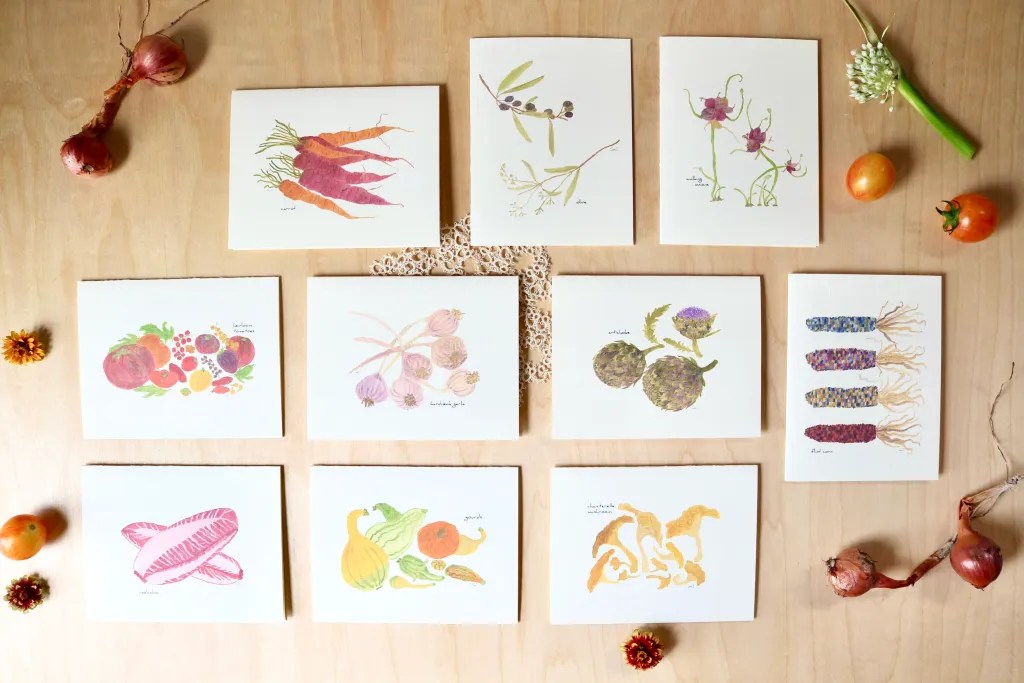
Fall Art Release: Vegetable Watercolor Collection

The Hum of Autumn

The dawn is crisp as I step into my garden. This coolness is new and refreshing. I know the day will heat up later, but for now I contentedly pause to breathe in the chilled air. I arrived at the garden early today to assess which vegetables are ripe and ready to be turned into rich pots of sauces or pickled into crunchy delicacies.

Something about the late summer days calms me even though the days and nights are full with harvesting and canning. Maybe it’s because the heat of summer is over and all that I’ve been preparing for since early spring is now bearing fruit.

Harvesting Garden Vegetables

Evenings and weekends hum along with a similar tune. I open the kitchen windows, turn on jazz saxophone music, and start creating from the garden bounty. It’s my happy time. What have I made before that I want to repeat? What new venture will I try this year?

Carrots

Back in the garden, I start with the carrot patch. I planted three varieties this year. Nantes and Chantenay are the two orange carrots I chose. They are trusty producers, always sweet and juicy. The other variety I planted is Purple Dragon. This is such a beautiful carrot, purple on the outside and orange on the inside. It’s always a crowd pleaser sliced into a salad.

Tomatoes

Across the aisle from the carrots are the tomatoes. Let’s just say I went a little overboard when I ordered my seeds last winter. It was a frigid day in the depths of January when I perused the seed catalogs and websites. This is a dangerous combination for me, as I’m bound to start dreaming of summer and a prolific harvest.

Now, as I look over my tomato collection, I’m glad I planted so many varieties. Most are interesting and delicious. I have what I call the United Nations of tomatoes and peppers.

They hail from most corners of the globe—with many countries in Europe, eastern Europe, the Mediterranean, and the Americas represented. Some of my favorite medium and large tomato varieties include German Pink, Japanese Black Trifele, Black Sea Man, and Dester. I’m newly addicted to two cherry tomato varieties, Blondkopfchen and Sunrise BumbleBee.

Garlic

Planting my garlic has become a cherished tradition for me. I spend many evenings scrolling through the garlic producer’s websites, reading about each type, and trying to choose what varieties to plant. Of course because of where I live, I have to pick from the hardneck options, which thrive in cooler Northern climes. This year I played it safe with the reliable Music variety, and I ventured into the unknown with Georgian Crystal, Pehoski Purple, and Chrysalis Purple.

Radicchio

Every year I challenge myself by planting a new type of vegetable in my garden. One of my favorite introductions was radicchio. This is such a sturdy little plant, whose best trait is that it shines in the very late fall when the days are cool. Radicchio is an Italian chicory. It’s delicious sautéed and tossed into risotto along with Parmigiano-Reggiano and pancetta. The leaves’ complex bitterness offsets the creamy richness of this dish. In addition, radicchio has been the subject of many experiments in my cooking, its flexibility making it an asset to any garden.

Mushrooms

On summery Saturday mornings, I hustle into line at the local farmers market to stock up on mushrooms. In my town, a local grower offers several varieties of unique mushrooms, and Chanterelles have become one of my favorites. They can form the base of a rich, savory bisque. They are heavenly when sautéed in butter and white wine and then finished with truffle salt and served over warm brie. Chanterelles are a mushroom I return to time after time, and for good reason.

The Vegetables of Fall

Autumn vegetables: from artichokes on my hors d’oeuvres platter to the bundle of flint corn gracing my front door, this group of vegetables is in a league all its own. They shine in both beauty and flavor. They elevate my cooking game. I say that tomatoes are my favorites, but that’s not really true. After all, then I’m abandoning the peppers, olives, onions, and squash in my life, and I could never do that.

These vegetables are at their delicious height right now, and I can do nothing but slow down and savor their bounty. In the spirit of these bountiful garden harvests this fall, I’m sharing my gourmet and autumn vegetable greeting card designs with you. I hope you find these pieces of art will bring joy to each person you send them to. Visit my shop to view the designs available in this new card collection.

Posted on Leave a comment

Summer Flower Cards: About the New Art Collection

Every summer growing up, my family would pack into the car and travel across Minnesota and North Dakota. We’d end up just into the eastern slice of Montana at my grandparents’ ranch. As we drove west, we couldn’t help but notice the countryside getting more and more arid. As we drove past the stunning North Dakota badlands, the multicolored lines in the rock formations jumped out at us in their stark beauty. As we drove, fields of sunflowers and corn turned into rolling hills with rock outcroppings, and fields of wheat transformed into cattle pastures.

Petunia

My grandparents’ ranch was located on a great, open prairie. Rolling fields of wheat, barley, and hay greeted us as we drove down the gravel road leading to the homestead. Upon turning into their driveway, however, our eyes turned to another scene. Billowing beds of brightly colored petunias circled the white stucco house. My grandmother, always one to turn a challenge into something of beauty, had found one of the few flowers that thrives in hot sunny spaces. Give petunias some soil, water, and sun, and you’ll have a colorful profusion of flowers all summer long.

On the hot, dry expanse of northeastern Montana, she created and tended a garden so lovely that it welcomed visitors into her space. The desolate nature of the location was lost in the colorful floral greeting.

Zinnia

In recent years, I have followed in my grandmother’s footsteps by planting an inordinate number of flowers in my vegetable garden. Planting flowers not only helps out the pollinator insects, but it also allows me to share flowers far and wide. After all, flowers always seem to lift our spirits and brighten the day of everyone who gets to enjoy them.

The flowers I leaned into were zinnias. I purchased them in many colors and sizes and proceeded to plant them in every nook and cranny I could find, and they did not disappoint. They flowered, and flowered, and flowered some more from late June until frost finally took them in October. Zinnias will always hold a special place in my heart because of their uniquely colorful hues and their ability to bring life to a kitchen table.

Nasturtium

I’ve had trouble deciding who loves nasturtium more: me or the robins. Promptly after I plant my nasturtium seeds, the robins descend, feverishly digging around in my planters, searching for the seeds to eat for dinner. On the off chance that one of my seeds evades their notice long enough to become a flowering plant, nasturtium tend to bloom with abandon.
All parts of the nasturtium plant are edible. The flowers and leaves appear as often in my salads as they do in my bouquets. Then, the seeds produced after the flowers are done blooming taste delicious when pickled with other garden vegetables.

Nasturtium plants’ brightly colored flowers, quirky twisted stems, and circular leaves are an essential addition to my planters. Together with basil, I tuck them in and around my tomato plants, using companion planting to my advantage. The flowers cascade down from the pots, acting as both an attractor for pollinating insects and a deterrent to the destructive ones that might want to do harm.

Yarrow

In xeriscape landscaping, the goal is to choose plants that thrive on neglect. In this area, yarrow is a frontrunner. Yarrow prefers hot, dry, sunny conditions, so it is an obvious choice for water-challenged regions of the country. Yarrow is also an excellent pollinator flower. On any summer day, you’ll find it covered with bees and other pollinating insects. Yarrow comes in colors ranging from white and yellow to pink, red, and burgundy, so it can compliment many types of flower beds.

The downside of yarrow is that it has a tendency to multiply, so regular weeding of the baby plants is necessary if you want them to stay in the boundaries of your landscaping. When you’re weeding yarrow, dig down at least a foot to get out the whole rhizome. Any broken off piece of the rhizome can become a new plant.

In addition, remove the flowers as soon as they are fading to control the spread through seeds. A single plant can produce thousands of seeds, which can remain viable in the ground for up to nine years. While there are many great reasons to grow yarrow, don’t plant it unless you can keep it in check.

Rose

Roses are in full bloom, the billowy bushes covered in red or pink. Their aroma captivates me as I walk through the neighborhoods. I come upon an old wooden arch covered in the climbing pink variety. These look to have been growing here for years, their tangly branches reaching up and over the arch, forming what would be the perfect backdrop for a garden wedding.

I think of my mother-in-law, who was a gardener and grew the old fashioned hybrid roses. These varieties possessed a fragrance that is challenging to find in current varieties. What I would give to have some of her rose bushes in my garden.

Garden roses elicit memories of times past. A small bouquet of roses sitting in a vase next to my cup of coffee: This was a common scene when visiting my mom, aunts, or mother-in-law. Fresh roses, hot coffee, a spot of something sweet, and meaningful conversation make for fond remembrances.

Pansy

Pansies tend to be the first flower I purchase in the early spring. As the tiresome gray winter months transition to spring, the weather slowly warms, and the days lengthen. 

As the spring dawns, the purples, oranges, yellows, and pinks of pansies are the perfect antidote. The faces of the flowers almost look as if they’re smiling, and their colors no doubt brighten anyone’s day. 

As soon as the nights warm, a planter full of pansies settles in by my front door. As neighbors pass by, the pansies tell of times to come, affirming that more color is on the way. Green grass, yellow daffodils, red tulips, and purple iris will be here soon. The pansies are just the doormen to the gateway of spring.

Sweet Pea

Sweet peas are the iconic spring vining flower that climb up trellises and over garden gates, spilling over the tops of large planters. Their intoxicatingly sweet scent brings me back to the cottage gardens of our grandmothers. Long treasured for its sweet fragrance, this flowering legume has graced the walls of gardens since the 17th century. 

Sweet peas are easy to grow, and they quickly add color to any garden space. Being a legume, they enrich the soil because of their nitrogen-fixing quality. These early flowers will also bring pollinating insects into your yard, a much desired trait. 

One of the best ways to plant sweet peas is to intermingle them with other vining plants, such as pole beans, around the base of a tall bamboo tripod. Place this in the center of your garden, and the birds and insects will be sure to visit. 

The Summer Flower Cards

Flowers abound, filling my garden and my vases. The gray of winter seems more bearable contrasted against the vibrance of flowers present in the summer months. I’m soaking up the beauty while it lasts.

These flowers have inspired the creation of my latest watercolor art and greeting card designs, the summer flower collection. Composed of designs of eight distinctive summer blooms, I hope this collection warms your heart and the hearts of those to whom you send them.

Posted on Leave a comment

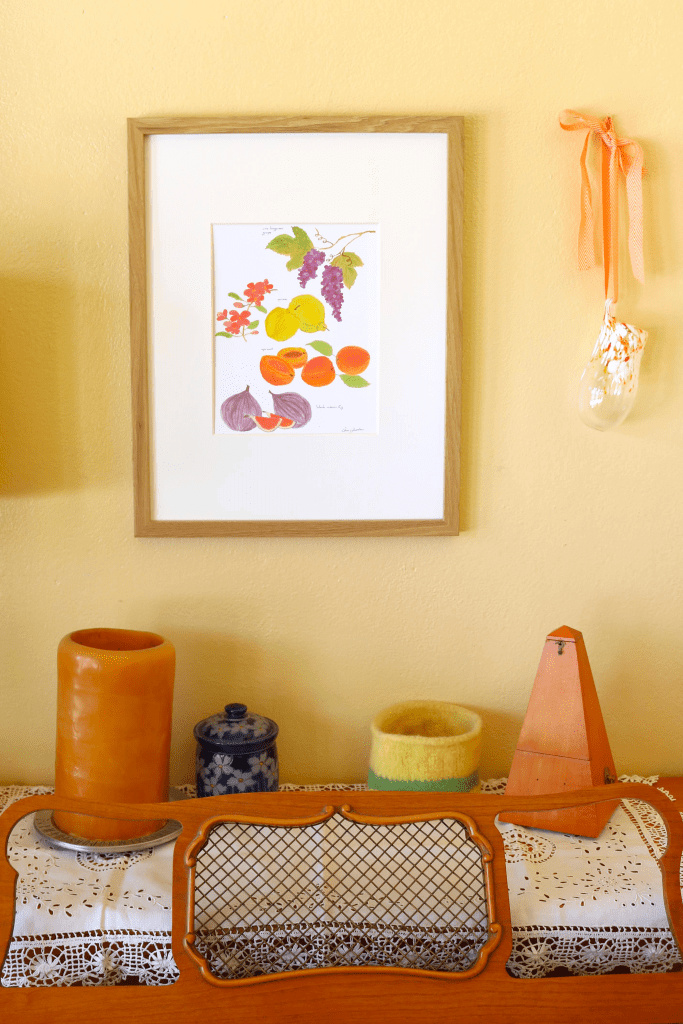
Cooking with a Hint of Sweetness: Gourmet Fruit Art Collection

Figs, apricots, quince, persimmons, and grapes; these gourmet fruit varieties stem from such unique lineages but possess similar captivating applications in the kitchen.

These are a collection of gourmet fruit ingredients I use time and again in entertaining because they transform the level of a dish. Their panache is unparalleled. I use them in appetizers as a sweet counter to savory meats and cheeses. They’re delightful as a part of the main course in braises, tagines, or roasts.

Then finally, they act as a sweet capstone in tarts, galettes, cakes, or toppings. These fruits have the power to change whatever you are serving from ordinary to special. They lend an earthy classiness to your meal.

Apricot

When I was a little girl, my mom would regularly make apricot jam. I grew to adore this jam on a piece of freshly toasted English muffin. I still taste the apricot flavor in my memories. Now, as an adult, I return to apricots as often as I can. They often find their way into braises, such as a chicken, white wine, and wild mushroom braise atop potatoes or rice. Apricots perfectly balance the savory hues and help create well-developed sauce. 

Quince

Likewise, quinces have played a role in my culinary journey. I was first introduced to this fruit when I lived in the French province of Alsace. The mild climate of eastern France is perfect for quince trees to thrive. Harvested in the late fall, they turn into pastes and butters, and they’re baked into cakes, tarts, and galettes. Quince also adds a refreshing sweetness when sliced and roasted with lamb in a tagine. 

As an added bonus, if you happen to live where quince trees grow, you get the privilege of enjoying their spring blossoms, which are the most electric color of pink coral possible. I swoon at the far-fetched idea of having a quince tree in my yard.

Fig

Figs seem like an almost mystical fruit to me. I’m always experimenting with interesting ways to use them. My most recent find was a recipe in Dorie Greenspan’s Around My French Table cookbook: 

I take fresh, homemade pasta (trust me, it’s worth it to make the pasta for this recipe from scratch), and toss it with browned butter, figs, and pistachios, among other things. What stands out to me in this recipe is the crunchy je ne sais quoi nature of those tiny fig seeds. It’s worth buying the cookbook just for this recipe! 

As with quinces and apricots, making a fig paste, or a very concentrated jam, to serve with cheeses and meats proves a sweet counter to the more savory hors d’oeuvres items. These intensely flavored fig pastes are also amazing with a slice of buttery pound cake, in the filling of a crepe along with some Brie, or melted into a marinade for grilled meat; the list could go on and on. Pretty soon I’ll be putting it on my toast. Wait a minute, that’s actually a great idea…

Persimmon

Persimmons meet and exceed the same thresholds as the other fruits in this collection. They can have both sweet and savory applications. When included in your menu, they elevate the playing field. The color and shape of persimmons are almost cartoonist. They make me smile. As with many fruits, the wild ones have the most interesting flavor. When cooked into pudding and butters, persimmons’ bright flavor adds a complicated sweetness that’s hard to pin down but delightful to the palate.

Red Grape

I have left my oldest friend for last, the red grape. For most of us, grapes have woven their way in and out of our menus our whole lives. They’re an easy and nutritious fruit that your mom packed in your lunchbox during elementary school. For me grapes showed up in their wild form first. Wild grapes grow all over Minnesota. They spread by the birds, so they can be found along many public fencelines or climbing up poles or trees. These aren’t the sweet grapes from the grocery store. Rather they are tiny explosions of richness in your mouth. They really shine when made into jam, juices, or pastes, which I grew up eating. The best grocery store jam pales in comparison. 

Moving into adulthood, the first savory use for grapes was a chicken salad recipe from Lukins and Rosso’s original Silver Palate cookbook. Here red grapes serve as a delightful surprise up against the slivers of chicken, celery, and onion. A chicken, grape, and white wine braise over curried rice was my next iteration.

The grape I chose to paint for this newest collection caught my fancy because of its charming story. A vine was discovered winding its way up and around an old oak tree on Longanesi’s property in the Emilia Romagna region of Italy. They took cuttings and planted them in their vineyard. The grapes grew and thrived, and today roughly 500 acres of this grape variety is grown. Many Uva Longanesi varietal wines are now made from this grape.   

The Gourmet Fruit Art Collection

I painted the gourmet fruit varieties in this culinary art series because each lies close to my heart with its connection to great cooking. They are delicious in countless meals, and with them you can create complexly flavored food year round.

This art collection honors just a few of the sweet and beautiful ingredients in our repertoire. It’s my wish that you enjoy these fruits on greeting cards and fine art prints as much as you would enjoy them in your cooking. 

Posted on Leave a comment

The Story Behind the Mountain Wildflower Collection

Wildflowers of My Life

Mountain wildflowers have been part of the formative memories in my life. Not only did they proliferate on the dry mountainside of our Colorado home, but they have been ubiquitous on our mountain hikes and backpacking trips. Whether it was Montana, Wyoming, Colorado, or New Mexico, the native flowers that have been a part of my life are both tenacious and beautiful.

The Blue Hue of Lupines

Wild lupines transport me back to Montana, when in the early summer, cerulean violet lupine flowers begin to cover the mountain valleys. They form a luscious carpet. The meadows surrounding my family’s cabins take on a blue hue as all these iconic flowers come into bloom. 

Many years ago, my dear aunt Joyce even named her cabin after them, Lupine Lodge. When I think back on lupines, I remember all the summers spent in Montana from the time I was a young girl to now. 

The Bitter Chokecherries of My Youth

It is somewhat of an oxymoron to pick a fruit as bitter and poisonous as the chokecherry only to cook it into something as delectable as chokecherry jam.

I first encountered chokecherries in the days of my foolish youth, when my parents, siblings, and I would stop along the road and pick the Montana berries. We would fill ice cream buckets and then haul them back to the log cabin nestled in the backwoods of the Absaroka Beartooth mountain range. There we would begin the long process of transforming these bitter berries into luscious jams and syrups. 

Backpacking with Thimbleberries 

Likewise, thimbleberries have been part of many a mountain hike. The day typically goes like this: we’re walking along the trail, maybe having just crossed a hot sunny rockslide. We progress into a shaded area, and there’s a small mountain stream that runs next to the path. 

Billowing among the undergrowth are thimbleberry bushes. Of course, we stop, nibble on some for a few minutes, take a big swig of water from our bottles, then start moving again. This scenario could repeat itself over and over depending on how much of a hurry we’re in. 

Thimbleberries to me represent a refreshing pause for a fatigued body. They are a fresh respite to a hot day and a touch of nourishment to our increasingly hungry stomachs. 

Beauty on the Edge of a Mountain

Our house sat just back from the edge of the steep Rocky Mountain foothills of Colorado. The hills were stony with clusters of scrub oak and prairie grasses. Cacti poked their thorny faces out from the rocky soil, just asking you to step on them. 

As I made my way down to the valley below, I couldn’t help but marvel at how so many varieties of wildflowers seemingly thrived in such harsh and adverse conditions. The soil was very poor, and the hillside faced southwest, so it got a beating from the afternoon sun. What moisture did come either evaporated off or ran down the incline. 

Indian Paintbrush

In this unwelcoming xeriscape, wildflowers dotted the hillside, cheerfully beaming their colorful faces. Darling little burgundy Mexican hats, Indian paintbrush, ruby colored penstemon, yellow potentilla, and rudbeckia scattered across the dry slope. 

These wild beauties have adapted to the conditions of their environment. Many of them have long roots that drill down to the moisture and nutrients that are deep below the surface. Indian paintbrush thrive despite the conditions. Being a hemiparasite, this flower piggybacks off the surrounding grasses. They attach themselves to the roots of nearby grasses, which are already burrowed deep in the soil.  

A Flower’s Inspiration 

Is the Indian paintbrush’s stamina and unexpected beauty a metaphor for life? When one fights hard for something, the result becomes particularly striking. Over time, these flowers have figured out not only how to grow, but they’ve learned how to flourish in adverse situations. In fact, for these flowers, their environment isn’t adverse; it’s the norm.

Joy from Wildflowers and Berries

I find wildflowers to be inspiring. When I am huffing and puffing up a mountainside, I look over the steep slopes or high mountain meadows, and I see spectacular beauty in the wildest environments. How can I not breathe easier in their delicate elegance? 

My eyes light up when I see wildflowers in bloom against the stark and vast background they call home. Then the wild berries come as a rare gift in the wilderness when tasted on the edge of a remote trail.

As I sit here, painting within the bleak January landscape, I wait for next summer. I hope my family’s trips into the mountains coincide with the bloom times of our favorite flowers or the ripening of our favorite mountain fruits. 

Until then I draw them, and I paint them, and I offer them for you to enjoy on art prints and cards as well. This is so you can dream along with me. We can wait together for warmer days, for summer mountain wildflowers, for buckets full of chokecherries, for bushes alongside high mountain trails that offer up what little they have so that the fleeting visitor might be refreshed. 

Posted on Leave a comment

Art from the Garden

My Love for Art

In my kitchen hangs a painting of a sprouting potato. An unassuming thing, but it brings me joy. Its creator was Betty Strand, an artist and family friend. I’ve always been enthralled by art. Drawings, watercolors, sketches, weavings, batiks, pottery; the list could go on. My walls certainly reflect this passion, and art takes up residence in every possible area of my home.

As you all know, my fascination with cooking and gardening is all-consuming, and a day doesn’t go by that I’m not dreaming about freshly sliced heirloom tomatoes or something of the sort. So why not tie my love for art with my love for all things food and garden? Thus an idea bloomed.

My original sketches when forming the idea to create garden art. You can see I carried some of my original designs into my later finished pieces. 

As I thought about what I could offer you, my mind went to the passion I have for drawing and painting. If only I could give you a taste of the garden within the home, a reminder of the daffodils and crisp sweet peas of spring when you are surrounded by a January blizzard. The garden and kitchen bring me such contentment, and I hope they will bring you the same. Whether you hang my creations on your walls or send them as a greeting card to a friend, I hope they will brighten each blustery day.

Why I Love Paper

Over the years, as I have wandered through little boutique shops on lazy Saturday afternoons, what always catches my eye is their fine art paper and supplies. I don’t quite know why this is, but I have always had an odd obsession with beautiful, high-quality pens, pencils, and brushes of every ilk.

Don’t even get me started on art paper. Sheets of all sizes and colors stacked in cubbies that line an entire wall. Paper hung in large sheets on racks. The thicker the better, I say, and ideally it has some great texture, as well. Paper is such a simple thing, but I love high quality, thick paper, paper with frayed edges, and envelopes in unique shapes that tie shut with little leather strings.

I no doubt leave the boutique a poorer but happier woman, loaded down with a stack of thick cotton vellums, rolls of paper, several pens, and brushes of various sizes and thicknesses. 

The finished card sets. How do I show paper in a still image? Just rest assured, the paper I found passes the Cami test. Thick, linen-textured, faint ivory color, divine. 

The Creative Process

Drawing and painting is an activity I have come back to time and again over the years. It’s in my bones, a part of who I am. I started off this project by sketching. Then I painted. They were small at first, and then they evolved to larger, more refined paintings that can stand the test of time.

Left: my original artwork as well as some of the original, smaller designs. Top right: close-up of a few of my original ideas. Bottom right: the finished card sets. 

There have been many iterations along the way, and I am sure there will be more. It is my pleasure to introduce you to my initial three collections, selections of favorite fruits, vegetables, and garden flowers. I am excited to continue creating more designs as well.

As we tread in the new water of this artistic endeavor, I hope you appreciate my lovingly painted watercolor art. I also wish for you to find meaning in the prose that I crafted to inspire and teach about each plant. I hope these designs printed on thick, beautiful, linen cardstock will make charming, classic greeting cards. Finally, when these pieces of art adorn your walls in frames, I hope they provide an elegant reminder of our collective love for plants.

I am excited to launch this new venture, and I look forward to hearing your suggestions for future designs.