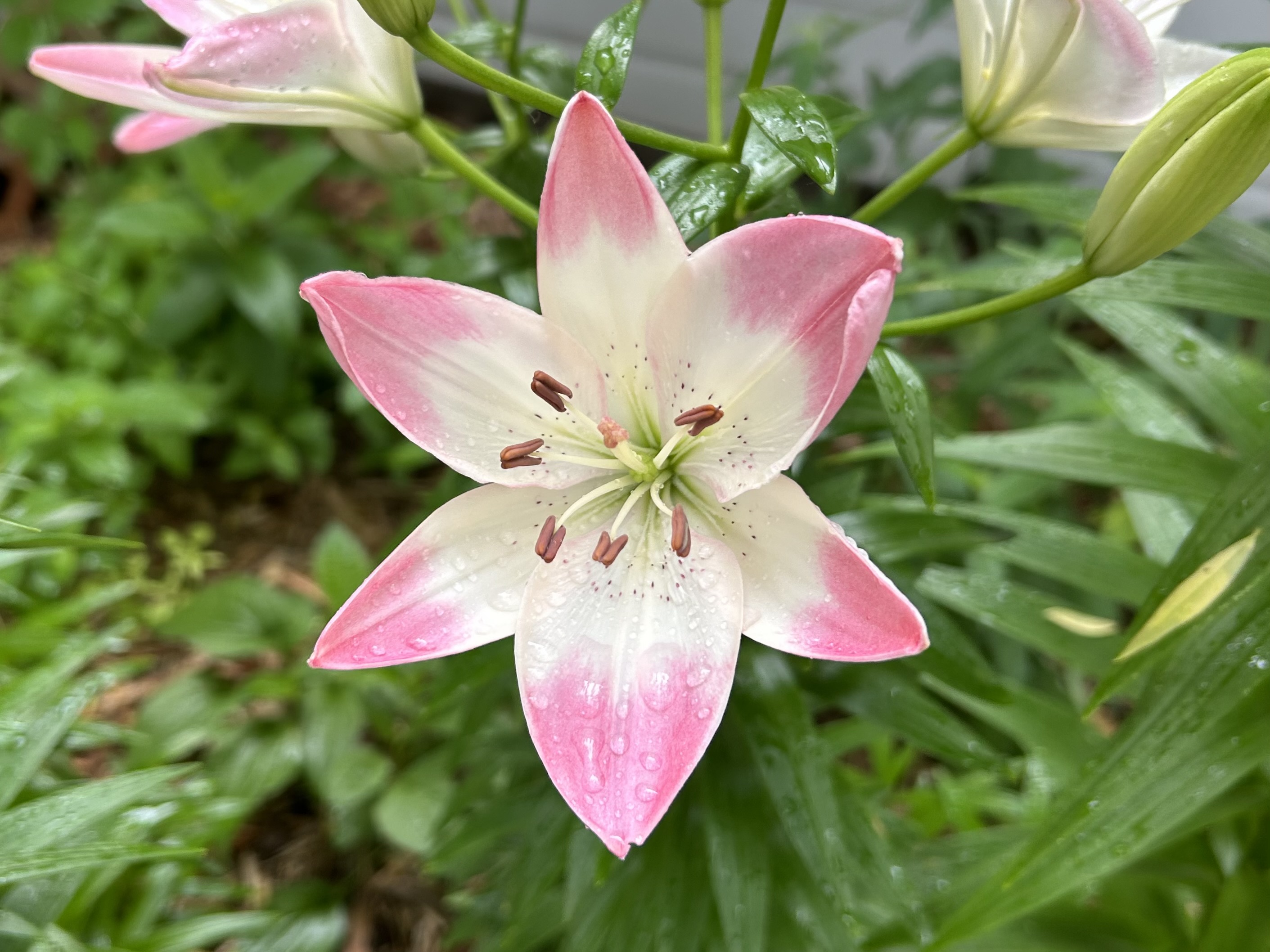
As I walk up the stone pathway in front of our house, I’m drawn to admire the flowers blooming in my garden beds. Of course the spotted orange lilies catch my eye first as they boldly stand tall and straight, surrounded by lavender veronica and the curly cue spiderwort sporting clusters of electric purple blossoms. The flower garden has yielded a couple generations of scented geraniums, first a short one, now a taller variety. I love to squeeze the leaves of these geraniums in my fist and then breathe in their lovely, subtle aroma.
One dainty little perennial flower I particularly enjoyed this spring was the prairie smoke plant. I only have two of these little guys, but needless to say their puffy explosions of flowers made me smile every time I looked at them. I am a sucker for anything in the geum genus. The ones I have are the classic plum-colored variety; however, I’m currently drooling over some pink ones I recently saw in a local garden shop. An orange variety may or may not also be calling my name.
I have a very established pink and yellow honeysuckle vine to which I gave a pretty aggressive haircut last fall. It has responded by coming back and blooming with abundance. The flowers spill over, through and around one side of my patio wall. Not only am I enjoying these, but they seem to be a favorite of the hummingbird population. Who needs a feeder when you have a honeysuckle vine profusely climbing in your backyard?
With all the rain and warm weather we’ve had recently, the black-eyed susans are opening in all their glory. They’re interspersed with white and pink phlox, fluffy white tiarella, and some magenta bee balm. We have a particularly chubby type of bumble bees that pretty much spend their entire summer on these flowers. I can’t get enough of these darling bees. It befuddles me as to how they can even fly with their massive size.
Earlier this spring I got my hands on some naked lily bulbs and planted them here and there among the other flowers. Naked lilies are a bit of a magical flower. Their long lily-like leaves emerge in early summer, they are around for a bit, and they then seem to die off. One quickly forgets about them. Then in the heat of late summer, when no one is seemingly paying any attention, these gorgeous pale pink lilies start to bloom.
It’s like they’ve come out of nowhere because the greenery is long gone. We’ve all been writing this plant off as dead or dormant for the year. Yet here they are, blooming up a storm. You’re probably wondering why they’re named naked lilies. It’s because there are no leaves, only stork-legged stems holding the lily blooms. They really do look a bit naked. This is why they pair particularly nicely planted among slightly shorter perennials like hostas, heuchera, or astilbe.
Continuing through my beds, I venture underneath the arching arms of a glorious smokebush tree. The leaves are various shades of plum and wine with massive burgundy puffballs on the end of every branch. Its branches form a delightful arch over the stone path that leads to our front door. In the shadows of this amazing tree grows a plant that doesn’t realize it is close to its demise.
As soon as I have a couple spare hours, I will be digging up a rather large and flourishing patch of garlic chives. Anyone who knows me knows I adore garlic. Not so with garlic chives. If they would mind their manners, it would be a different story. But they don’t. They are quite happy in their cozy little spot and thus are making babies with abandon. I’m finding these offspring in the far flung reaches of the yard.
I’ve been dreaming all spring about what flowers I’m going to replace these with. This is a fairly high value real estate location in my yard, right there next to the front door. So I want to choose carefully. At the moment I’m thinking of planting bergenia, one of my favorite and most recommended plants, but the jury is still out, and I’m up for suggestions.
This is one of my favorite times of year in the flower garden. When we open the windows or when sitting in the garden, the sounds of the birds singing to each other become our background music. I hope you’ll join me in soaking up this lovely time of year.
I step outside on a cool afternoon. As I look around, the spring meadows surround me, painted with great swatches of blue flowers. Life is waking up after our strangely mild winter. The arrival of Colorado blue columbine signals the warmer days of summer are just around the corner.
Spring in the mountains is a lovely time. The streams begin to gurgle with the fresh snow melt running off the peaks. It’s tough to be a plant in such rocky soil and at such high altitude. This makes it all the more refreshing when flowers like bittersweet and Colorado blue columbine flourish. Harsh conditions are exactly where they thrive.
Pasque flowers are much the same, except they bloom on the prairies rather than the mountains. Like its mountain counterparts, the pasque flower loves the cool spring and doesn’t mind challenging growing conditions.
Most of my flower collections are structured in a rigid frame, but this unique collection is instead simply a grouping of some of my favorite flowers, some found in the wild and some in the garden:
Colorado blue columbine
Pasque flower
Lady slipper
Bitterroot
Dogwood flower
Poppy
It is with joy and excitement that I present to you this special collection of flower designs.
Colorado blue columbine
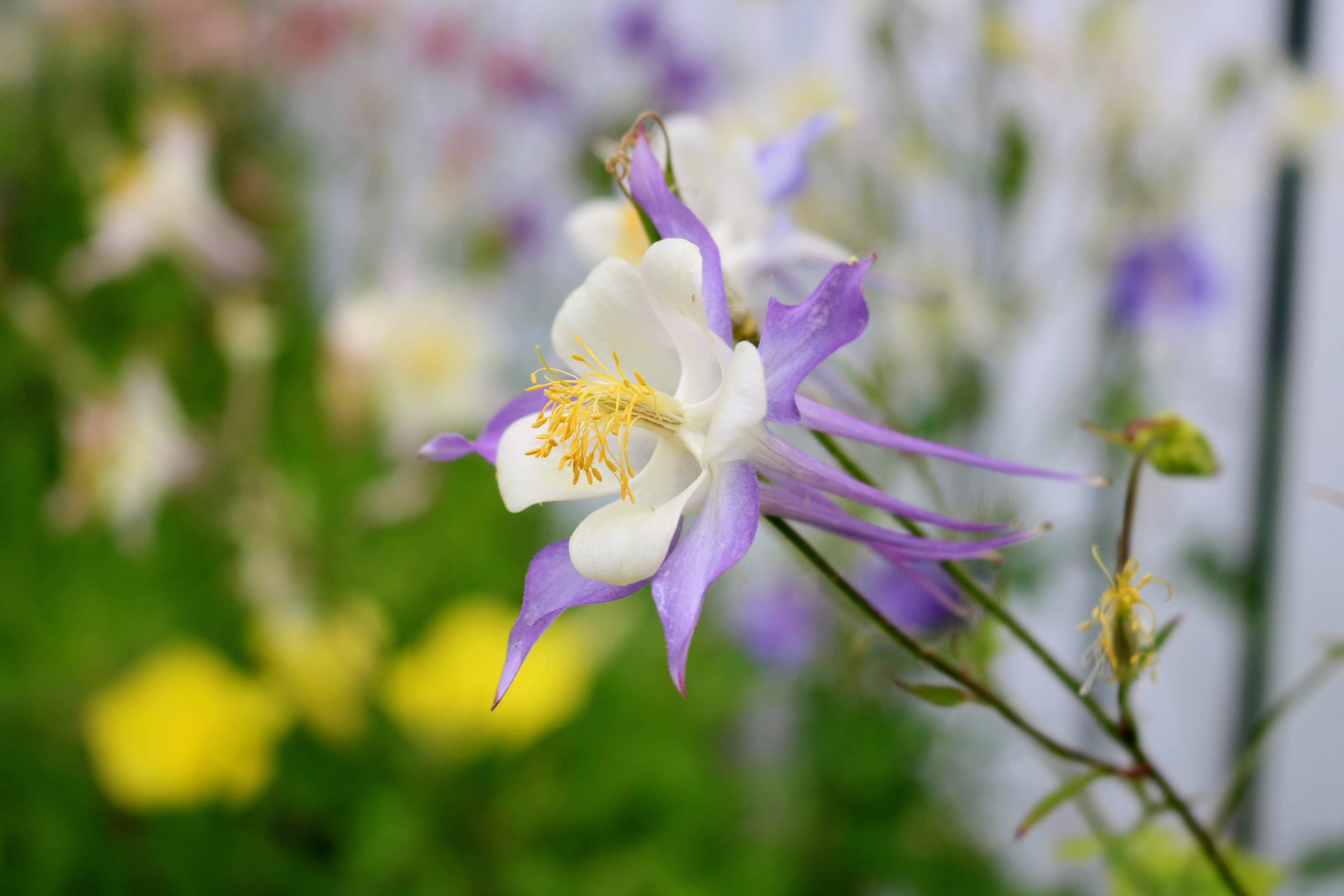
The Colorado blue columbine is one of those hard-to-find state flowers. To see these beauties in all their glory, you need to hike up into the Rocky Mountains during the early part of the summer. These flowers like moist, sunny mountain meadows, and they can also be found tucked into relatively open Aspen groves in the alpine tundra.
Colorado blue columbines are bi-colored, sporting creamy white sepals that extend out from the flower at a right angle. The blue petals jut backwards and extend into long points. The structure of the columbine flower is particularly suited to the hummingbird and hawkmoths, who both help to pollinate these lovely flowers.
Like so many of these high mountain glories, this flower is becoming rarer and rarer. It’s currently against the law to pick it on public lands in Colorado. If you are lucky enough to see it in the meadows of your own mountain getaway and want a bouquet, simply clip the stems off above the ground so the roots stay intact. This way it’ll come back in years to come.
Pasque flower
The pasque flower is another one of those early bloomers. As its name indicates, pasque is the French word for Easter, which is around the time that it usually blooms. It’s the state flower of South Dakota, my home, where it’s one of the earliest flowers seen on the prairie.
The bluish purple petals stand out against the otherwise bland-colored spring ground. These delicate flowers serve as an important early pollinator for many insects that are just waking up in the spring. Even though insects love this plant, it is considered toxic to both animals and humans.
Lady slipper
It was a gorgeous sunny day when I found myself walking on the edge of a wood in northern Minnesota. What suddenly caught my eye were dozens of delicate orchid-looking pink and white flowers scattered around the vegetation.
Some were tucked under the pines, and others poked up throughout the meadow in front of me. The ground in this area was mildly moist and spongy under my feet. In fact, just off in the distance was a swamp. The tall brown cattail heads stood high against the green foliage. These intricate and showy flowers seemed out of place against the wildness of the environment.
Lady slipper is a flower in the orchid family that thrives in the moist, cool forests of central and northern Minnesota. In this native habitat, the plants can live for decades, putting out their gorgeous flowers every year.
When you see a lady slipper in nature, it’s easy to forget how increasingly rare they’ve become. Lady slippers have very specific requirements for growth. They need bees to pollinate them, the seeds depend on mycorrhizal fungi to survive, and they can grow for years before they flower. As their natural habitat is developed and disappears, so also these beauties are becoming less prevalent.
It is with a great deal of awe and reverence that I paint and offer my rendition of this very special flower, the state flower of Minnesota, and one of the most interesting and rare of the state flowers.
For me personally, there are only a few flowers that fall into the “hallowed flowers” category. The lady slipper orchid holds this elevated status for me.
Bitterroot
This darling little pink flower is only found in the most desolate of locations, in the dry, stony areas in and around mountain ranges. It thrives in the poorest of soils and the driest of conditions. It baffles me that something can be so beautiful in spite of such difficult environments, or should I say because of such difficult environments. I somehow find the antithetical nature of this flower personally inspiring.
In the southwestern part of Montana exists a river, a mountain range, and a valley all named after bitterroot. Many Native Americans tribes, who had an innate sense of edible plants, considered bitterroot a delicacy, eaten with meat such as grouse.
That said, if you happen to be wandering through the high country of Montana, resist harvesting this rare plant for dinner, as it is also becoming rarer in recent years.
Dogwood flower
I’m a sucker for flowering trees, and dogwood flowers have to be among my favorites. They almost glow in their brilliance.
One of my many favorite things about spring in the southeast quadrant of our country is the spring flowering dogwoods. The white, yellow, or pink flowers seem to float on top of the branches. These blooming trees are the portal to the beginning of spring.
Botanically, dogwoods have many interesting qualities. They can self pollinate, so you only need one to enjoy flowers and berries. The wood is extremely hard — so hard, in fact, that it’s almost grainless. The flowering dogwood variety actually grows better as an understory tree in dappled shade than it does in full sun.
This tree is so prized that it’s the state tree and/or flower in several states: North Carolina, Virginia, Missouri, and New Jersey. I’ll have to admit, this tree is one of the reasons I suffer from zone 5 envy!
Poppy
The poppy, with its papery petals and colors that look like they came off a painter’s easel, are both tough and delicate. Their petals ruffle in the breeze in the most whimsical way.
The primary reason I painted the red poppy is because of their incredible color. Their vibrant red pops in the landscape (or on a wall). Poppies are one of the most recognizable flowers in the world, even though they tend to flourish in the northern hemisphere.
Their color range is wide from white to pink to rose, red, wine, purple, yellow, orange, and even a grayish purple. Since World War I when poppies flourished in the war-torn fields of northern Europe, the red poppy has been the symbol of remembrance and hope for veterans throughout the United Kingdom. The orange-colored California poppy is the state flower of its namesake, California.
Closing thoughts
I hope this collection of flowers gets you in the mood for spring. Everywhere I turn, trees are budding, bulbs are emerging from the ground, perennials are reviving, and the grass is becoming ever-more green. May each of you have a happy and beautiful spring!
The rustling leaves of the nearby oak tree catch my eye as I pass by on the street. Its leaves have just begun to transform into yellow and brown. Across the street the maple tree is already adorned in oranges and reds. My pagoda dogwood sports hues of deep purple and plum. I feel the magic in nature’s metamorphosis.
As the days shorten and the temperatures lower, sunlight becomes more prized. We receive pockets of golden sunshine that prompt us to slow down and treasure the moment, which can be difficult to do amid the season’s busyness. After all, a long list of fall chores beckons us. Should I take a moment to savor the crisp weather or use these mild-weathered moments to complete my many garden tasks? The two sides pull at us.
My garden has transitioned from the bright and clear pinks and magentas of summer flowers to the cozy red and burgundy tones of fall. I’m in the mood to gather the troops and take a trip to our local apple orchard. The delicious result of such an excursion will necessarily be filling the house with the heady aroma of apple butter bubbling on the stove, something that my family always eagerly anticipates.
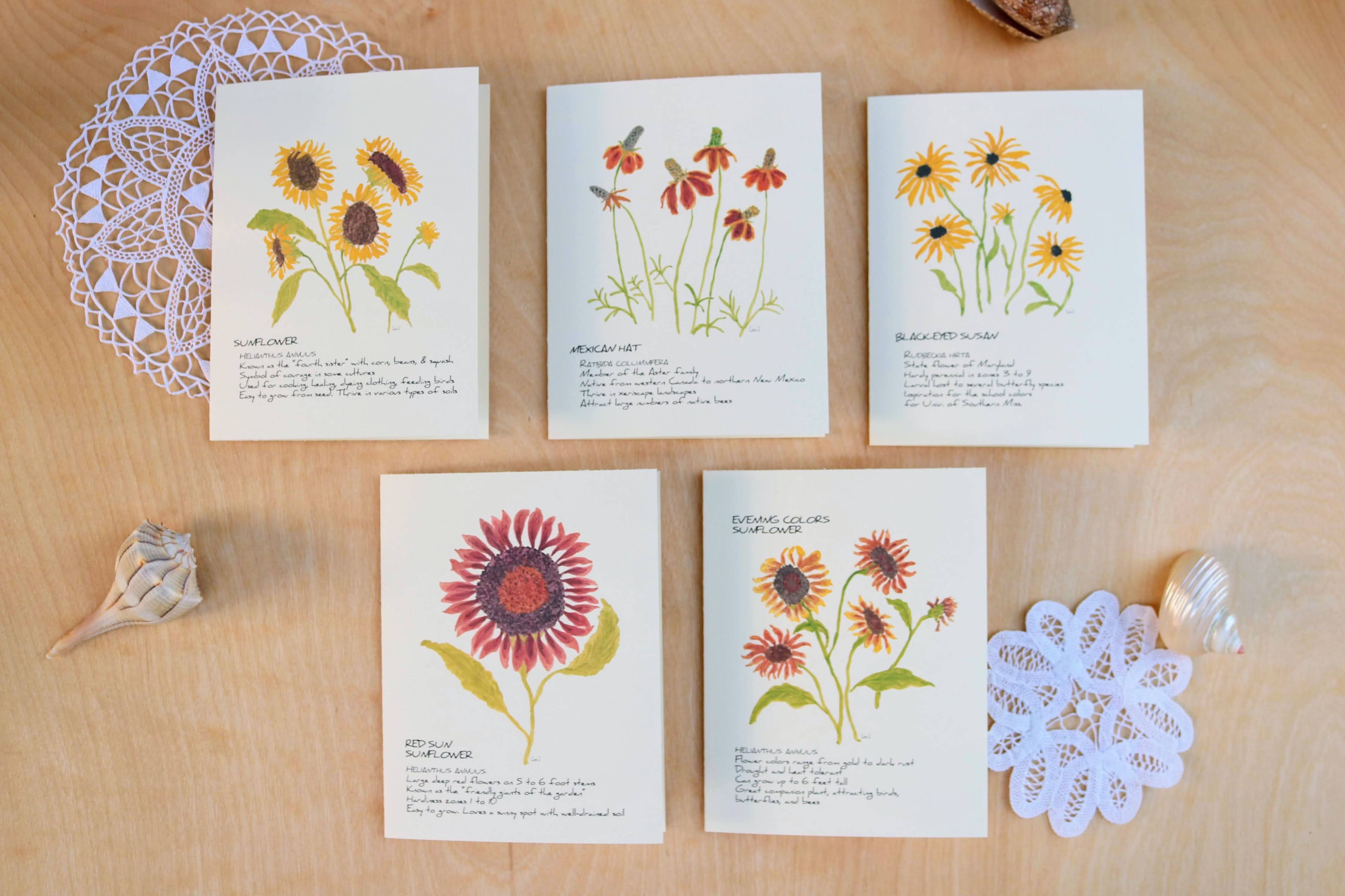
Sunflower
A while back, as I walked up to the tall russet-colored sunflowers in the corner of my garden, I noticed several gold finches flitting between the seedy centers of the flowers and a nearby fence. I paused so as not to disturb their dinner. Later as I looked again, these same seed heads were hosting a collection of native bees and bumblebees. My idea of clipping off flowers to bring home for a bouquet went by the wayside. How could I bring myself to remove this important food source from my garden pollinators only to beautify my kitchen table? So those gorgeous massive flowers stayed in the garden, beautifying that space and feeding the local bird and insect population.
I finally took them down at the latest possible moment so as to provide a living bird and bee feeder right in the corner of my yard. Who doesn’t adore a chubby little bumblebee or a bright yellow goldfinch? In trying to find ways to attract these cuties, sunflowers are an easy and beautiful solution.
Mexican Hat
One flower I’ve been very excited to paint is the Mexican hat flower, also known, for obvious reasons, as the thimble flower. I first started planting this flower in my garden when I lived in Colorado. It is a little powerhouse in any xeriscape landscape. The delicate yellow-kissed maroon petals belie the workhorse nature of this prairie flower. Mexican hat flowers are not picky about water, heat, or soil. In fact, they will bloom by the hundreds in conditions where other flowers would simply go on strike. I regularly encounter this gem in a prairie garden near my home, and it never fails to make me smile.
Black-Eyed Susan
I have large groups of black-eyed susan rudbeckias in the flower beds in front of my house. Their bright yellow petals provide a cheerful contrast to the lavender-colored veronica and monarda. The black seed centers are command central for the local pollinator population. This fall, while clearing out the faded blooms, I have discovered a bonus treat to an already striking flower, the deep green leaves that blanket the floor underneath. I couldn’t bear to tear them out, so I left them to continue forming a carpet over the earth.
Evening Colors and Red Sun Sunflowers
The standard yellow sunflower has always seemed to me like it was smiling. If flowers could have emotions, sunflowers would be perpetually happy. The deep, rich tones of red sun sunflowers and evening colors sunflowers remind me of a summer sunset. Just like that golden hour, the saturated petal colors encourage me pause and soak in their rich hues. For several years now, I have planted a selection of rustic/ruby/maroon colored sunflowers. This “variety-pack” of colorful sunflowers have been such a welcome surprise for me each time I see another one open up and wonder which hue this next flower will be.
The Fall Colors Flower Collection
It is with these nesting-like emotions that I offer you my latest collection of floral designs to purchase and enjoy. The gold, rust, and ruby petals remind me of pumpkins, flint corn, bittersweet berries, and apple cider.
We are collectively tying up the loose ends in our yards and gardens to prepare for the indoor life of winter. As you soak in the last moments of autumn, it’s my hope that you can sit back and sip cider, breathe in cool air, and jump into a large pile of leaves. And perhaps write a little note to someone you love.
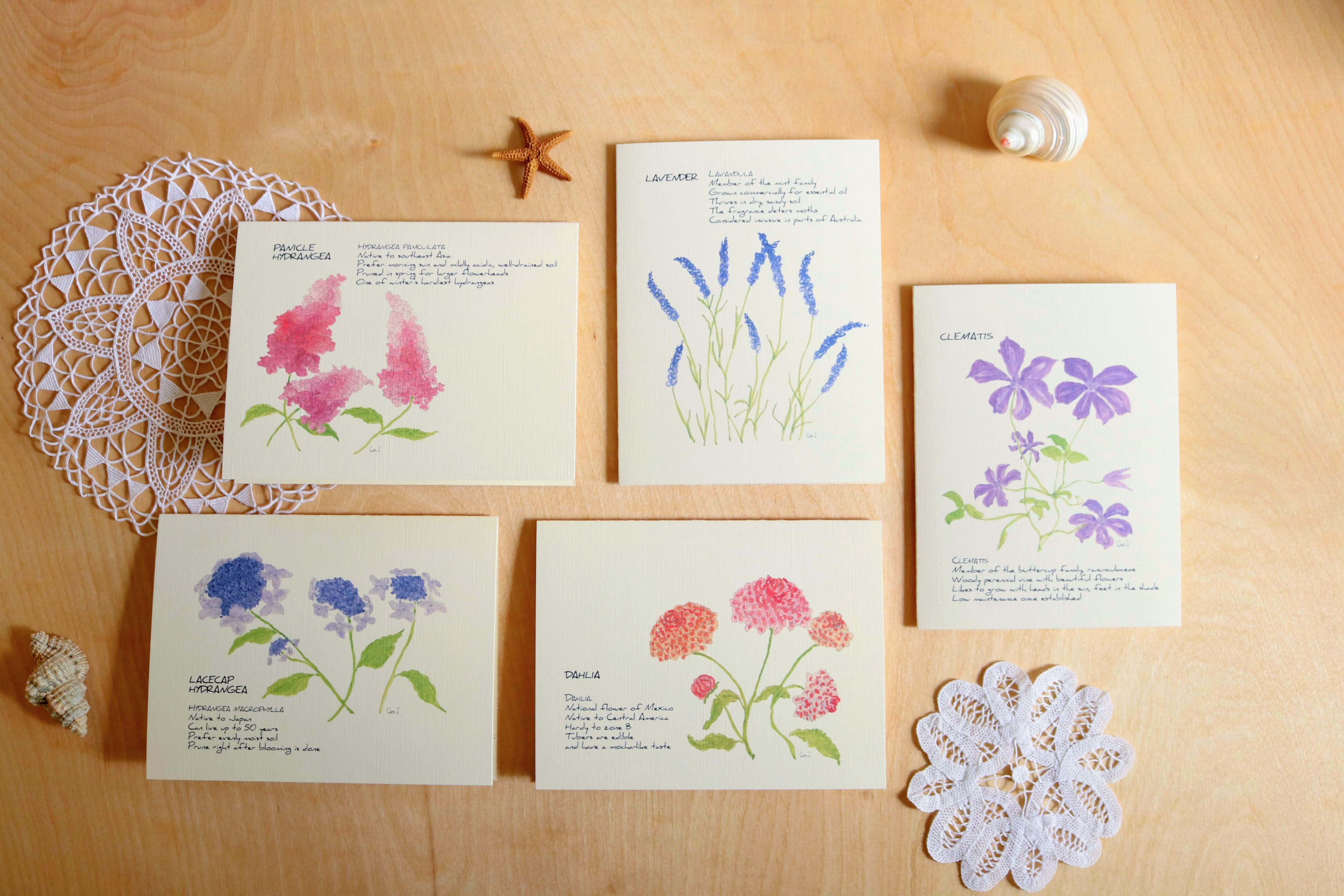
How is it that something so bright and colorful can bring a sense of calm? I admire the tiny florets that combine to form the grand hydrangea and the tumbling clematis vining up the fence. They are at once complex yet simple.
As the cool spring has moved to toasty summer, the buds have grown to ornate blossoms. The sun kisses them, and they grow larger while their color brightens and deepens. When these flower friends greet me each day, they lift my spirit and bring me peace and joy.
Flowers appear simple, yet they are the lynchpin in a complicated food web. For example, as I write these words, two dainty hummingbirds and a rotund bumblebee dart from flower to flower on the honeysuckle vine right outside my door. Flowers truly are the insect and bird world’s kitchen, or should I say dinner plate.
Clematis
For years, I’ve had a whimsical clematis vine climbing my fence. Its delicate tendrils curl around the wrought iron with deep purple flowers poking out here and there. Politely reaching up and out, it slowly expands its reach every year. I try to tell it, “grow faster, grow higher, my beautiful vine. You can never be too much for me.” But it takes its sweet time, growing little by little as the years unwind.
Blossoms envelop my clematis vine for many weeks throughout midsummer. I find myself dreaming up new spots where I could place a trellis and tuck in another variety.
With all its colors and variations, clematis is a vine that the gardening world has been collectively enamored with for centuries. Hailing originally from Asia, it was brought to Europe in the early 1800s and finally made its way to the New World. It is regarded by many as the Queen of Vines, and that it is, possessing both grace and beauty.
Hydrangea
For myriad reasons, I recommend planting hydrangeas more than any other bush. They are like that person in your life who’s practically perfect in every way. Not only are the flowers beautiful, but their bloom times extend for months, from early summer through to the next year when you finally prune them. Additionally, they get more beautiful as they age, often going from ivory or pale green to pink or even deep rose as autumn progresses.
Many plants, trees, and bushes are suited to particular climates, called hardiness zones. Being in a northern climate, there are several southern plants for which I have intense zone envy. Some include the more ornate hydrangea varieties, like the lacecap and mountain hydrangea.
These jewel-toned beauties have graced southern gardens for eons. However, thanks to our busy scientists, more of these colorful varieties are becoming available in the northern zones.
Dahlia
If you’re looking for just one very good reason to live in a southern hardiness zone, it’s the ability to grow dahlias as a perennial. These plants sport massive pom pom-like blooms that can stand several feet tall. Humans have fawned over dahlias for centuries, and for good reason.
The flowers come in every color of the rainbow (except blue and black). They can be a dainty two inches in diameter or a massive 10 inches across. Hailing from Central America, dahlias are the national flower of Mexico.
While I can’t quite imagine digging up this beauty just so I could sauté its root, it was originally classified as a vegetable thanks to its edible, mocha-tasting tuber. I guess the powers that be agreed with me because it was eventually reclassified as a flower. One of its most favored qualities is its late summer bloom time. Right when other flowers are starting to fade, dahlias are going strong, and they continue right up until the frost.
Lavender
As I breathe in the deep purple color and the intoxicating aroma of my newly gathered lavender bouquet, my worries melt away. On gray and rainy days, I often light a lavender-scented votive candle and let the fragrance waft throughout the house, creating a warm, cozy mood.
My love for lavender runs deep, and the scent elicits a deep emotional response in me. I can’t get enough of it. Whether it is in a sachet in my woolens, in the dish soap by my sink, or in a vase on the counter, it’s the one flower I come back to when I’m looking for something special. Maybe it allures me because my northern clime prevents me from growing vast purple fields. Lavender’s relative scarcity up here makes it that much more special.
I suppose until the day I can own a lavender farm, I’ll resign myself to filling my house with lavender-scented tea, lavender candles, lavender soaps, lavender honey, lavender lotion, and lavender water for ironing…Is there ever too much?
The New Summer Flower Art Collection
Now that you see the inspiration behind all of these incredible flowers, you can see why I had to paint them. We really can never have too many flower designs to choose from so here are five more: clematis, lacecap hydrangea, panicle hydrangea, dahlia, and lavender. I hope you enjoy these new designs as much as I enjoyed painting them.
And whenever you sit down to write a note in one of these cards, no matter the time of year, I hope it takes you back to those carefree summer days of sipping iced tea in the garden while the hummingbirds dance all around you.
The dawn is crisp as I step into my garden. This coolness is new and refreshing. I know the day will heat up later, but for now I contentedly pause to breathe in the chilled air. I arrived at the garden early today to assess which vegetables are ripe and ready to be turned into rich pots of sauces or pickled into crunchy delicacies.
Something about the late summer days calms me even though the days and nights are full with harvesting and canning. Maybe it’s because the heat of summer is over and all that I’ve been preparing for since early spring is now bearing fruit.
Harvesting Garden Vegetables
Evenings and weekends hum along with a similar tune. I open the kitchen windows, turn on jazz saxophone music, and start creating from the garden bounty. It’s my happy time. What have I made before that I want to repeat? What new venture will I try this year?
Carrots
Back in the garden, I start with the carrot patch. I planted three varieties this year. Nantes and Chantenay are the two orange carrots I chose. They are trusty producers, always sweet and juicy. The other variety I planted is Purple Dragon. This is such a beautiful carrot, purple on the outside and orange on the inside. It’s always a crowd pleaser sliced into a salad.
Tomatoes
Across the aisle from the carrots are the tomatoes. Let’s just say I went a little overboard when I ordered my seeds last winter. It was a frigid day in the depths of January when I perused the seed catalogs and websites. This is a dangerous combination for me, as I’m bound to start dreaming of summer and a prolific harvest.
Now, as I look over my tomato collection, I’m glad I planted so many varieties. Most are interesting and delicious. I have what I call the United Nations of tomatoes and peppers.
They hail from most corners of the globe—with many countries in Europe, eastern Europe, the Mediterranean, and the Americas represented. Some of my favorite medium and large tomato varieties include German Pink, Japanese Black Trifele, Black Sea Man, and Dester. I’m newly addicted to two cherry tomato varieties, Blondkopfchen and Sunrise BumbleBee.
Garlic
Planting my garlic has become a cherished tradition for me. I spend many evenings scrolling through the garlic producer’s websites, reading about each type, and trying to choose what varieties to plant. Of course because of where I live, I have to pick from the hardneck options, which thrive in cooler Northern climes. This year I played it safe with the reliable Music variety, and I ventured into the unknown with Georgian Crystal, Pehoski Purple, and Chrysalis Purple.
Radicchio
Every year I challenge myself by planting a new type of vegetable in my garden. One of my favorite introductions was radicchio. This is such a sturdy little plant, whose best trait is that it shines in the very late fall when the days are cool. Radicchio is an Italian chicory. It’s delicious sautéed and tossed into risotto along with Parmigiano-Reggiano and pancetta. The leaves’ complex bitterness offsets the creamy richness of this dish. In addition, radicchio has been the subject of many experiments in my cooking, its flexibility making it an asset to any garden.
Mushrooms
On summery Saturday mornings, I hustle into line at the local farmers market to stock up on mushrooms. In my town, a local grower offers several varieties of unique mushrooms, and Chanterelles have become one of my favorites. They can form the base of a rich, savory bisque. They are heavenly when sautéed in butter and white wine and then finished with truffle salt and served over warm brie. Chanterelles are a mushroom I return to time after time, and for good reason.
The Vegetables of Fall
Autumn vegetables: from artichokes on my hors d’oeuvres platter to the bundle of flint corn gracing my front door, this group of vegetables is in a league all its own. They shine in both beauty and flavor. They elevate my cooking game. I say that tomatoes are my favorites, but that’s not really true. After all, then I’m abandoning the peppers, olives, onions, and squash in my life, and I could never do that.
These vegetables are at their delicious height right now, and I can do nothing but slow down and savor their bounty. In the spirit of these bountiful garden harvests this fall, I’m sharing my gourmet and autumn vegetable greeting card designs with you. I hope you find these pieces of art will bring joy to each person you send them to. Visit my shop to view the designs available in this new card collection.
Gardening should be simple, but it’s often more involved than it seems. Especially if you’re new to growing your garden, what can you do to ensure your plants have the best chance of succeeding? What beginner garden tips will help you get a bigger harvest and healthier plants?
There are several strategies that can help you as you go through the garden season. Often, learning from other people’s mistakes and experiences with growing a garden can help you make fewer mistakes yourself.
I’ll discuss 12 beginner garden tips that will help you give yourself the best chance of success with your space. Implement these strategies, and you’ll see your garden take off.
1. Supplement Your Soil
Your soil is the lifeblood of your plants, and healthy, rich soil produces larger, more productive plants. Good soil will nourish your plants’ roots and improve the success of your garden year after year.
One of the key beginner garden tips is you should supplement your soil regularly. This will feed the microorganisms that live in the soil. A few tried-and-true supplements for your soil include:
Heated compost – add twice a year, in spring and fall
Compost tea – add monthly throughout summer
Mycorrhizal fungi – add when planting
Fish emulsion – add monthly throughout summer
2. Water in the Morning
One of the key garden tips for new gardeners is to learn how to water in a way that minimizes the potential for disease and maximizes the benefit to the plants. First, ensure you water in the morning. This will allow time for the water to dry out before nightfall, when the likelihood for disease is higher. Second, watering in the morning will help your plants make use of the water to protect their roots during a hot summer day. Moisture is the primary defense against high heat, so watering will help your plants tolerate a hot day.
Another way to help decrease the risk of disease is to focus your watering on the dirt below the plant rather than the leaves. Avoid getting the leaves wet, and just focus on watering the roots.
Get in the habit of watering your garden in the morning rather than in the evening.
3. Weed Your Garden
Weeds will grow bigger and stronger than your plants, and if left alone, they will deter your plants’ growth. Weeds can also attract harmful insects and cause disease in your plants. Therefore, it’s important to keep them out of your garden. It’s ideal to weed before you plant your garden, again about two weeks later, and then throughout the rest of the season as needed.
4. Use an Organic, Compostable Mulch
A great way to keep most weeds away is to apply a compostable mulch to your garden beds and aisles. Weeds need heat, light, and moisture to survive, so when mulch covers the ground, weeds will grow less easily. Mulch will also help by providing nutrition to the soil as it decomposes.
Remember to apply mulch after you’ve removed weeds from the space and after your seedlings are large enough to see so you don’t cover them up. A few of my favorite options for types of mulch you can use include:
Seed-free straw
Hardwood shredded mulch (not cedar or cypress)
Dried leaves
Shredded newspaper
Partially decomposed compost
Add a high-quality, compostable bed covering to your garden aisles and around your plants.
5. Use Organic Insecticides
When following organic practices, it can be hard to know how to handle insect control. My garden tip for this is to use products that are safe and organic, as they will help protect your plants from disease and invasion. A couple of the best organic insecticides to use in your garden include Neem and Bt (Bacillus thuringiensis), which you can apply on your plants several times throughout the summer.
6. Plan Your Placement
Where you put your plants matters. Look at the instructions on the back of your seed packets or plant labels, and place your crops in sun, partial sun, or shade depending on what each one prefers.
It’s also important to think about the sun and how tall plants may shade the plants north of them, as well. Therefore, I recommend drawing out a garden map and planting your space with a clear plan for why you’re putting each plant where.
7. Use Companion Planting
Companion planting is a perfect way to improve your yields and set your plants up for success without needing to do much extra work. The concept of companion planting is that certain plants do better when they are planted near other plants. On the other hand, some plants do worse when next to certain others.
Therefore, do your research, and incorporate companion planting when designing your garden. A couple examples of easy companion plants include:
Corn, beans, and squash
Tomatoes and basil, carrots, or lettuce
Implement companion planting strategies to benefit your plants.
8. Fence to Keep Animals Out
A simple garden tip for growing your garden and not having it eaten by rabbits and deer is to build a fence around the garden space. This can be as easy as digging a few t-posts and using chicken-wire, or you can build a more substantial wooden fence. The key with garden fencing is to ensure there are no big holes where animals can sneak through to grab their lunch.
9. Space Your Plants for Maximum Growth
Crowding out your plants by planting them too close together can stifle their growth. When you’re planting plants, remember to plant them far enough apart to give the adult plant plenty of room to grow.
Space plants like onions, garlic, tomatoes, and peppers far enough apart for the adult plant to grow.
On the other hand, you will end up thinning the crops you plant from seed. Therefore, plant your seeds according to the directions on the back of your seed packet. Once your plants germinate, remove the extra seedlings by pulling them with your fingers. Thin the seedlings until you achieve the correct distance apart, as found on the seed packets for each variety.
10. Add Pollinator Plants
Incorporating pollinator plants into your garden is a garden tip that is practical as well as beautiful. The flowers of pollinator plants will attract beneficial insects like bees and butterflies into your vegetable garden. Not only are pollinator plants beautiful, but also having more of these insects around means they will pollinate your vegetables, thus helping your plants produce higher yields.
Plant flowers within your vegetable garden to attract beneficial pollinator insects to your garden.
11. Deadhead Your Flowers
When growing your garden, one great way to ensure your flowers keep blooming throughout the summer is to deadhead them. Deadheading means removing the dead or dying flower heads, and when you do this, it promotes further growth and blooms on other parts of the plant.
12. Plant Mint in a Pot
Another foundational garden tip is to never, I repeat never, plant mint in your garden bed. Mint is an invasive plant, and its root system will take over and crowd out your other plants you have growing in your garden. It will also be hard to remove because it will return year after year.
Instead, plant your mint in a dedicated pot just for mint. You can plant multiple varieties in the pot if you desire. This will enable you to enjoy mint without the negative effects of it overgrowing in your garden.
Always plant your mint in its own pot.
Learn More About Growing Your Garden
Gardening in your own backyard is a rewarding experience for anyone. My online vegetable gardening course walks you through the entire process of growing your garden, from deciding where to locate your garden to planting and taking care of your young plants.
To learn more about how to design and plant your garden, visit the garden course and sign up.
It seems like spring has had to work overtime to get winter to exit the scene this year. But finally, the rains are here, the grass is greening up, and the trees are beginning to bud. More than anything, the lovely spring bulbs are starting to bloom. In this vein, I’d like to introduce you to my new collection of garden watercolor art, the flowering bulbs.
Spring Bulbs
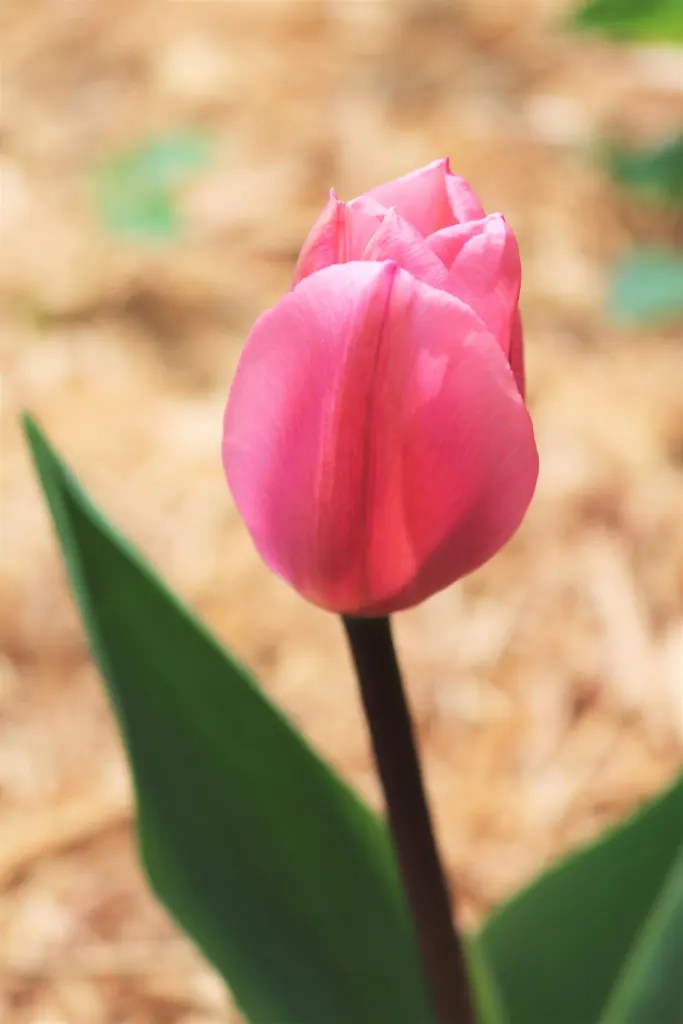
I have always had a thing for early spring flowers. Maybe it’s the grayness of winter; maybe it’s the stark empty branches of the trees. First, I see crocuses and muscari, then daffodils, and then tulips and irises. As these flowers begin to shine their colorful faces for all the world to see, it does something to my spirit. Just like that, life is new and fresh.
The birds’ chirping seems louder and happier. People are starting to move outdoors. Runners and cyclists are taking advantage of the warming days to exercise on the paths and streets of my city. In every spring thaw, life emerges after a deep winter sleep.
Gardening with Bulbs
Years ago, I sort of went wild planting bulbs around my yard, choosing everything from fritillaria to muscari to many unique interesting varieties of tulips, daffodils, irises, and lilies. I planned it in such a way that we had bulbs of many kinds constantly blooming from early spring well into summer.
Some of the advantages of planting bulbs in your landscaping and garden beds include:
They are perennials, so they come back year after year.
Spring bulbs are often early to emerge, offering spring color.
Most bulbs are low maintenance.
Bulbs multiply on their own, so you can divide them and spread them out in your beds or give them away to friends.
Many bulbs are deer and rodent-resistant (amaryllis, daffodil, snowflake, crocus, muscari, iris).
Lilies have a long bloom time, and you can stagger the bloom times of the various bulbs by planting a mix that bloom at different times throughout the spring/summer.
This year already, I have seen muscari, tulips, and daffodils in bloom, and they never cease to enhance the landscape with picturesque vibrance.
Learn more about creating a garden this year through my virtual home gardening course. You still have time to sign up and get started with planting your garden this spring.
The New Garden Watercolor Art Collection
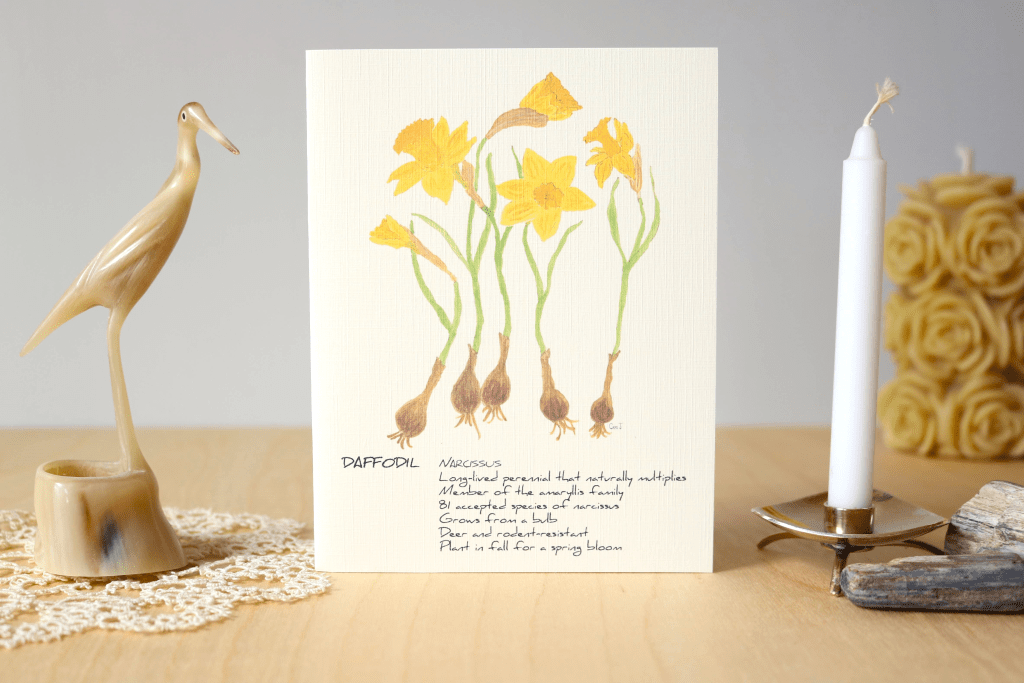
It is with these flowers in mind that I painted the new garden watercolor art bulb series, choosing to include lilies, tulips, iris, and daffodils. I painted them with the bulbs attached, hailing back to the many vintage botanical paintings I’ve enjoyed looking at over the years.
I’ve created these designs into both cards and art prints. The cards are available individually as well as in packs. I’m also excited to announce that for the first time, I’m offering these four flowers as smaller individual art prints, matted into an 8×10 inch size.
SUMMARY: The process of how to grow garlic is simple once you know the key points. First, decide what varieties to plant, and prepare the soil. Plant and cover the garlic in autumn. Uncover it in spring, watch it grow, and pick the scapes and harvest the heads during the summer.
Are you interested in growing garlic in your yard, but you’re not sure how to get started? Garlic is a low-maintenance and high-reward plant to grow as long as you understand a few key principles.
I’ll walk through the seven steps for how to grow garlic so you can order them and get them in the ground by this fall.
1. Decide What Varieties to Plant and Order Them
The first step in how to grow garlic is deciding what type of garlic to grow. At the grocery store, you generally only see one or two varieties, but when you’re growing your own, you have a myriad of beautiful options.
You’ll plant your garlic in the fall, so it’s best to order it early, in late spring, for the best selection. Recently I’ve been getting my garlic from Keene Garlic, but another great option is Seed Savers. You can find garlic heads for planting through local farmers or garden shops. Grocery store garlic is typically a softneck garlic, which isn’t hardy in northern parts of the U.S., so it’s best to order garlic intended for planting.
Hardneck Garlic
The first type of garlic is hardneck, which means that the stem is stiff and woody, and it can’t be braided like softneck varieties. If you live in a climate with cold winters, such as the northern parts of the U.S., plant hardneck garlic because it’s hardier and will withstand the winters better.
Hardneck garlic varieties produce scapes, which are the flowering stem of the plant. You can cut off these scapes and cook with them, or you can plant them. Hardneck garlic generally has fewer larger cloves compared to softneck.
Best Hardneck Varieties
Here are a few of my favorite hardneck varieties to grow in my upper Midwestern garden:
Music
Chesnok Red
German Extra Hardy
Purple Glazer
Rose de Lautrec
Russian Red
Spanish Roja
Softneck Garlic
The other type of garlic you can plant is softneck, which means the stem of the garlic is more flexible. These varieties are generally more susceptible to the cold, so they do great in warmer climates with less severe winters, such as the lower parts of the U.S.
Softneck garlic does not produce scapes, and the cloves tend to be smaller and more numerous than hardneck garlic cloves.
Best Softneck Varieties
A few great options for planting softneck garlic include:
Inchelium Red
French Red
Blanco Piacenza
2. Prepare the Soil
Once you’ve ordered your garlic, you’ll need to plan where you’ll plant it. Garlic is a heavy feeder, so it prefers rich, loose soil, not clay. They do best in full sun. You can replant it in the same place every year if you have good soil, but it’s ideal to rotate its location around your garden.
If you do not have good soil where you live, add compost to enrich the dirt. You can also separate the cloves from each other and soak them in a fertilizer soak before planting, which you’ll be able to find anywhere you buy garlic bulbs.
3. Plant and Cover the Garlic in Mid-Fall
Plant your garlic in mid-fall. In the upper midwest, I plant my garlic when the maple leaves are golden, which is late September or early October.
Dig holes 6 to 9 inches apart, 3 inches deep, and place an individual clove in each hole. Place the root side down, and the tip upwards. Then cover with dirt. When you are done planting, cover the patch with 3 to 6 inches of an organic mulch, such as straw or leaves.
After the cloves are buried and covered in the fall, you can forget about them until spring.
4. Uncover the Garlic in Spring
In the spring, you can take off some or all of the mulch after the threat of freezing temperatures has passed. If you leave some of the mulch, it acts as a weed barrier. The garlic will be able to grow through it.
It’s important to keep the space very weeded, as weeds will compete with the garlic, producing smaller garlic heads. Once the garlic is uncovered, as it grows you can water it as needed. Otherwise, sit back and watch it grow.
5. Harvest Garlic Scapes in June
In mid June, if you planted a hardneck variety, you will notice curly stems called scapes poking out from the garlic leaves. These stems curl as they reach upward and outward. In mid June, if you planted a hardneck variety, you will notice curly stems called scapes poking out from the garlic leaves. These stems curl as they reach upward and outward. If you let these go without picking, they will produce a beautiful white garlic flower. These are the seed heads, and they are delicious.
When these scapes get nice and long, you can cut them off and bring them inside to use in your cooking. I add them to everything I would normally use garlic in and more. Because they are a bit like a garlicky green onion, they go into salads, soups, and pastes. Anything savory, really.
Once all the scapes are trimmed off the plants, I continue to let the garlic plants grow.
6. Dig Up Garlic in July
Once the tops of the garlic leaves are starting to dry and turn brown, I start keeping track of them again. When you have about 5 green leaves remaining on each plant, or about 50% of the leaves are still green, you can harvest the garlic bulbs.
First dig up one plant to see if it is ready. You should see big heads with the outside skin sort of papery. Once I deem them ready, I dig them out of the ground carefully with a long spade, being careful not to slice open the heads.
7. Dry and Prepare the Garlic Heads
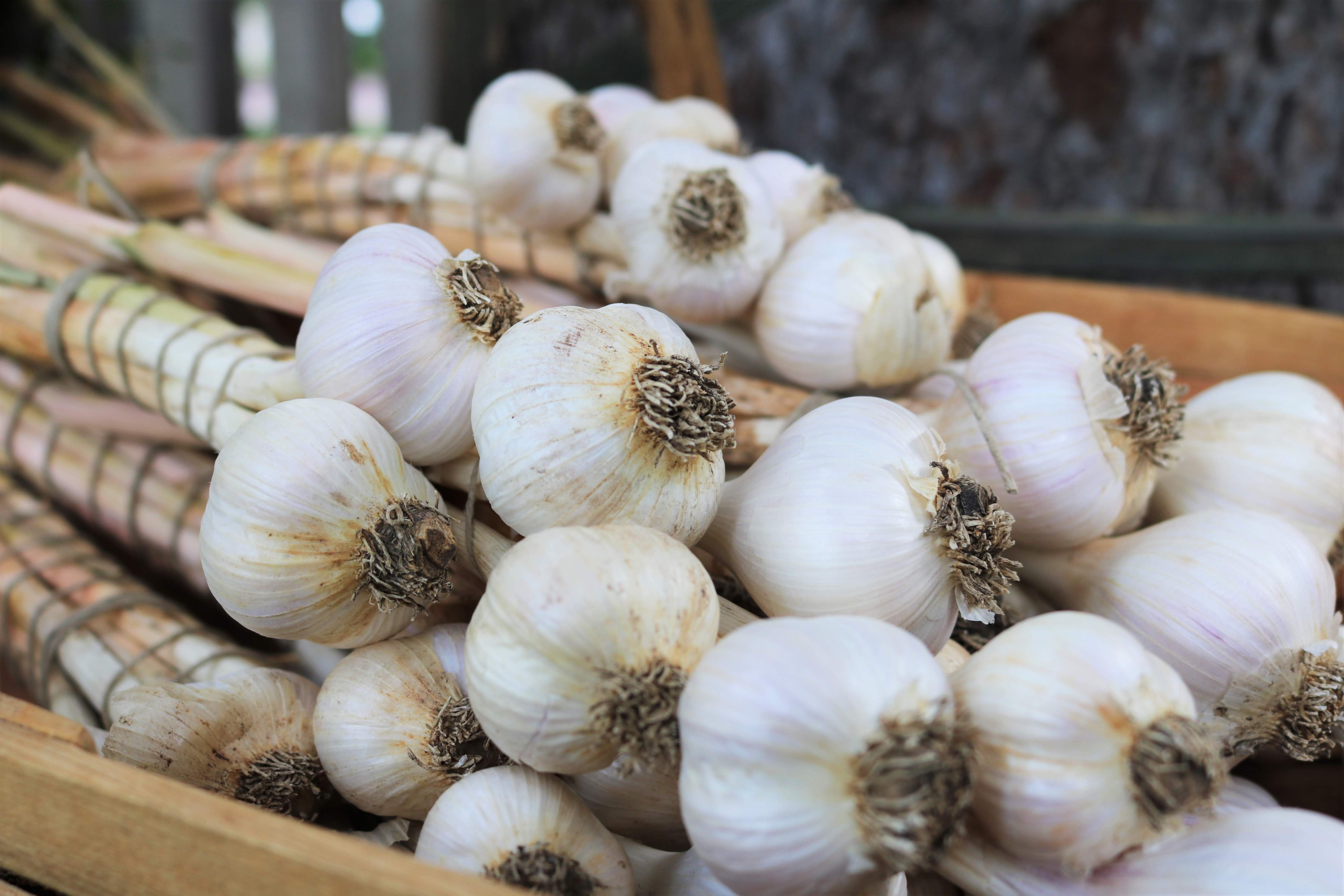
After pulling out my garlic, use a stiff brush to remove the excess dirt. Do not use water. Once they’re brushed off, lay them out in a well-circulated place, not touching each other, for about three weeks. This will allow them to cure. I generally leave them on a tarp in my garage, but you can also put them in the sun or under a tree, or you can tie and hang them in a well-ventilated space.
Once the garlic has cured for about three weeks, then it’s time to finish cleaning it up. Trim the tops and roots so they’re neat, and then tie them by wrapping them with string. By combining the garlic into a nice arrangement, they are beautiful on the wall, and they’re extra convenient when you want to clip a head off to use in your cooking.
Once the garlic is arranged and ready for storage, place it in a well-ventilated, room-temperature space. I generally like to hang it in my kitchen, and that way, it’s ready for use.
Why Grow Garlic?
I grew up with minimal garlic in my life, and what did exist came in the form of garlic powder. Later this changed to the minced garlic in a jar, and I thought I was getting pretty fancy at this point. The idea of fresh cloves of garlic came next, but I always bought these from a grocery store.
It was probably twenty five years ago when I was wandering through a farmers market in late July and came across a stand that had garlic for sale. They had baskets filled with pink garlic, garlic with purple stripes, and white garlic. Some bulbs were large, others smaller.
The realization that so many varieties existed was quite the discovery for me. Of course I fell in love with the taste and texture of homegrown garlic heads. Newly harvested garlic is very juicy. The individual cloves are firmer and fresher than what you buy at the grocery store.
A number of years ago, I started my own garlic patch, and I have never looked back. Garlic has become one of my favorite things to grow. It’s such an easy, carefree plant, and I can cook with the garlic year round. My garlic lasts all the way through winter, spring, and summer until I get my new batch in the late summer.
What to Cook with Garlic
The best part of learning how to grow garlic is getting to cook delicious meals from the scapes and fresh, juicy heads. If I tried to list all the ways I use my garlic, I could go on forever. But a few of my favorite uses for homegrown garlic include:
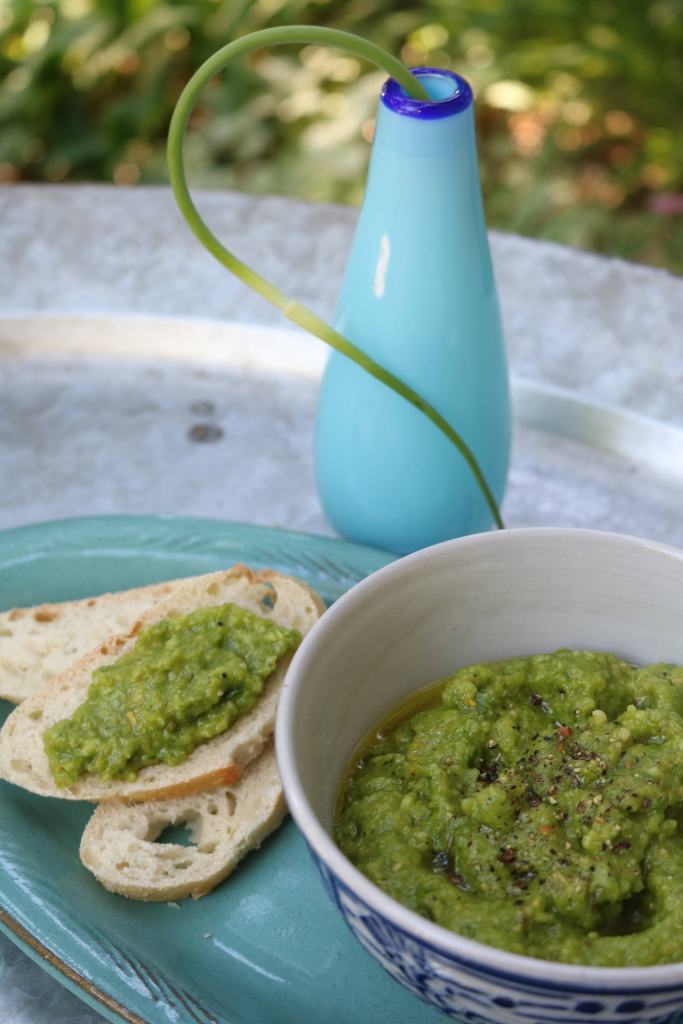
Garlic scape pesto
Garlic scape and sauteed mushroom pasta
Grilled pizza topped with fresh garlic scapes
Bruschetta with garlic scapes or garlic
Garlic bisque
Garlic and shrimp pasta
Learn More about Creating Your Garden
Growing garlic is one of the many joys of starting a garden at home. By growing a garden, you can create a wonderful haven and rich food for yourself and your family.
The Ripe and Roasted online vegetable garden course with Cami walks you through the steps of how to design and build your garden from scratch. You’ll learn how to choose, arrange, plant, and care for your vegetables and pollinator flowers.
Visit the garden course pageto learn more and sign up. Gardening makes it possible to reconnect with nature while growing fresh, organic food in your own backyard.
In my kitchen hangs a painting of a sprouting potato. An unassuming thing, but it brings me joy. Its creator was Betty Strand, an artist and family friend. I’ve always been enthralled by art. Drawings, watercolors, sketches, weavings, batiks, pottery; the list could go on. My walls certainly reflect this passion, and art takes up residence in every possible area of my home.
As you all know, my fascination with cooking and gardening is all-consuming, and a day doesn’t go by that I’m not dreaming about freshly sliced heirloom tomatoes or something of the sort. So why not tie my love for art with my love for all things food and garden? Thus an idea bloomed.
My original sketches when forming the idea to create garden art. You can see I carried some of my original designs into my later finished pieces.
As I thought about what I could offer you, my mind went to the passion I have for drawing and painting. If only I could give you a taste of the garden within the home, a reminder of the daffodils and crisp sweet peas of spring when you are surrounded by a January blizzard. The garden and kitchen bring me such contentment, and I hope they will bring you the same. Whether you hang my creations on your walls or send them as a greeting card to a friend, I hope they will brighten each blustery day.
Why I Love Paper
Over the years, as I have wandered through little boutique shops on lazy Saturday afternoons, what always catches my eye is their fine art paper and supplies. I don’t quite know why this is, but I have always had an odd obsession with beautiful, high-quality pens, pencils, and brushes of every ilk.
Don’t even get me started on art paper. Sheets of all sizes and colors stacked in cubbies that line an entire wall. Paper hung in large sheets on racks. The thicker the better, I say, and ideally it has some great texture, as well. Paper is such a simple thing, but I love high quality, thick paper, paper with frayed edges, and envelopes in unique shapes that tie shut with little leather strings.
I no doubt leave the boutique a poorer but happier woman, loaded down with a stack of thick cotton vellums, rolls of paper, several pens, and brushes of various sizes and thicknesses.
The finished card sets. How do I show paper in a still image? Just rest assured, the paper I found passes the Cami test. Thick, linen-textured, faint ivory color, divine.
The Creative Process
Drawing and painting is an activity I have come back to time and again over the years. It’s in my bones, a part of who I am. I started off this project by sketching. Then I painted. They were small at first, and then they evolved to larger, more refined paintings that can stand the test of time.
Left: my original artwork as well as some of the original, smaller designs. Top right: close-up of a few of my original ideas. Bottom right: the finished card sets.
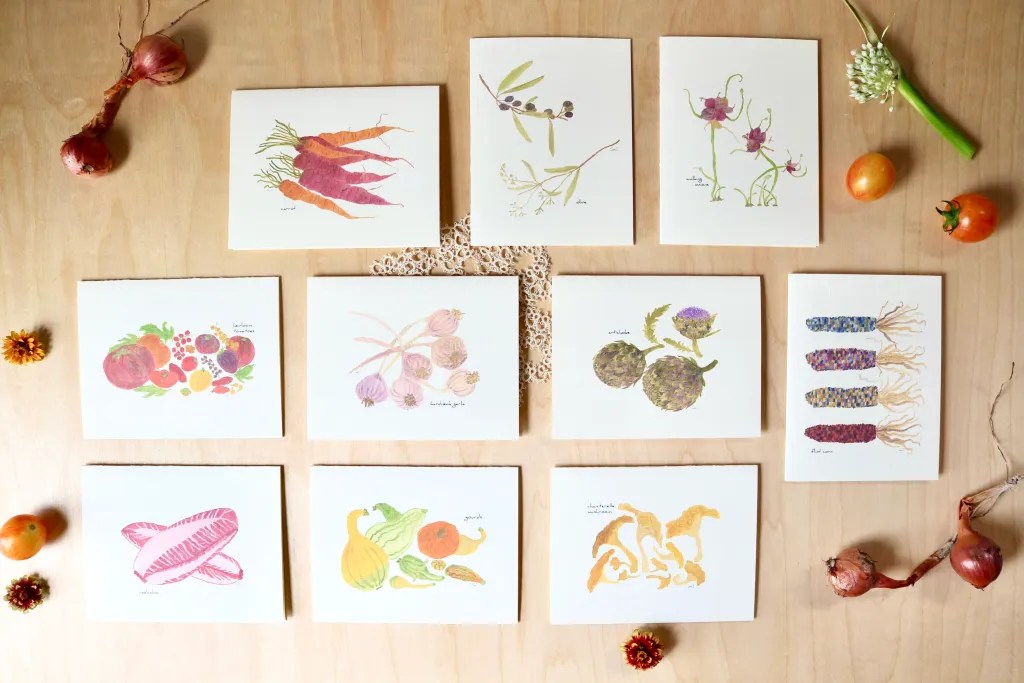
There have been many iterations along the way, and I am sure there will be more. It is my pleasure to introduce you to my initial three collections, selections of favorite fruits, vegetables, and garden flowers. I am excited to continue creating more designs as well.
As we tread in the new water of this artistic endeavor, I hope you appreciate my lovingly painted watercolor art. I also wish for you to find meaning in the prose that I crafted to inspire and teach about each plant. I hope these designs printed on thick, beautiful, linen cardstock will make charming, classic greeting cards. Finally, when these pieces of art adorn your walls in frames, I hope they provide an elegant reminder of our collective love for plants.
I am excited to launch this new venture, and I look forward to hearing your suggestions for future designs.
It had rained overnight, so as I stepped out the door, a fresh layer of fallen ochre-colored sugar maple leaves greeted me. Like gemstones, when strewn on the wet gray cement, the autumn leaves were almost luminous.
Oak and maple leaves in the fall with the play between the yellow, orange, rust, and wine colors, continue to inspire me. As the world around them is shutting down for winter and is becoming brown and gray, they shine in their brilliant splendor for all the world to see.
Autumn bounty from the garden
Autumn Animal Visitors
I watch as a squirrel carries a large walnut in his mouth over to a spot in the lawn where he starts to dig. Nope, not quite the right spot. He moves a few feet over, then moves again. Finally he finds what he deems the perfect location to bury his precious nut. He starts to feverishly dig, into the hole drops the nut, and it’s quickly buried.
A mama cardinal lands on the fence and sits, looking over the situation before flying into the feeder to get an afternoon snack. It seems that all the birds are back in our yard. They’ve been out in the bushes, trees, and prairies all summer, but now they’re back at our feeders. It’s good to see them, the little nuthatches, the red-breasted woodpeckers, the slate-colored juncos, the chickadees, and of course the cardinals.
Kale and green tomatoes from the garden.
Clearing the Garden
I turned away from my little friends. There was a laundry list of things to get done, and I had to get busy. I needed to harvest the last of my vegetable garden before the temperature drops. Working outside in the cold, I picked the season’s final tomatoes. It has been a great year for tomato production, but the vines started to turn brown. I pulled them out of the ground and stacked the cages.
Next, it was on to digging up the carrots and beets. Then the leeks and onions, Then the peppers, eggplants, and cucumbers. My baskets filled up, and yet there was more to do. I dried the beans to shuck at a later time, so I laid those out on a tarp in the garage. I clip the herbs and store them in freezer bags for me to use this winter.
Autumn bounty from harvest time.
Planting for Next Year
The final task of the day was planting my garlic in my newly empty garden bed. I chose some interesting varieties of garlic this year, and I’m excited to get them planted. There are a couple of purple varieties, one that grills up nicely, and a couple that will be sweet when eaten raw. I picked all of them for their lasting quality, as I hang them in my kitchen to use throughout the winter. First I dug holes in my rich dirt, buried the cloves, labeled the spaces, and covered the bed with piles of the dried oak and maple leaves. At last my work was done.
Top left: onions from the garden, bottom left: more garden bounty, right: kale leaves from the garden.
Transition to Winter
It’s almost as if I just finished up reading a riveting novel. I’ve thoroughly enjoyed the journey and now am in the final chapters. I don’t want the book to end. But end it does. Such has been this summer, the greenery, the garden bounty, the profuse flowers, the long, idyllic evenings. The chapters in this summertime novel are long and have captured my heart. Closing the cover to this book is bittersweet.
With late autumn we move our lives indoors. We take the piles of vegetables on our counters and create rich stews and braises. We don sweaters and light candles. Soon the lovely scent of fireplaces burning will permeate our neighborhoods. The next novel, a wintertime one, is at my doorstep, and I’m ready to begin reading.
The evening was stormy. Cracks of thunder played overhead. As we hurried up the old cobbled street, our feet danced around the growing puddles and streams. We were staying in an ancient hamlet buried in the hilly Umbrian countryside. Upon stepping into the trattoria, we took in the aromas of roasting meats, pizzas, breads, and vegetables.
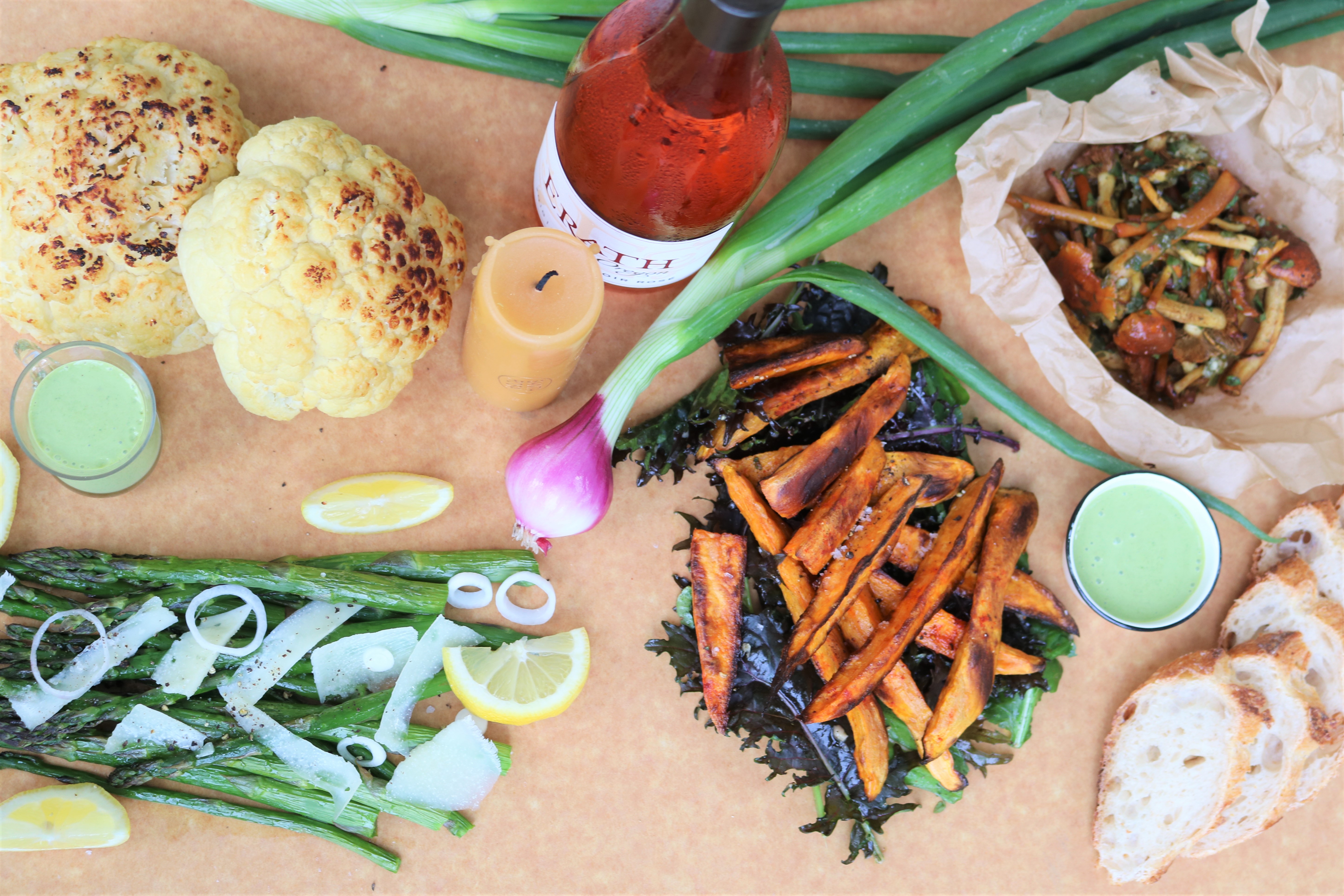
A gorgeous and massive medieval pizza oven took up one entire wall of the kitchen. Stacks of olivewood sat neatly stacked to one side. This was my first exposure to the unabashed, divine nature of roasting. The cozy warmth on a cold and rainy night. The taste of a perfectly charred beet, halved garlic heads drizzled with olive oil and balsamic vinegar, wild mushrooms and fennel bulbs. They pulled me in. I was hooked and haven’t looked back. I relegated the taste of bland canned beets and garlic powder from my childhood to the cobweb-filled attic of my memory bank. Going forward, it was roasting or nothing. This was a sort of genesis, a new horizon. I moved from steamed carrots to roasted carrots, from boiled baby potatoes to toasted wedges.
Roasting Beets
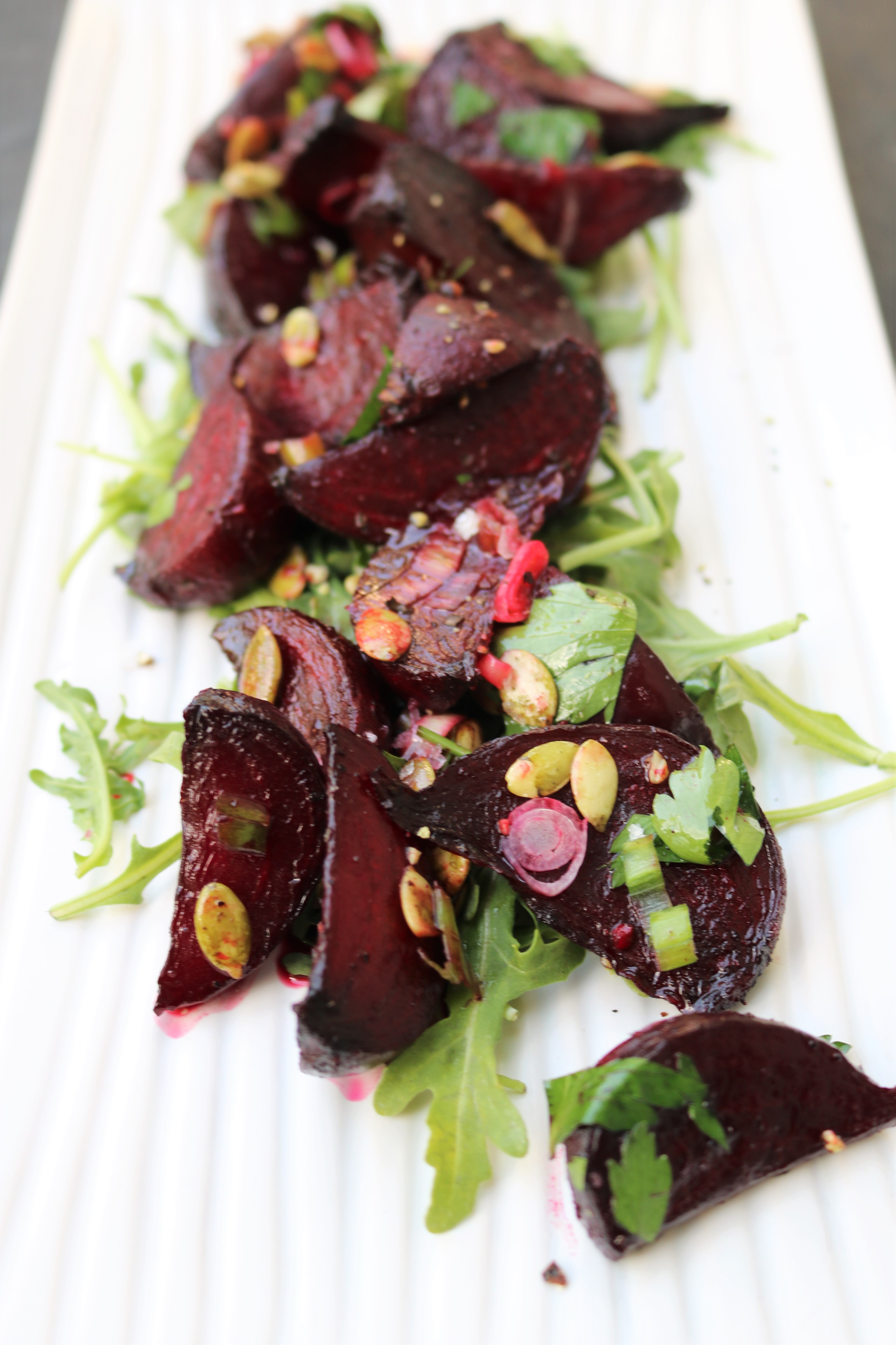
Let’s take beets. It seems simple enough. I slice the freshly scrubbed beets into wedges, toss them in olive oil, sea salt, and coarsely ground black pepper. Next I spread them in a single layer on a parchment-lined cookie sheet, placing them in a hot oven to roast (400 F). After cooling the beets, I drizzle red wine vinegar and a good quality olive oil and then add sliced green onions and toasted pumpkin seeds. I lightly toss the mixture and lay the salad over a bed of arugula.
As we tuck our forks into this ruby salad, a refreshing sweetness greets us. Roasting the beets has concentrated their sugars and given the tips of the wedges a slight crunch. The overall result is delicious.
Roasting vegetables produces a depth of flavor one doesn’t get with the other types of cooking. An almost caramel tone develops in them.
Roasting Cauliflower
Let’s look at cauliflower. Take a whole cauliflower, steam it for a few minutes in a pot of boiling salted water, after taking it out, rub it all over with olive oil, salt and pepper, and place it in a very hot oven (475 degrees) for 20 minutes or until toasty on the top surface. This version of roasted cauliflower is absolutely scrumptious served with a cool yogurt cilantro sauce.
Roasting Eggplant
Another vegetable that benefits immensely from roasting is eggplant. Roasting transforms the interior of eggplant into an almost buttery consistency. I recently made an iteration of an Israeli staple where I roasted the scored and oiled halves of an eggplant until they became nicely browned. Then I topped each half with a citrus, pomegranate molasses, and tahini mixture and broiled those halves for a couple minutes until they turned caramel in color. I covered these halves with dollops of a yogurt cucumber mixture, sprinkled toasted pistachios, slivered mint, and Italian parsley.
Adding Complexity with Sauces
The dry heat of an oven amps up the flavor of what can normally be a rather plain tasting vegetable. Roasting adds the char on the edges and a caramel-like sweetness. With a bit of creativity accented by fresh herbs and cool flavor filled sauces, roasted vegetables move from the ordinary to the deliciously sublime.
Using whole-milk yogurt as a base and adding refreshing ingredients such as lime, lemon, cilantro, Italian parsley, basil, dill, cucumber, scallions, and spring greens like arugula, sauces and dips can compliment the depth of flavor in roasted vegetables. It’s the savory counter to ice cream on a slice of pie. You can definitely do without it, but oh, its addition is so wonderful!
Vegetables Galore
We are about to enter into the season of ubiquitous vegetables. Tomatoes, potatoes, cauliflower, broccoli, kale, beets, carrots, onions, cabbages, and squash of all varieties will soon be at our fingertips. Try roasting these.
When garden produce is starting to pile up on my counter, I pull out a sheet pan, lay down parchment, spread out any variety of vegetables, drizzle them with olive oil and balsamic vinegar, and add whole garlic cloves, sea salt, and freshly ground pepper. Then I place the pan in a very hot oven (400 F). Simple prep, yet it yields a divinely complex result.
However you end up using the vegetables in the end, roasting first will give a new dimension of flavor to the dish. Be it a salad, a soup, a side, an hors d’oeuvres, or a braise, roast and then combine. You won’t have any regrets.
“Never ever ever mess around with my greens. Especially the beans!” My sentiments exactly. This line from the musical Into the Woods echoed through my mind as I watched the beans twist and curl their way up the fences. This summer was, for me, an adventurous journey into the world of funky, heirloom beans.
Too Many Kinds to Count
There were so many varieties, each with distinctive patterns and colors. White beans inside yellow pods, black or brown beans in green pods, pink stripes, purple stripes, deep purple; these are just a sampling of this summer’s collection. Even multiple continents made an appearance. There were beans from Italy, Ireland, the U.S., Germany, France, the Netherlands, and even a bean developed in good ol’ Minnesota.
I used the forgotten spaces of the fenceline to plant the pole bean varieties. I tucked the bush beans into open areas or spaces previously used by early spring vegetables like radishes. Because beans need to be planted once the soil is warm, you can inter-plant them with plants like sugar snap peas and radishes that bear quickly in the spring and then are done. Beans mature much later than radishes or peas, so by planting them in the same space, you are maximizing your garden yield.
A Beneficial Legume for The Garden
Beans are part of the legume family. Legumes are a beneficial type of vegetable to plant throughout your garden because legumes fix nitrogen. They pull atmospheric nitrogen out of the air, and then the bacteria attached to its roots convert the nitrogen into a form usable as a nutrient for the plant. When the plant is done, the usable forms (ammonia, nitrates, and nitrites) are available in the soil for the nearby plant roots to use. Biological nitrogen fixation is an example of nature using its own plants to fertilize itself.
Companion Planting the Beans
This concept is also referred to as companion planting, where plants mutually benefit each other when planted next to one another, a practice that has been done for centuries. Native Americans mastered this age-old practice when they would plant a combination of vegetables they named “the three sisters.” First they buried corn kernels into the ground in the shape of small rings, and then they surrounded the corn with beans. Lastly, they planted squash in the spaces between the corn/bean rings. The beans fertilized the soil for the corn and squash, using the tall corn stalks as a trellis to climb. The squash formed a high thick carpet on the ground that cooled the roots of the beans and corn, allowing them to thrive. The squash’s thick prickly leaves also served as a deterrent for animals that might want to come and nibble on the crops.
The Health of Beans
Beans are not only good for the soil; they are likewise good for your health. A wonderful source of the B vitamin folate, they are also high in fiber, protein, iron, and magnesium. As a nutrient-packed, low fat, and very inexpensive vegetable, let’s just say their return on investment is huge. For each single little bean buried into the sweet summer dirt, you will reap a hundredfold in harvest.
Harvesting and Storing
I began harvesting the long, thin French varieties in July. They add a delightful crunch to salads. You can steam them with a touch of butter and lemon or steam and quickly cool them to dip into aioli on an antipasto platter. The wax and purple varieties came next. These went into stir fries, soups, and casseroles. Finally, a breakpoint arrived where I halted harvesting them so the remaining could mature and become dried beans for this winter.
This is where I find myself now. I have brought all the beans in from the garden. I have threshed the driest of the bunch to get the beans out of the stiff, dried pod. The rest find themselves spread out in the basement until they are also ready for threshing.
I have pulled out a select few from each variety to plant again next year. I will store these in a cool spot until early next summer when I will plant them. The remaining dried beans are awaiting incorporation into our winter menu of hearty stews, casseroles, bean salads, and dips.
Garden grown beans offer a welcome consolation in these cool, dreary, autumn days. Whether it’s a cassoulet or a bowl of ham and bean soup, these are the gifts summer has given to winter. The memory of delicate purple flowers gracing the tips of vines exploring their way up and over the fenceline. Tiny little bean pods transforming into delicious adult counterparts. I taste these memories as I bring a spoonful to my lips.
Yes, as the fairy tales have claimed, beans are certainly magical. And they are not to be messed with.
How is it that our favorite vegetable is only available in its perfectly ripened glory for a couple months in late summer? Tomatoes, naturally sweetened by the sun, have a fresh yet unami quality that is hard to replicate in the winter months. Their shortened availability feeds our ubiquitous obsession with the pomme d’amour of all colors and sizes.
Growing Tomatoes
I have grown (and attempted to grow) tomatoes for over 30 years. They can actually be quite a finicky plant to grow well. Many factors go into successfully planting, growing, and harvesting these beauties. They are known to be heavy feeders, so you want to plant them in rich soil. They tend to be susceptible to diseases, especially those that are moisture-related. A number of insects agree with us and think they are delicious. They do best in as much sun as they can get. The stems can break easily, so we’re always looking for the newest and greatest way to support them. This is getting to be a daunting list.
Despite these potential obstacles, tomatoes are the one vegetable around which my garden is organized. My primario. I decide where in the garden I am going to move my tomatoes (because, of course, tomatoes are picky about this as well. They shouldn’t be planted in the same spot year to year, or they will get a blight disease that harbors in the soil). Once I know they’ll be in a spot they fancy and where they’ll flourish, I lay out the blueprint for the rest of my garden.
Choosing Varieties
My first consideration in choosing which tomatoes to plant is always about how I am going to use them in the kitchen. Will they be eaten fresh, in sandwiches, in salads, or as part of an hors d’oeuvre? How much pasta sauce or salsa am I going to preserve this year?
That leads me to which varieties are going to serve my needs best. I tend to prefer the complex flavors, shapes and colors of heirlooms, yet I am constantly frustrated by how easily they get diseased and how relatively few tomatoes each plant produces. After years of planting only heirlooms or hybrids, the last few years I have planted a cross between the two. I am hedging my bets, hoping that the best qualities of each will shine through.
Provençal tomato mustard tart
I have faithfully done everything my high-maintenance, lipstick-colored orbs require. The soil has been enriched with compost, they have been fertilized, mulched, pruned, staked, nipped, and tucked. Now it’s time for them to start giving back. To earn their keep, so to speak. It’s August, and I have big culinary plans, almost all of which involves tomatoes.
Cooking with Tomatoes
Let’s start simply. The cherry versions often don’t make it out of the garden, nibbled by kids and adults alike. One of my favorite treats is to sprinkle an interesting sea salt on slices and eat these while still warm from the sunshine.
Heirloom tomatoes, fresh Mozzarella, and red basil with crostini
This is when I splurge on great olive oil, as freshly pressed as I can find. I lean toward the grassy peppery flavor tones. This gets drizzled over tomatoes, slivers of my newly harvested garlic, pieces of torn basil leaves, crushed pepper, and a flaky sea salt. When stacked atop a slice of grilled baguette, it becomes a dish I could actually eat every night of the year. I know I can’t, however, thus compounding its allure.
Basil and mint laced Burrata on a zucchini Swiss chard fritter
My imagination for their uses is only limited by the available waking hours of the days. I tuck tomatoes into tarts, crepes, tacos, soups, pizza, braises, pasta dishes, salads, and sandwiches. I haven’t included them in my oatmeal or homemade ice cream, so for now, breakfast and dessert haven’t been invaded. I’ll have to work on that. A tomato sorbet might be in my future.
It was a cool, late spring afternoon. The sun shone, but there was a slight bite in the air. We were itching to dig outside in the dirt. My kids inspected the garlic patch, which was by now a foot tall. They called out to me, “Mom, we can’t believe you haven’t weeded the garlic. Look at all the weeds coming out of the ground.” I came over to inspect, and then I started to explain each little plant. This one was arugula. That one was fennel. Over here was dill. There was cilantro. These weren’t weeds at all. They were self-seeding plants from previous years.
Arugula growing amid the garlic
Self-Seeding: What is it?
Self-seeding happens when a plant is left to flower and then go to seed. In the summer sun, these seeds dry out and drop onto the ground or are blown by the wind. They sink into the soil and stay there until the time is right for them to germinate and grow into a new plant. This is nature’s way of sustaining itself. It’s also how a weed can go from one plant to 300 in no time flat.
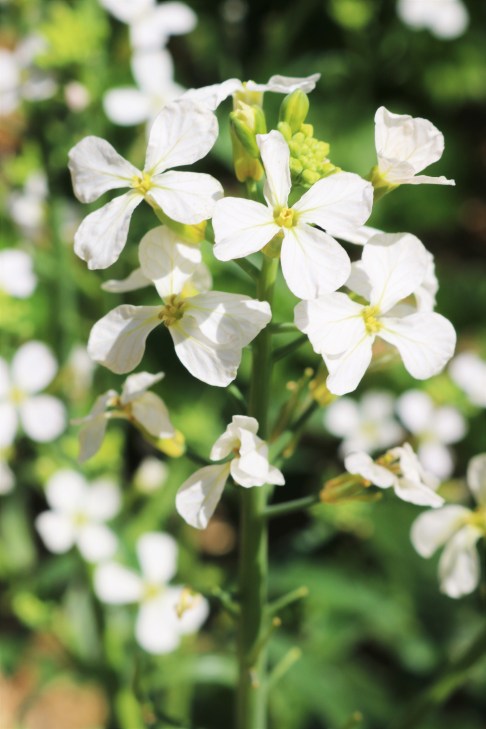
Over the past number of years, I have been increasingly intentional about letting my herbs and vegetables produce flowers so the beneficial insects have nectar to eat. On any summer day, fennel, cilantro, arugula, and lettuce flowers are covered with little hoverflies or bumblebees busily sucking in the sweet nectar these flowers provide. As they move from flower to flower, these diminutive bugs play the essential role of pollinating our fruit and vegetable plants.
Radish flowers that I am allowing to self-seed for next year
Sporadic onion flowers growing up after they were missed in last year’s harvest
Why Self-Seed?
Many might say that letting plants self-seed is the lazy gardener’s way of operating. That is true in some respect. It can also be a frugal way to garden. When you let plants self-seed, you don’t have to buy the seed or plant the seed. It just comes up on its own.
I tend to have a favorable perspective on the philosophy of self-seeding. I love the whimsy of a coleus flower poking up in the middle of my radishes or a bachelor button in my beets. Cilantro taking root within my carrots brings me joy. Loveliness arises when a broad, white dill flower stands proudly next to the cucumbers. Order is laced with beautiful disarray.
Cilantro next to the garlic
Lettuce flowers that will self-seed for next year
Resting on the kale, a sporadic onion flower that grew up after being missed in last year’s harvest
Ordered Chaos
Yesterday as I was harvesting berries, tucked up under the branches of the mulberry tree which the birds planted years ago, I noticed that the clematis had vined up around a lower mulberry branch. The plum-colored flowers intertwined with the dark purple berries. This simple artistry caught me and drew me in. The intentional encircling the accidental, the fanciful result of order marrying chaos.
Clematis vining up the mulberry tree
Many gardeners set aside a designated garden space for self-seeding plants. Sometimes they combine this with their perennial vegetable garden. Perennial vegetables include plants like asparagus, rhubarb, raspberries, strawberries, walking onions, thyme, chives, and oregano. If these two categories mix in the same space, technically one never needs to plant these vegetables and herbs again. As the saying goes, “One only plants tomatillos once.” Tomatillos are famous for self-seeding.
Exceptions to Self-Seeding
There are a few caveats in this whole discussion. I do weed extensively in places where I do not want self-seeding plants to grow. For example, a lot of dill came up in a section where I had planted beets. I harvested the dill when it was five or six inches tall, opening up the space for the beets to grow and thrive. A similar thing happened where I planted my Basil Genovese. Arugula was happily growing very tall, shading the tiny basil plants. Guess what I ate for dinner last night? An arugula salad. The dill is going to top a baked slab of fish shortly.
Arugula and dill amid the garlic
Dill growing up in the carrot patch
Another point I want to be sure and mention is to not let invasive plants self-seed. As much as the bees go crazy for mint flowers, I am fastidious about plucking them off the mint plants before they can drop their seed and spread around the garden. The same holds true for both regular and garlic chives. Heirloom tomatoes can be included as well simply because if you let tomatoes drop onto the ground and they rot there for the rest of the summer, a tight collection of tomato plants will sprout the next year. These will undoubtedly be planted in the wrong spot and too tightly together. You can carefully transplant a few of them into the intended spots, but the rest will probably go into the compost pile.
Compost Plants
Speaking of compost piles, there’s many a squash or plant that has emerged from its surface because someone discarded their extras the previous summer. Again, the delightful unintended consequences occasionally graced upon us by nature. The idea of something as delicious as squash growing out of the rot of compost is a concept paralleled in many aspects of life. I suppose this is what attracts me to the random beauty of self-seeded plants.
Dill growing up in the carrot patch
Radish flowers that will self-seed for next year
I will savor the cilantro in my mango salad. The radish flowers (a plant I’m allowing to self-seed for next year) are going into a bouquet on my dining room table. The sunflowers and bachelor buttons will bloom and then dry to drop their seeds for another year. Beauty moves forward, magnifying into the future.
Seed catalogs litter my couch. I keep pouring over the pages of flowers and vegetables. I have garden tabs open across the top of my computer screen, and I have been driving through town, stopping by garden shops. Amid all this planning, the plants are pulling me in, whispering, “I am beautiful. I am delicious. Buy me. Plant me.”
Planting time is approaching. The days are longer and warmer. We have been cooped up, self-isolating, and our reaction to this seclusion is to get outside. In the face of sickness, we have an inner voice inspiring us to self-improve and do what we can within ourselves to combat the enemy that is consuming our world.
We have this urge to grow plants for eating. We want to surround ourselves with beauty, living greenery, and flowers. The desire to eat healthy foods enthralls us. We are exercising more than ever. It seems more important than ever that we plant our gardens. For our soundness of mind, we need to sink our hands in the dirt and bury seeds that soon will produce vegetal plenty.
Finding Garden Plants
Now, where to go to procure these seeds and plants? As local businesses are struggling, it seems more important now than ever to support them. I choose to buy my garden supplies from those I value and rely on during normal gardening seasons. I carefully tuck away the catalogs, turn off the computer, and buy from the shops in my community.
Whether it’s calling on the phone, ordering by computer, or, mask in hand, actually visiting these shops, seeds and plants will come home with me. The plants that fill my garden this year and the flowers that will spill out of my planters will mean more than ever.
Planning the Garden
First, I start with a plan. What should I plant first? Second? In a few weeks? My garden map is sketched, pencil on graph paper. I need to place the nightshade plants in a new spot this year. Maybe where the basil was last year.
I tend to go a little crazy on tomato plants. My resolution for 2020 is to control myself and carefully choose my favorite varieties. A few heirlooms, some Romas for pasta sauce, a couple sweet cherries, a couple dependable heavy producers, and most importantly, some new interesting colors and shapes. These are going to take too much room. I erase and rearrange the vegetables on my map, trying to squeeze in my indulgences. So many indulgences, so little space… There are simply too many have-to-have tomatoes.
Planning a Timeline
The cool weather vegetables need to go into the ground. Kale, arugula, sweet peas, radishes, lettuces, onions, leeks, carrots, beets, radicchio, Swiss chard.
My attention now turns to planning what I will plant in late May. It is important to purchase them now, as these unusual varieties tend to sell out. Plants include tomatoes, eggplant, peppers, and cold-sensitive herbs and flowers. After bringing them home, they can harden in my yard for a while before they get planted.
Lastly are the vegetables that cannot get planted until the ground is very warm: beans, cucumbers, and squash. I buy the seeds but will hold off planting until early June.
With my plan forming, I can already smell the intoxicating scents of the garden. Tall dill that I allow to self seed everywhere (My small contribution to the black swallowtail butterfly). The delicate white cilantro flowers. Marigolds and nasturtium. The distinctive aroma of a just pruned tomato plant. Green fingertips. The yellow finches flitting from coleus to coleus, eating their seeds. This planning process elicits a visceral reaction. This garden is already worming its way into my soul.
The Hope of Spring
While on a walk, I hear the robins chirp as they busily go about building their nests. The squirrels race from tree to tree, busy with who knows what. The buds on the magnolia trees are just appearing, ivory cashmere petals emerging from pale green, velvety calyx.
The cool spring air. I breathe in deeply. Thankful. The soft new grass seems so green. Rhubarb and strawberry leaves push up through the soft, damp earth. The roses and clematis don’t realize there’s a deadly virus afoot. The plum and cherry trees are blithely budding. Nature is seemingly unaware of our current crisis.
This new birth is calming and reassuring. Heading to the garden, trowel and seed packets in hand, I settle in to dig, plant, and water, waiting for the future, waiting for new life to emerge.
Is it possible to create a new food group? How about an additional nutrient? Maybe it was one of the treasures found in the pyramids of Egypt. Questions fly around such as, “Is it a vegetable or an herb?” Aaahhh, yes, you know I am talking about garlic. In my kitchen there are few things that sneak themselves into my cooking more often than that firm but juicy bulb named garlic.
A Creole classic dish, Maque Choix.
Cooking with Garlic
I must admit, I have a self-diagnosed and historical obsession with the culinary bulb. As a way of denial, let’s call it a garlic penchant. Garlic has been inching its way more and more into my dishes and menus for several decades now. It started innocently enough back in the mid ‘80s when a little garlic powder sprinkled on my garlic bread was a natural accompaniment to spaghetti sauce with meatballs. When I moved from opening a jar to creating the sauce for the afore-mentioned spaghetti sauce, I realized the value of its culinary pungency. It was uphill (or should I say downhill?) from there.
I seem to regularly make dishes that just happen to have it as an ingredient. Or do I search for dishes that include it? In the back of my mind, I remember, “An apple a day keeps the doctor away.” In my way of thinking, it is “A garlic clove per day…”
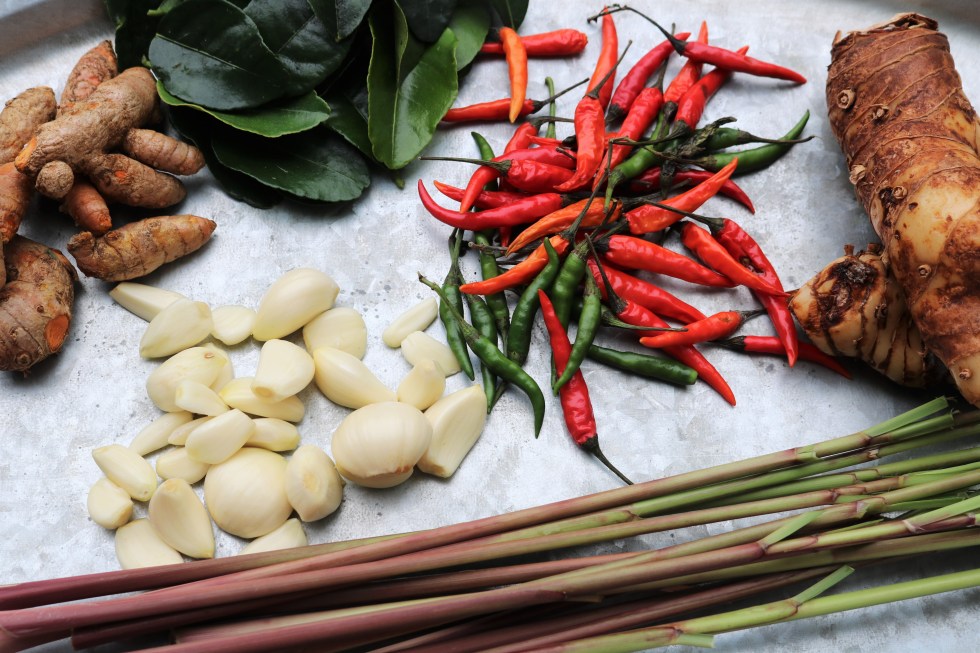
Ingredients for a Cambodian chicken curry featuring scratch lemongrass paste made with garden garlic and lemongrass.
Three square meals of garlic per day, you say? That is possible. Garlic for breakfast? Yep. A necessity in mushroom crepes. Lunch? Of course. The classic French oil and vinegar dressing drizzled on my garden greens by all standards Françoise must contain a minced clove. Then from 4:00 p.m. and onward, it shows up everywhere, working its way into every dish. Garlic is an essential part of the tomato, basil, fresh mozzarella cheese crostini I’m currently addicted to. Whether I make a Mexican dish like pork green chili, a toothsome Tuscan garlic and kale soup, a Creole classic Maque Choix, or Spanish paella, they are all rife with garlic.
Garden tomatoes, basil, and garlic with mozzarella over French bread.
Growing Garlic
Garlic has been much more easily consumed in my kitchen than grown in my garden. My issues with growing a successful crop has included forgetting to harvest it in a timely fashion (it needs to come out of the ground once about half of the green tops have dried and turned a sandy color and in mid July), overcrowding the cloves when planting, locating the garlic plot in a sunny location, planting smaller cloves (large cloves=large bulbs the following year).
Well, this year I’ve finally arrived! I successfully grew garlic! Last summer I decided it was time I took the time and effort to buy and plant this beloved vegetable properly. After reading up on the specifics of growing garlic, I shopped around online and ended up ordering from Seed Savers in Decorah, Iowa. I chose the sunniest spot in my garden beds and prepped the soil. Garlic bulbs are heavy feeders, so I added extra compost to the area. In late September I buried them in the ground, layering inches of dried leaves overtop to insulate against our frigid winters. I secured these with battened down cardboard. Lo and behold, they even survived this winter’s Polar Vortex.
About the Bulb
Regarding garlic, it belongs to the onion genus, Allium, which in turn is a part of the lily family. In the garden, it has almost no enemies. I suppose the same odor that, when consumed by you and me, scares away friends and family also keeps away garden pests. As it turns out it is also rather easy to grow (a fact that previously seems to have eluded me). When you give it sun and space, it rewards you first with scapes and then large bulbous heads.
The only catch to success is that you have to plan a year in advance. In the upper Midwest, the bulbs need to go into the ground in the fall nine months before they are harvested. If you have a sunny corner and an interest in growing garlic, it is almost time to plant. You can check your local greenhouses or look at online vendors, bearing in mind that favorite varieties sell out quickly.
Garlic heads
Garlic scapes
Varieties
The garlic that you find in the vegetable section of your grocery store usually is not successful in your garden. There are several reasons for this. First, much of our grocery store garlic comes from China and they treat it with a chemical to prevent it from sprouting. Secondly, most garlic you find in grocery store is soft neck garlic which isn’t hardy north of zone 6. If you live in zone 6 or south and want to try planting these soft-neck varieties, do it in the very early spring while it is still cold out.
The rest of us have to “settle” for the wonderfully interesting hard-neck varieties. These little gems we’re settling for, why do we love them so? I know I’ve mentioned juicy before, but that’s one of their prime descriptors. Juicy and crisp. Very different from your grocery store bulbs that have been sitting around for months before they get to the produce department. And quite honestly, the taste is fresher. Something is delicious about them because they are disappearing out of my kitchen faster than I can say “I am crazy for roasted garlic soup.”
Hardneck garlic with scapes
Hardneck garlic harvest
Health Benefits
I know you are asking, is garlic actually healthy for me to eat? There has and continues to be a great deal of research around this bulb and its health benefits. What the holistic community has been touting for millennia the modern scientific community is working hard to confirm. From acting as an antimicrobial to helping to improve lipid profiles to aiding in the prevention of some types of cancer, more of garlic’s attributes are being discovered or confirmed every year.
This really is a “which came first, the chicken or the egg?” situation. Do we love the ethnic foods from every continent because they contain our beloved garlic, or is it because of our preoccupation with this crisp and flavorful bulb that we snatch up all available fresh heads at the local farmers market to work into our evening menu?
Does it matter? I say go forth. Indulge. And if you can’t convince your friends and family to join you in your garlic-feeding frenzy, make sure you have a stash of breath mints handy.
My garden is planted. The carrots, beets, and kale are poking through the ground, the strawberries still little green orbs. Tiny flowers adorn the tomatoes and peppers in preparation for their future bounty. The rhubarb is mostly finished, having been transformed into many toothsome desserts. Alas, as far as gardens go, the middle of June is known as “shoulder season.” We are waiting, waiting for the vegetables we have planted to be laden with their bounty. Yet something is ready to be picked and eaten in all its tender beauty, lettuce.
A Time for Lettuce
My garden is bountiful with a host of lettuces. Purple and red varieties, lettuce with red speckles, lettuce with curly edges, and of course, green lettuce. These colorful leaves grace our gardens and plates.
This green loves to germinate and grow in the cool, wet weather of spring and early summer. In fact, it has a hard time germinating in the heat of midsummer. In the early spring and late fall, however, it goes to town.
The ground was barely free of snow when I planted the first seeds this spring. I’ll do this same thing again when the crisp days of fall are on the horizon. Planting in a sunny spot or one that gets a bit of afternoon sunshine will ensure that the plants quickly poke their little heads through the earth’s surface.
The spring rain showers help keep the ground moist. I usually scatter the seeds randomly in a square space. When they come up, they’ll be very crowded. I thin them as they grow, eventually leaving several inches between plants. In this way I get to harvest lettuce for weeks. I always leave a few plants to go to flower and then to seed. The flowers serve as food to the bees and little beneficial insects that drink their nectar. Once they go to seed, these seeds drop to become new plants next season.
Eating Well with Lettuce
We used to think that lettuce was basically just glorified water. We thought it did not have much nutritional value, but we now know this is absolutely not true. Lettuce and greens of all kinds are packed with nutrients, vitamins A and K, folate, and molydenum to name a few. Flavonoids and phenolic acids are just a couple of the antioxidants present that work their magic in you to help prevent diseases and keep you healthy.
If the nutritiousness does not propel you to make lettuce cups for your grilled salmon salad, the fresh crunchy flavor will. The taste of just picked lettuce is unlike any green I have tasted all winter. This is my launchpad into summer garden goodness.
Garden lettuce is the first ingredient in any number of salads. It is the thick layer of crispness in my sandwiches. It adorns my platters of hors d’oeuvres. I fill the thicker romaine cups with endless variations of meat or vegetable salads.
Cleaning Garden Greens
One of the deterrents to eating garden lettuce is cleaning garden lettuce. I have found the fastest way to clean a pile of dirt-laden lettuce is to soak it in a sink full of cold water. Stir gently with your fingers to dislodge any soil from the leaves and stems. The dirt will sink to the bottom of the sink so that when you drain out the water, the dirt drains out first. I then refill the sink with cool water and repeat the process until the leaves are clean. This may take two or three rinses.
Finally, I scoop out the leaves and spin them in a salad spinner for a minute until they are dry. You can store it for a few days in the refrigerator by wrapping it loosely in a paper towel and sealing it in a plastic bag. Personally, I upped my intake dramatically once I started washing my lettuce in this way, and I always tend to use things faster that are washed and ready to go in the refrigerator.
It is the season for eating lettuce. Just picked leaves of all stripes and colors is waiting for you. I, for one, will thoroughly enjoy waiting for the second wave of produce from my garden as long as I have lettuce on my plate.
Spring. Warm, sunny days. Cool rains. The green of the budding trees is almost electric, and emerging plants are the same. Their lime color is cheerful yet soothing. I am daily transfixed by the new strawberries poking their leaves up through the caramel mulch. Lily of the valley are slowly uncoiling their leaves. Soon the intoxicating perfume of their flowers will greet me each day.
Lily of the valley
Strawberry plant
The garlic cloves I buried in a corner bed last fall have long been up and stretching toward the sky. I cannot stop thinking about the garlic scape pesto I will be creating from the curly scapes that will swirl up from each plant. As I look across my other garden beds, I see the tiny evidence of early spring peas, lettuces, and pak choi.
Garlic shoots
Spring Preparation
The time has not yet arrived for planting my summer seeds and plants. In this part of the country, we wait for the soil temperatures to warm up. What I am doing now is collecting. My stack of vegetable seed packets increases by the day. A wide array of pepper and tomato plants are hardening in my yard and garage. Flowers and plants with interesting foliage await being planted into ceramic pots.
Collecting plants
Gardens with multi-season plantings bring life to the spring season when we have been without outside color for months. Some of my favorites are the early bulbs such as the subtly-hued Lenten rose, stubby crocuses that almost look like they are laughing at late winter as they push themselves up through the frosty remnants of winter, muscari with its clusters of tiny indigo grape-like flowers standing at attention up and down the stem, and fritillaria whose upside down tulip-shaped flowers look like miniature plum checkerboards. These are of course in addition to the many varieties and shades of daffodils and tulips.
The First Market
Just as I welcome the visual freshness of spring, so I also eagerly anticipate the clean crispness of spring fruits and vegetables. The weekly summer tradition of going to the farmers market began this weekend. Like walking through a seasonal portal, the opening of the farmers market is, for me, the start of my summer gardening season. Catching up with the farmers, scouting their new offerings, listening to the bluegrass band, buying something here, tasting something there. The aroma of coffee beans grinding or pizza baking in a wood-fired oven. It all comes together to lift my spirits. It is saying, “hello spring,” “hello warm sunshine,” “hello cool rich earth!” “Are you ready to welcome and nurture what I’m planting this year?”
Farmers market bounty
Cooking for Spring
Of course, I brought home some culinary gems; trumpet mushrooms, Japanese spinach, and bok choy. These formed the components of our evening meal. So upon returning from the farmers market, I had to create in the kitchen. The ingredients called for simple dishes. We needed to hear the crunch of the bok choy and feel the bite of the emerald Japanese spinach. I decided to do an Asian interpretation by tossing in some pistachios and drizzling the greens with a mixture of peanut and sesame oil, Tamari sauce, freshly grated ginger root, minced garlic, and rice wine vinegar.
Bok choy
Trumpet mushrooms
The just-harvested trumpet mushrooms that I buy at the market are so marvelous that I had to do the classic preparation of sauteing them in butter albeit with the twist of a sprinkling truffle salt. Strips of Ataulfo mangoes topped with coarsely ground pepper and charcoal-grilled chicken thighs marinated in a mixture of Vietnamese lemon curry, sea salt, and black pepper rounded out the dinner plates.
I wake up to the multitude of birds chirping outside my bedroom window and go to sleep to the sound of gentle rain. Digging into the chocolate dirt, I carefully place my seeds within. I clean windows, sweep sidewalks, wash off yard furniture, and for the next five months we move our lives outdoors. Yes, spring has arrived. She has flung her bountiful self upon us, and I am basking in her presence.
By the time I was launching into my adult life, I had lived on three continents and had at one point or another been fluent in multiple languages. However, I did not have any idea how to garden (my cooking skills were not any better, but that is a story for another time).
I limped along every summer, reading what I could, listening to family and friends, and using a lot of trial and error, mostly error. I loved the idea of gathering fresh produce from my garden for the upcoming evening’s meal. My knowledge, however, was accumulating at a glacial pace.
Glenn’s lily collection
Vegetable gardening
Glenn the Gardener
My family then moved to a new house in a new city in a new state. Our next door neighbors were Cindy and Glenn. My garden muse presented himself in the unsuspecting form of Glenn, my new neighbor. A teacher by trade, he is a coupling of all that is both brilliant and quirky.
I had never heard of using corn gluten meal as an organic herbicide on lawns. Creating a garden conducive to attracting pollinators and other beneficial insects was a new concept to me. I knew not of the advantages and how-to of companion planting. It seemed that all my questions and garden challenges were answered with a wise solution or a “let’s figure this out.”
Glenn mowing at his farm with the river and prairie behind.
When Glenn planted a collection of prairie flowers on a strip of our adjoining properties, he introduced me to the multitude of benefits that come from using native wildflowers in your landscaping. Glenn has since graduated his prairie yard into an actual prairie on his 20 acre property just outside of town. If you want to see butterflies and other pollinators, this is the place to go. As they say, “Build it, and they will come”. Well, Glenn planted it, and they came in droves. Long before it became popular, he has been intentional about fostering a climate for pollinators.
Learning from the Master
As someone with many questions, learning was made simple because of being able to walk a few feet to the south and know I could get the answers. Glenn introduced me to collectible lilies, composting, building living soil, catching rainwater, how to grow grapes, garlic, fruit trees, seed saving, and so on.
Gardening wisdom oozes from Glenn and Cindy’s property. Cindy, Glenn’s wife, quickly became a dear friend, and together we cooked, preserved, and all ate from the bountiful quantities. As is so often the case in life, as much as I loved the ease from their proximity, I appreciated his wisdom even more after we moved away. Having a garden guru at the ready jump started my passion for gardening, and I have carried his many lessons with me ever since.
Although there have been many other wise garden savants since Glenn, he was my first garden muse. My yard and gardens blossomed profusely under his careful tutelage. As a result, I have adopted his passion as my own. I will always be grateful to Glenn for living next door to me.
The other day, when picking produce from my community garden, I was enthralled by a bumble bee buzzing in front of a cucumber blossom. It landed on the edge of the flower, burying its head inside. Soon it moved on to another blossom, then a third. Later, little hoverflies worked their way across a collection of white cilantro blossoms. It is the height of summer; plants have full leaves, and they are flowering. Fruits and vegetables are growing larger and ripening.
All of this verdurous growth creates a buzz in the insect world. A number of years ago, after deciding to garden organically and soaking in the wisdom of entomologists I have had the pleasure of learning from, both my tolerance of and fascination for bugs have markedly increased.
For the purposes of this discussion, I will focus on three categories of insects. First, there are the insects that eat or otherwise destroy your plants, like the cucumber beetle I recently killed. Second, there are the insects that are very helpful, the above-mentioned bumble bee and hoverfly are two examples. Finally, there are the insects that “worm” their way into our hearts because they kill harmful insects (we love these guys!).
Fostering a Healthy Insect Population
There are many things one can do to foster the symbiotic relationship that insects have with one another and with our plants. As a baseline, it is wise to take the time to search for and plant disease resistant varieties of seeds or plants. I learned my lesson this year when I planted four kinds of cucumbers. A couple are resistant to cucumber wilt bacteria and a couple (that I just HAD to try) were not. Guess what? The varieties that aren’t resistant have cucumber wilt. This is a disease that is spread by the cucumber beetle, and the bacteria overwinters in the soil. This is happening in my community garden, where the history of what was planted in years past is unknown. (I might have been given a little bit of a break if I had known where cucumbers had been and planted this year’s in a different spot.)
A great way to help the pollinator insects is to let some of your plants go to flower and then seed. The butterflies, bees, and hoverflies will love you for it! I always leave a portion of my cilantro, arugula, lettuces, bak choy, basil, mint, among others to flower and seed. Those plants are very busy places right now. In addition, I scatter flower seeds throughout my garden. Nasturtiums, marigolds, and sunflowers are all edible and thus beneficial in several ways. Then there are the blossoms on tomatoes, eggplant, cucumber, watermelon, squash, peas, beans, etc. What a plethora of options for our insect friends!
Another helpful practice is to plant things that are specific foods for certain desirable insects. I let my fennel reseed itself every year and plant dill everywhere because that is what the black swallowtail butterfly larvae eat. With Monarch butterflies, their larvae only eat milkweed, so including that in your landscape will help them multiply.
One of the more interesting groups of the insect world are the predatory insects. We all know about ladybugs eating aphids, but other examples include the cicada killer wasp as well as spiders. One of the more voracious predators, and maybe the most maligned, are spiders. Let’s just say spiders are not vegetarians. They eat other insects, many of them harmful to our yard and garden plants. So instead of cleaning up all those cobwebs in your garden, leave them. I’m not saying to leave the cobwebs around doors, windows, and house. But in your garden, these hungry critters are doing your work for you.
Think twice before you buy packages of earthworms, lady beetles, praying mantis, etc. I could write an epistle on the downsides of introducing foreign bugs into your environment. Instead, foster the conditions to help the native bugs that are already present thrive and do their thing.
It goes without saying, use insecticides either not at all or very, very sparingly. Most insecticides don’t discriminate between helpful and harmful insects.
It doesn’t take much to change your way of thinking and your practices. Just like many of us try attract birds to our yards, we can attract insects. In fact, it is easy to do this because much of what attracts insects is leaving your garden alone. Don’t harvest some of your greens, don’t apply insecticides, don’t pick all your flowers. This laid-back approach will, in the end, increase your insect population, which will increase the health of your plants and lead to higher production.
I love great food, plants, and art that brings it all together. I'm passionate about educating people on home gardening and gourmet cooking. My watercolor art centers around plants. Visit my blog to learn about gourmet cooking, growing your own garden, and the inspiration behind my art.
Let's Stay Connected
Get 10% off plus free shipping on your first order when you join my mailing list. You’ll also be the first to hear about new blog posts and projects.
Processing…
Success! You're on the list.
Whoops! There was an error and we couldn't process your subscription. Please reload the page and try again.